Quick answer: Monstera deliciosa is an easy plant once you get four things right. Give it bright, indirect light (near an east or west window, or a few feet back from a south window). Water when the top 5 cm (2 in) of soil is dry, usually every 1–2 weeks in spring and summer and less often in winter. Grow it in a chunky, fast-draining mix (potting soil plus bark and perlite) in a pot with drainage holes. Keep it warm (18–29 °C / 65–85 °F), away from cold drafts, and give it a moss pole or other support so it can climb. Most Monstera problems, like yellow leaves, leaves without splits, or a floppy plant, come back to one of these basics.
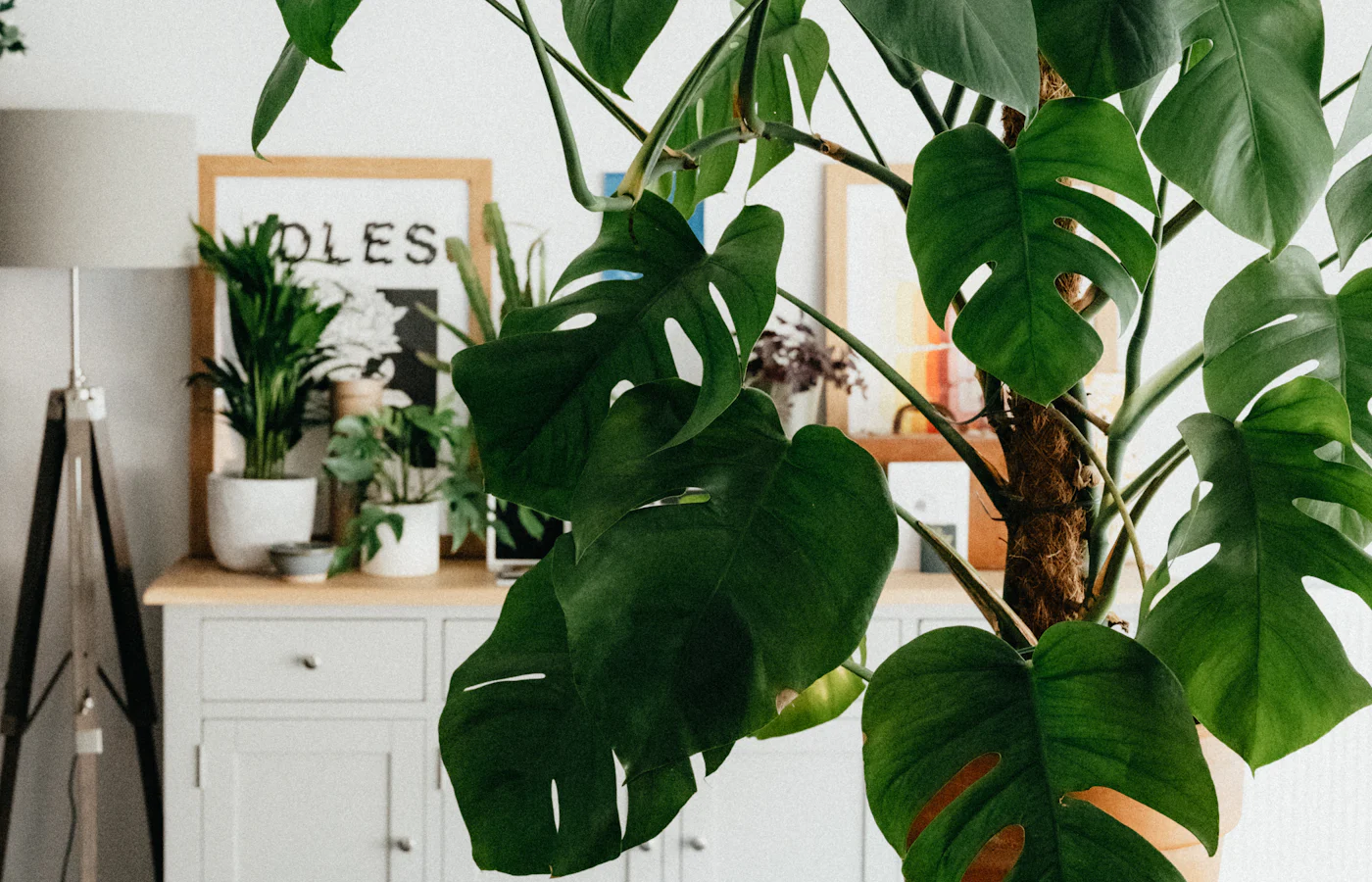
Monstera deliciosa, the Swiss cheese plant, is a climbing aroid from the tropical forests of southern Mexico and Central America. In the wild it starts on the shady forest floor, finds a tree trunk, and climbs toward brighter light, putting out larger, more split leaves as it goes. Keep that picture in mind, because every part of good Monstera care copies it: dappled light, airy soil that never stays soggy, warmth, humidity, and something to climb.
This Monstera care guide covers the basics in the order that matters most, then lists the most common mistakes. If your plant already has a problem, go straight to the right guide: Monstera leaves turning yellow (overwatering vs light stress) or houseplant root rot rescue.
Monstera care at a glance
| Need | What works | Sign it’s wrong |
|---|---|---|
| Light | Bright, indirect light; a little gentle morning sun is fine | Small leaves with no splits, long stems, leaning (too dark); bleached or scorched patches (too much hot sun) |
| Water | Water deeply when the top 5 cm (2 in) is dry; empty the saucer | Yellow lower leaves and soil that stays wet (too much); drooping, curling, crispy edges with dry soil (too little) |
| Soil | Chunky mix: roughly 1 part potting soil, 1 part orchid bark, 1 part perlite | Soil stays wet for more than 10 days, smells sour, fungus gnats |
| Temperature | 18–29 °C (65–85 °F); not below about 12 °C (55 °F) | Growth stops, dark or limp patches after cold drafts |
| Humidity | Average home humidity is fine; 50%+ helps new leaves open cleanly | Brown, crispy leaf edges; new leaves tearing as they unfurl |
| Feeding | Balanced liquid fertilizer, diluted, every 4 weeks in spring and summer | Pale new growth (too little); salt crust and brown tips (too much) |
| Support | Moss pole, coir pole or plank once the plant starts leaning | Stems flopping sideways, the plant spreading out instead of up |
How much light does a Monstera need?
Light is what decides how big your Monstera gets and whether its leaves split. Monsteras want bright, indirect light: a spot where the plant sees a wide piece of sky but the sun does not hit the leaves for hours at midday. In practice that means:
- East window: very good. Soft morning sun is welcome.
- West window: good, but keep the plant a little back or behind a sheer curtain in summer.
- South window: 1–2 m (3–6 ft) back from the glass, or behind a sheer curtain.
- North window: it will survive close to the glass, but growth is slow and leaves stay small. Our guide to caring for houseplants in a north-facing window explains how to make the most of it.
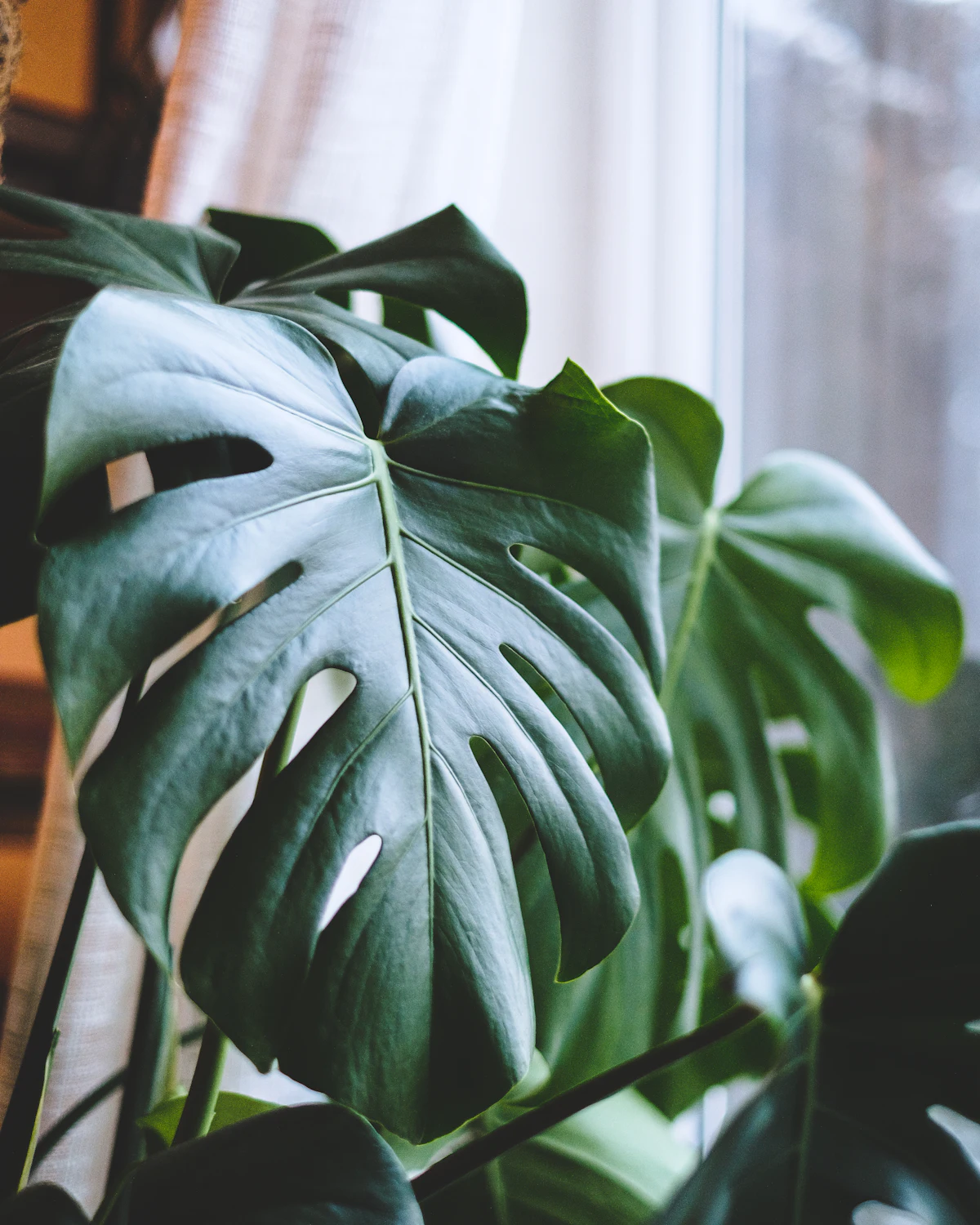
A simple test: at midday, hold your hand about 30 cm (1 ft) above the leaves. A soft but clear shadow means good light. A faint, blurry shadow means the spot is too dim for strong growth. If you are not sure how to read your windows, see How Much Light Do Houseplants Need?
Low light is the most common reason a Monstera grows long, bare stems with small leaves. Stretched stems do not shrink back, but new growth will come in fuller once light improves. Our guide to leggy houseplants shows how to correct it, including pruning. Rotate the pot a quarter turn every couple of weeks so the plant does not lean hard toward the window.
Why are my Monstera leaves not splitting?
Leaf splits (fenestrations) come with maturity and light. Young Monsteras grow solid, heart-shaped leaves at first. Most plants start producing splits after they have grown roughly 8–12 leaves and are getting enough light. If an older plant keeps putting out solid leaves, the usual reasons are, in order: not enough light, no support to climb (climbing tells the plant it is reaching brighter conditions), and a plant that is root-bound or underfed. Splits appear only on new leaves. An existing leaf will never develop holes later.
How often should you water a Monstera?
Water by checking the soil, not by the calendar. Push a finger into the soil: when the top 5 cm (2 in) is dry, water thoroughly until water runs out of the drainage holes, then empty the saucer after 15 minutes. For a medium plant in a 25 cm (10 in) pot, that often works out to about once a week in summer and every 2–3 weeks in winter, but your home can differ.
- Lift the pot. A dry pot feels clearly lighter. Once you know both weights, you can tell at a glance.
- Water less in winter. Shorter days and cooler rooms slow growth, so soil stays wet longer. See how often to water houseplants in winter.
- Never leave it sitting in water. Monstera roots need air. Soggy soil is the classic cause of yellow leaves and root rot.
For the general method behind this, read our houseplant watering guide.
What does an overwatered Monstera look like?
An overwatered Monstera usually shows yellowing lower leaves (often starting with a whole leaf turning soft yellow), soil that is still wet days after watering, drooping even though the soil is moist, dark brown patches with a yellow halo, and sometimes a sour or musty smell from the pot. Fungus gnats flying around the soil are another sign that it stays wet too long (see our guide to fungus gnats in houseplants). An underwatered Monstera droops with dry, light soil, its leaves curl inward, and edges go crispy. Both look like “drooping”, so always check the soil first. The full diagnosis is in our yellow Monstera leaves guide.
Best soil and pot for a Monstera
Monsteras grow on trees in the wild, so their roots are used to air, not dense mud. A standard bagged potting mix alone holds too much water for most homes. A simple, reliable recipe:
- 1 part good quality indoor potting mix
- 1 part orchid bark (or coco chips)
- 1 part perlite (or pumice)
- Optional: a handful of horticultural charcoal or worm castings
The mix should feel loose and chunky, and water should run through it within seconds. Always use a pot with drainage holes. Choose a pot only 2–5 cm (1–2 in) wider than the root ball: a pot that is much too big holds extra wet soil that roots cannot use, which raises the risk of rot.
When should you repot a Monstera?
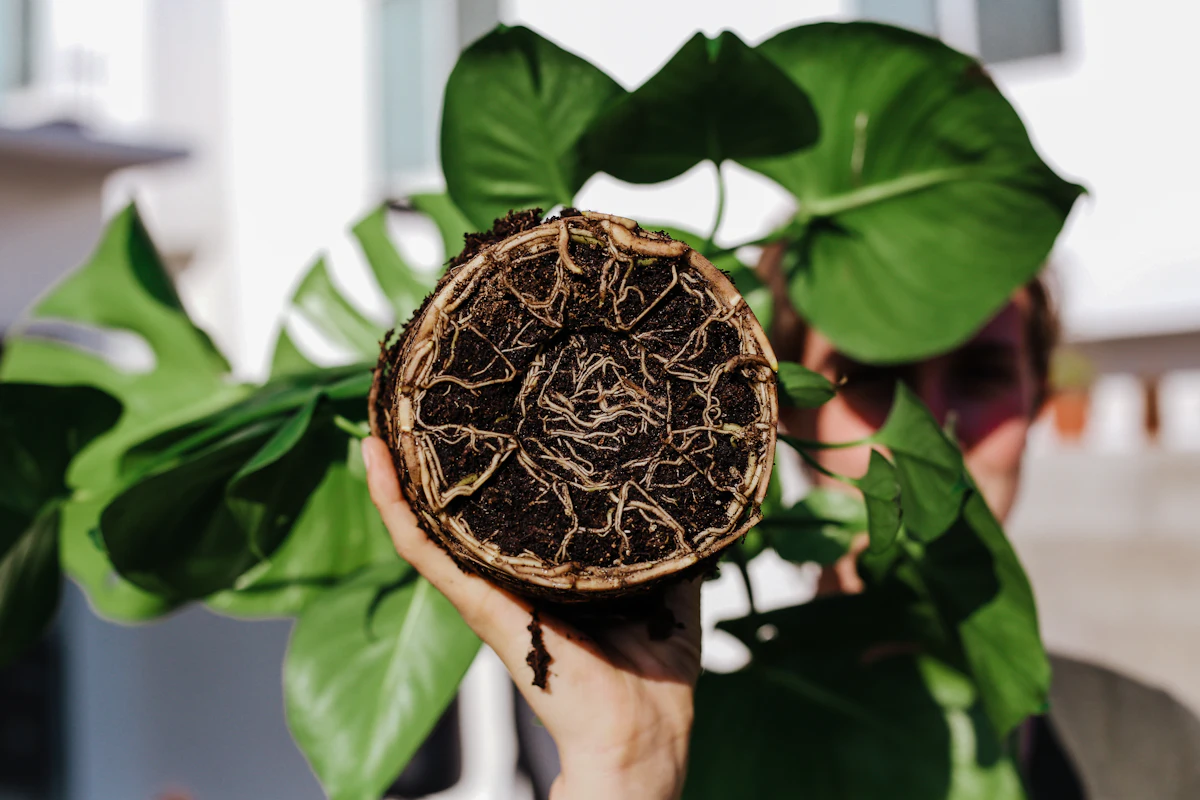
Repot every 1–2 years, in spring or early summer, when you see roots circling the bottom of the pot, roots coming out of the drainage holes, or soil drying out within 2–3 days. Slide the plant out and look: healthy roots are firm and pale; mushy, dark, smelly roots mean rot and need trimming first. Our step-by-step repotting guide walks through the process. A little drooping for a week afterwards is normal; if it lasts longer, see how to fix transplant shock. Avoid repotting in late autumn and winter unless the plant is rotting.
Temperature, humidity, and feeding
Temperature. Normal room temperatures suit Monsteras well. Growth slows below about 18 °C (65 °F), and damage can start below about 10–12 °C (50–55 °F). Keep the plant away from cold, drafty doors and windows in winter, and away from radiators and heating vents, which dry leaves quickly. When the heating comes on, our guide to protecting houseplants from dry air helps.
Humidity. Monsteras are more forgiving than calatheas or ferns. Average indoor humidity (40–50%) is usually fine. Very dry winter air can cause brown, crispy edges and new leaves that tear or get stuck as they unfurl. If that happens, a humidifier or grouping plants works much better than misting. See how to raise humidity for houseplants.
Feeding. In spring and summer, use a balanced liquid houseplant fertilizer at half the label strength about every 4 weeks, on moist soil. Stop in autumn and winter, when growth slows (see when to stop fertilizing houseplants). Wipe the large leaves with a damp cloth every month or two: dust blocks light, and it is also the moment to check the undersides for pests.
Does a Monstera need a moss pole?
It does not need one to survive, but a Monstera is a climber, and support makes a big difference indoors. A plant that can climb grows upward instead of sprawling, takes up less floor space, and usually produces larger, more split leaves. Signs it is time: stems lean or flop over the edge of the pot, or the plant keeps falling to one side.
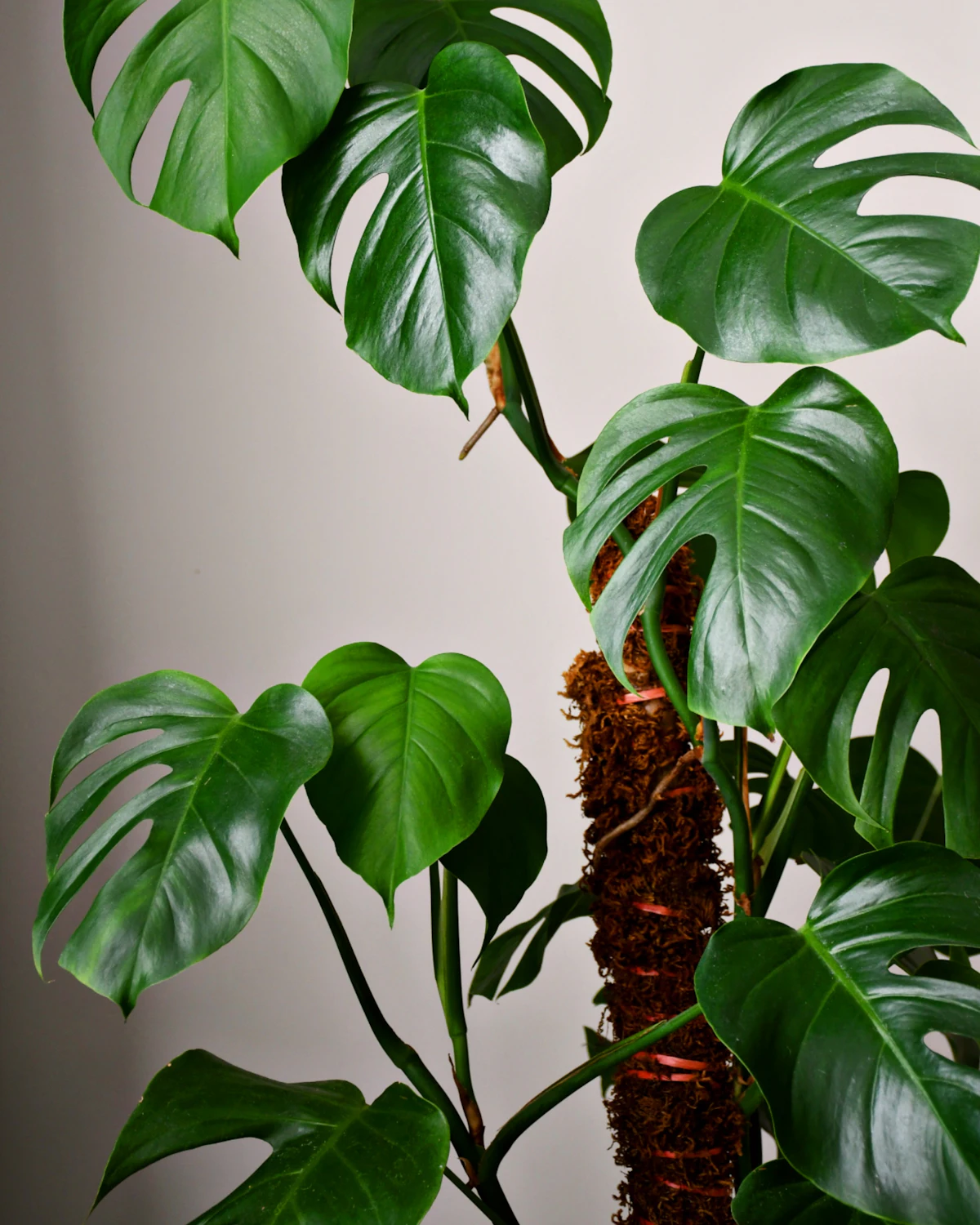
- Pick a support at least as tall as the plant: a moss pole, coir pole, or a wooden plank all work.
- Place it at the back of the stem, the side the aerial roots grow from, ideally when repotting so you do not damage roots.
- Tie the stem loosely to the pole with soft plant ties or velcro, never wire.
- Guide aerial roots toward the pole. On a moss pole, keep the moss slightly damp so the roots grow into it.
Aerial roots (the brown, cord-like roots growing from the stem) are normal. You can tuck them into the pole or the soil, or leave them. You can trim one that is in the way with clean scissors, but do not remove them all: they help the plant anchor and take up moisture.
Common Monstera care mistakes (and fixes)
| Mistake | What you see | Fix |
|---|---|---|
| Watering on a fixed schedule | Yellow lower leaves, wet soil, gnats | Water only when the top 5 cm (2 in) is dry; empty the saucer |
| Too dark a spot | Small leaves, no splits, long bare stems, leaning | Move closer to an east or west window or add a grow light |
| Hot direct afternoon sun | Bleached, pale, or crispy brown patches | Move back from the glass or use a sheer curtain |
| Dense soil or no drainage holes | Soil stays wet, root rot, sour smell | Repot into a chunky mix in a pot with holes |
| Pot far too big | Slow growth, soil never dries, yellowing | Size up only 2–5 cm (1–2 in) at a time |
| No support | Plant sprawls, stems flop or snap | Add a moss pole or plank and tie stems loosely |
| Cold drafts or heater blasts | Dark patches, curling, crispy edges | Keep away from doors, cold glass and vents |
| Ignoring leaf undersides | Fine speckling, webbing, sticky residue | Inspect monthly; treat early (see below) |
Monsteras can get spider mites, thrips, mealybugs and scale, especially in dry, warm winter rooms. Fine pale speckles and thin webbing under the leaves point to spider mites; for everything else, see common houseplant pests. Check any new plant for a couple of weeks before putting it next to your Monstera (how to quarantine new houseplants).
Is Monstera toxic to cats and dogs?
Yes. Monstera deliciosa is listed as toxic to cats and dogs by the ASPCA. Like other aroids, its leaves and stems contain insoluble calcium oxalate crystals that irritate the mouth and can cause drooling, pawing at the mouth, and vomiting if chewed. Keep it out of reach of pets that like to chew plants, and contact your vet if you think a pet has eaten some. Sap can also irritate sensitive skin, so wear gloves when pruning.
Monstera care through the seasons
- Spring: growth restarts. Repot if needed, add a pole, and start feeding again.
- Summer: peak growth. Water more often, feed monthly, and protect it from hot afternoon sun.
- Autumn: slow down watering, stop feeding, and check for pests before heating starts. Our fall houseplant care checklist covers the switch.
- Winter: water sparingly, keep it warm and in the brightest spot you have, and accept slower growth.
Monstera care FAQ
How do you care for a Monstera for beginners?
Put it in bright, indirect light, water only when the top 5 cm (2 in) of soil is dry, use a chunky well-draining mix in a pot with drainage holes, and keep it warm and away from drafts. Add a pole once it starts to lean. Those four habits prevent most problems.
Should I cut off yellow Monstera leaves?
Yes, once a leaf is mostly yellow it will not turn green again, so you can cut it off at the base of its stalk with clean scissors. First fix the cause (usually too much water or too little light), or new leaves will follow. See Monstera leaves turning yellow.
Can a Monstera live in low light?
It can survive in moderate light, but not thrive. In a dim room it grows slowly, leaves stay small and unsplit, and stems stretch. If you only have low light, see our list of low-light plants for apartments for easier options.
Why is my Monstera drooping?
Check the soil first. Dry, light soil means it needs water; it should perk up within a day. Wet soil means overwatering or root problems, so let it dry and check the roots. Drooping right after repotting or moving is usually short-term stress.
How fast does a Monstera grow?
In good light and warmth, a healthy Monstera can put out a new leaf every 4–6 weeks in the growing season and grow 30–60 cm (1–2 ft) a year. Growth slows or stops in winter, which is normal.
Should I mist my Monstera?
Misting raises humidity only for a few minutes, so it does little for the plant. A humidifier, grouping plants, or keeping it away from heat vents helps more. Wiping the leaves clean is more useful than misting. More in should you mist houseplants?
The short version
Good Monstera care copies its forest home: bright, filtered light; water only when the top of the soil is dry; an airy, chunky mix in a pot that drains; steady warmth; and something to climb. Get those right and the big, split leaves follow. When something goes wrong, check light and soil moisture first: they explain most Monstera problems. For more species guides and routines, browse our indoor plant care system.