Quick answer: Calathea brown edges are almost always a moisture problem at the leaf margin. The three usual causes are dry air (humidity below about 40%), minerals in tap water (fluoride, chlorine/chloramine and dissolved salts that collect at the leaf edges), and inconsistent watering (soil swinging from soaked to bone-dry). Brown tissue won’t turn green again, so the fix is to stop new damage: raise humidity to around 50–60%, water with filtered, distilled or rain water, keep the soil evenly moist but never soggy, and flush the pot every month or two. New leaves should come in clean within 4–8 weeks.
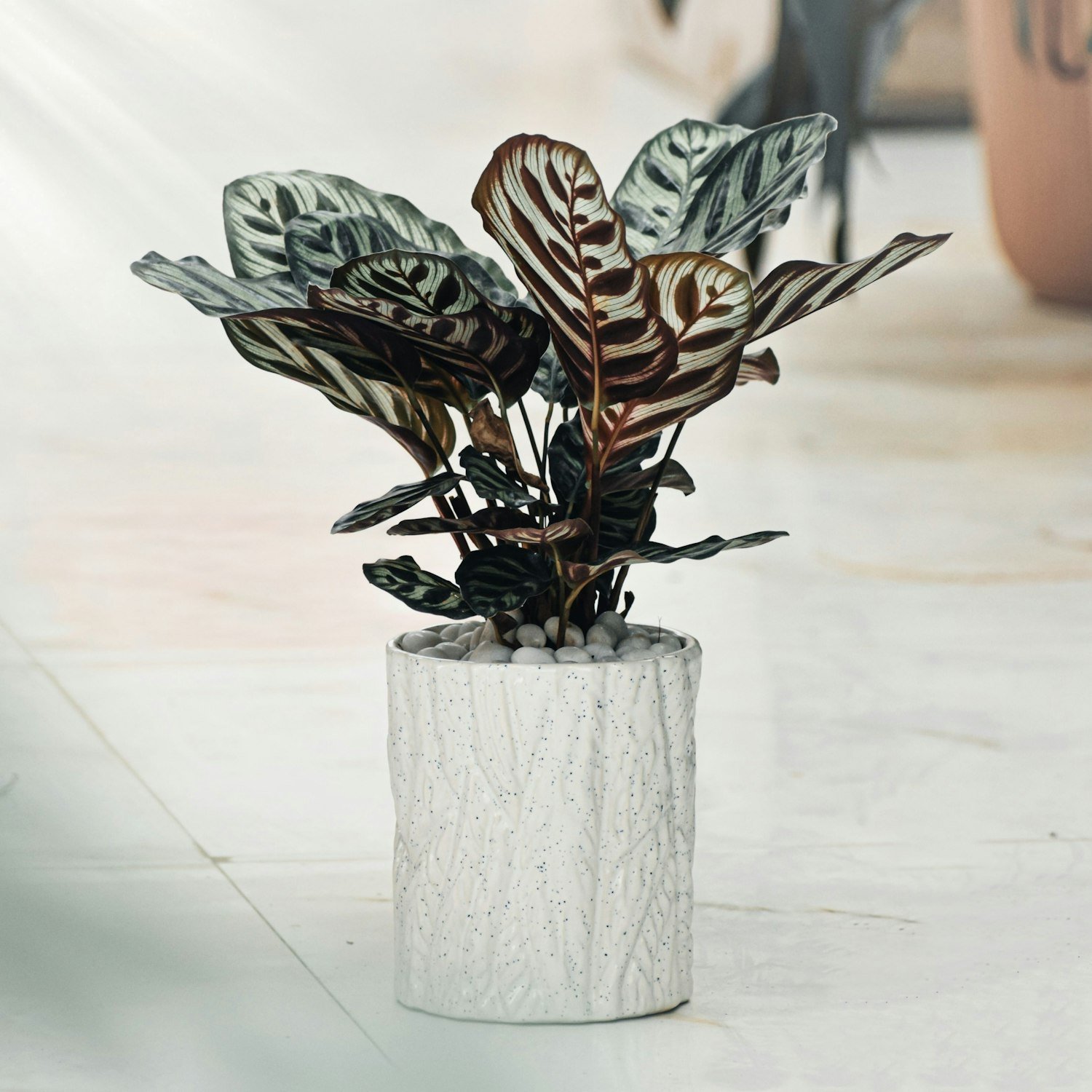
Calatheas (many are now botanically classed as Goeppertia, but shops still sell them as calathea or prayer plants) are famous for two things: stunning leaf patterns and crispy brown edges. The browning is not random. These plants come from humid tropical forest floors where the air is damp, the light is soft and the rain water is low in minerals. A heated apartment, hard tap water and a “water when I remember” routine are the opposite of that. This guide focuses on the brown-edge problem specifically. If browning shows up on many different plants in your home, start with our general guide to brown tips on houseplant leaves.
Why calathea leaves get brown, crispy edges
The leaf edge is the part of a calathea furthest from the veins that supply water. When the plant loses water faster than it can replace it, or when minerals build up as water evaporates, the margin is the first tissue to dry out and die. That is why the damage starts as a thin tan or brown line along the edge (or at the tip) and creeps inward. Use the pattern you see to narrow down the cause.
Cause, sign and fix at a glance
| Cause | What you see | What to do |
|---|---|---|
| Dry air (humidity under ~40%) | Crispy, papery edges on many leaves at once, often worse after the heating comes on; leaves may curl inward | Raise humidity to 50–60% with a humidifier, grouping or a pebble tray; move away from heaters and vents |
| Tap water minerals (fluoride, chlorine/chloramine, salts) | Brown tips and edges with a sharp line, sometimes a yellow halo; slow to appear but keeps getting worse even when humidity is fine | Switch to filtered, distilled or rain water; flush the soil every 1–2 months |
| Inconsistent watering | Browning after the soil dried out completely, sometimes with drooping or tightly rolled leaves | Water when the top 2–3 cm (about 1 inch) is dry; keep the root ball evenly moist, not soggy |
| Fertilizer salt buildup | Brown edges plus a white crust on the soil or pot rim | Flush thoroughly; feed at half strength only in spring and summer |
| Overwatering / root rot | Brown edges with yellowing, soft stems, soil that stays wet for a week or more | Check the roots, improve drainage, let the top layer dry before watering again |
| Too much direct sun or cold drafts | Bleached or scorched patches, brown areas on the side facing the window or door | Bright indirect light only; keep above about 16°C (60°F) and out of drafts |

Humidity: the most common cause of calathea brown edges
Calatheas are happiest at roughly 50–60% relative humidity or higher. Many homes sit at 30–40% for most of the year and drop to 20–30% once central heating or air conditioning runs. At those levels the thin leaves lose water from their edges faster than the roots can replace it, and the margins crisp up. If brown edges appeared a few weeks after the heating came on, dry air is your first suspect. Our guide to protecting houseplants from dry air when the heat turns on covers the seasonal side of this.
How to raise humidity for a calathea (what actually works)
- Measure first. A cheap digital hygrometer next to the plant tells you whether humidity is really the problem. Guessing wastes weeks.
- Use a humidifier. It’s the only method that reliably holds 50–60% in a dry room. Place it near the plant, not pointed directly at the leaves.
- Group plants together. Several plants in one spot create a slightly more humid microclimate.
- Try a pebble tray as a helper. A tray of pebbles and water under the pot adds a little local moisture. Keep the pot base above the water line.
- Move it to a naturally humid room. A bright bathroom or kitchen often works well, as long as the light is bright but indirect.
- Keep it away from heat sources. Radiators, heating vents and the top of a fridge dry leaves fast.
Misting feels helpful but only raises humidity for a few minutes, and wet leaves in a still room can invite leaf spots. We explain why in should you mist houseplants? For a side-by-side comparison of every method, see how to raise humidity for houseplants, and for target ranges by plant type, read indoor humidity for tropical houseplants.
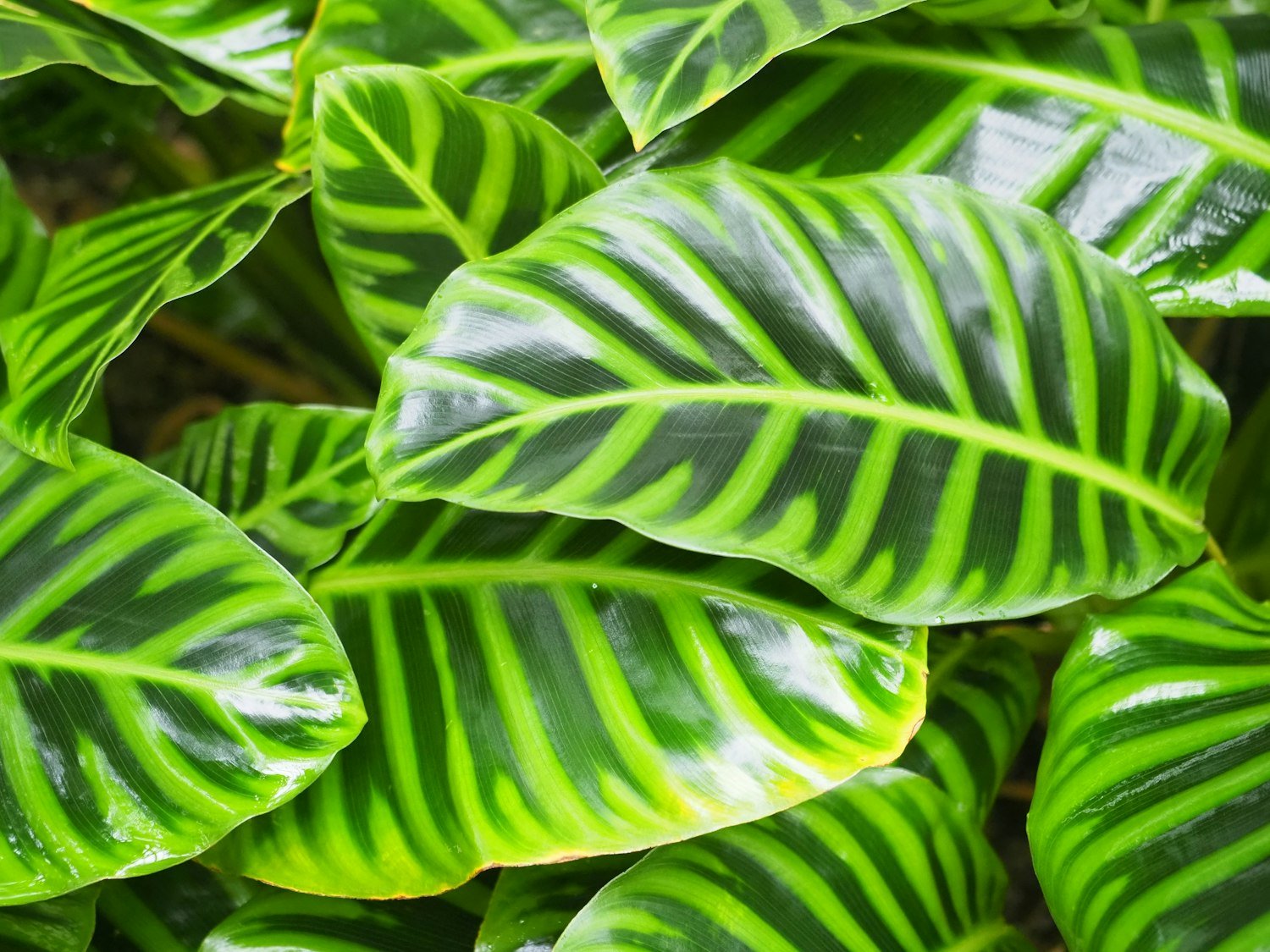
Tap water: why calatheas get crispy edges even in humid rooms
If you already keep humidity in a good range and the edges still brown, look at your water. Calatheas are among the houseplants most sensitive to what’s dissolved in tap water:
- Fluoride is added to many municipal water supplies. Sensitive plants move it to their leaf tips and edges, where it accumulates and kills tissue.
- Chlorine and chloramine are used to disinfect water. Chlorine escapes if water sits out overnight; chloramine, used by many cities, does not leave that easily.
- Dissolved salts and hard-water minerals build up in the soil each time water evaporates, especially in pots that are never watered through to drainage.
Best water for a calathea
- Rain water collected in a clean container is ideal.
- Distilled water or water from a reverse-osmosis filter removes almost all minerals, including fluoride.
- Filtered tap water from a standard jug filter reduces chlorine and some minerals. Check the filter’s specs: many basic carbon filters do not remove fluoride.
- Tap water left out overnight is a last resort. It helps only with chlorine, not fluoride, chloramine or salts.
Whatever water you use, flush the pot every one to two months: water slowly until a good amount runs out of the drainage hole, wait a few minutes, and repeat. This washes out accumulated salts. If you see white crust on the soil surface, scrape off the top layer and replace it with fresh mix.
Watering consistency: the third piece of the puzzle
Calatheas don’t like extremes. Let the root ball dry out completely and the leaf edges brown and the leaves roll up; keep it waterlogged and roots start to rot, which also shows up as brown, yellowing leaves. The goal is soil that feels like a wrung-out sponge.

- Check, don’t schedule. Push a finger into the soil. Water when the top 2–3 cm (about 1 inch) feels dry, not before.
- Water thoroughly. Water until it drains out of the bottom, then empty the saucer after 15 minutes.
- Use a pot with drainage and a light, airy mix (houseplant soil with added perlite or bark).
- Adjust for the season. In winter the plant uses less water, so the soil stays moist longer. Our guide on how often to water houseplants in winter explains how to slow down safely.
- Use room-temperature water. Very cold water can stress the roots of tropical plants.
If the soil has stayed wet for over a week and the plant is declining, check the roots: firm and white is good, brown and mushy means trouble. Our root rot rescue guide walks you through it. For general technique, see our houseplant watering guide.
Other causes worth ruling out
Fertilizer burn
Calatheas are light feeders. Too much fertilizer leaves salts in the soil that burn the leaf edges much like hard water does. Feed at half strength once a month in spring and summer only, and pause in fall and winter. More on timing in when to stop fertilizing houseplants in fall.
Light and temperature
Direct afternoon sun bleaches calathea leaves and scorches the edges. Give bright, indirect light, such as a few feet back from an east or west window, or behind a sheer curtain. See how much light houseplants need. Keep the plant between roughly 18–27°C (65–80°F) and away from cold windows and doors in winter.
Pests
Spider mites love the same warm, dry air that causes crispy edges. If you see fine webbing, tiny speckles or dull, stippled leaves along with the browning, inspect the undersides closely and read our guide to spider mites on houseplants.
How to fix a calathea with brown edges, step by step
- Diagnose with the table above. Check humidity with a hygrometer, look at your water source, and think back on your watering pattern over the last month.
- Fix the main cause first. Usually that’s humidity in winter and water quality the rest of the year. Change one or two things at a time so you can tell what worked.
- Flush the soil with distilled, filtered or rain water to remove built-up minerals.
- Trim the damage if it bothers you. Use clean, sharp scissors and follow the natural shape of the leaf, leaving a very thin line of brown so you don’t cut into healthy tissue (which can brown again). Remove leaves that are more than half brown at the base of the stem.
- Judge progress by new leaves. Old brown edges won’t heal. If new leaves unfurl clean over the next 4–8 weeks, your changes are working.
Calathea brown edges FAQ
Can brown calathea edges turn green again?
No. Brown leaf tissue is dead and can’t recover. You can trim it for looks, but the real measure of success is whether new leaves come in without damage.
Should I cut the brown edges off my calathea?
You can. Trimming is purely cosmetic and doesn’t harm the plant if your scissors are clean. Follow the leaf’s outline and leave a hairline of brown so you don’t create a fresh wound in green tissue.
Is tap water bad for calatheas?
Not always, but calatheas are more sensitive to fluoride, chlorine, chloramine and mineral salts than most houseplants. If you have hard or fluoridated water and the edges keep browning despite good humidity, switching to distilled, rain or properly filtered water often stops new damage.
Does letting tap water sit out overnight help?
Partly. It lets chlorine evaporate, but it doesn’t remove fluoride, chloramine or dissolved salts. It’s better than nothing, but it rarely solves the problem on its own.
What humidity does a calathea need?
Aim for about 50–60%. Calatheas can survive lower, but below around 40% most of them develop crispy edges sooner or later, especially in winter.
Why are my calathea leaves brown and curling?
Brown edges plus curling usually means the plant is losing water faster than it can take it up: dry air, dry soil, or both. Raise humidity and check the soil moisture. For other reasons leaves roll up, see why houseplant leaves curl.
Do prayer plants get brown tips for the same reasons?
Yes. Maranta (the true prayer plant) and calathea are close relatives with the same needs: steady humidity, gentle water and evenly moist soil. The same fixes apply.