Low-light apartments can still support a strong plant collection, but “low light” does not mean no light. The right choice depends on the amount of natural light, how close the plant sits to a window, and how quickly its potting mix dries.
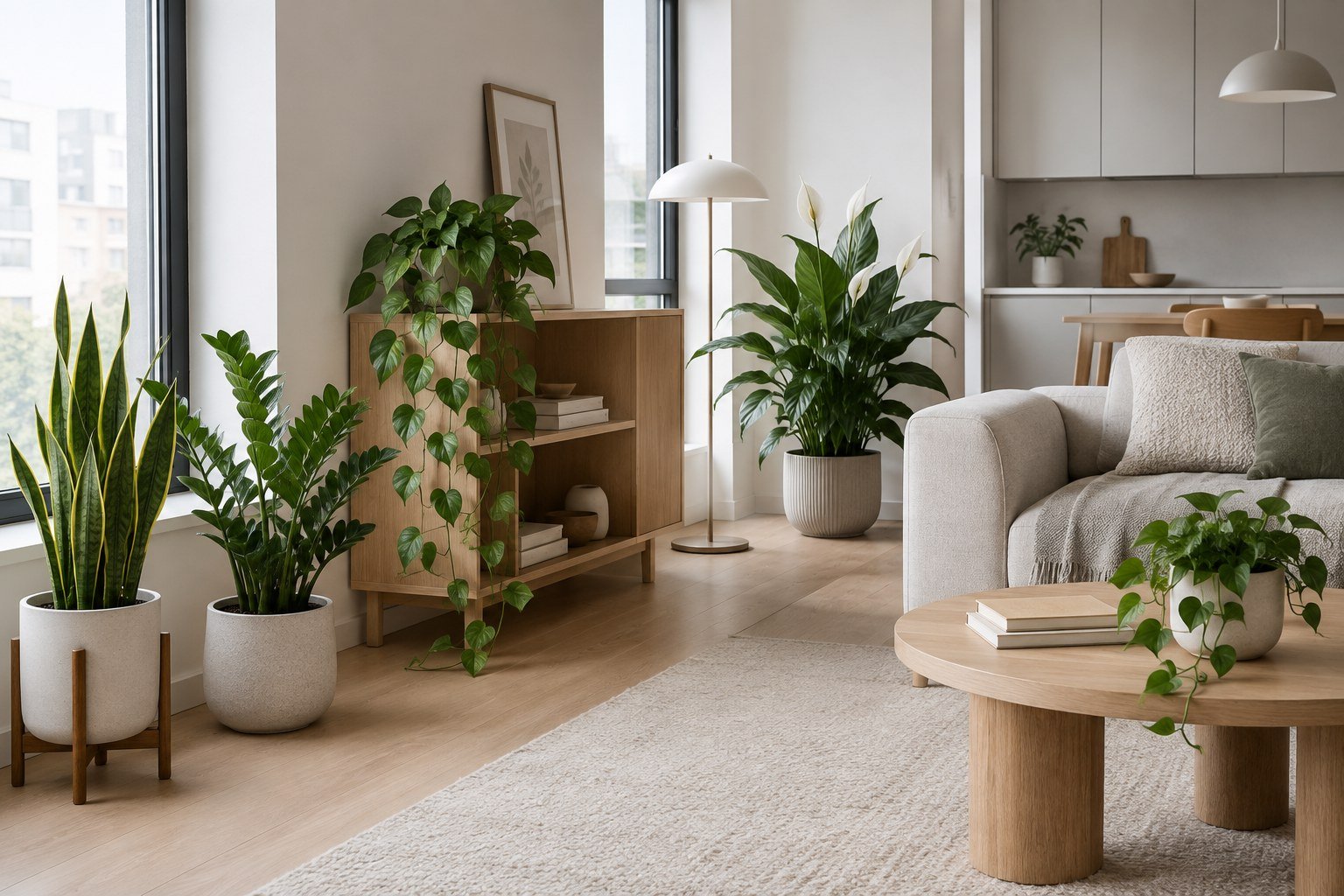
What counts as low light?
Low light usually describes spaces that receive limited direct sunlight or are several feet away from a bright window. A room that is completely dark for most of the day is different: plants still need usable light for photosynthesis, so a grow light may be necessary.
Best low-light plants for minimalist apartments
1. Snake Plant
Snake plants tolerate lower light and generally prefer to dry between waterings. Their upright form makes them particularly useful when you want visual height without taking up much floor space.
2. ZZ Plant
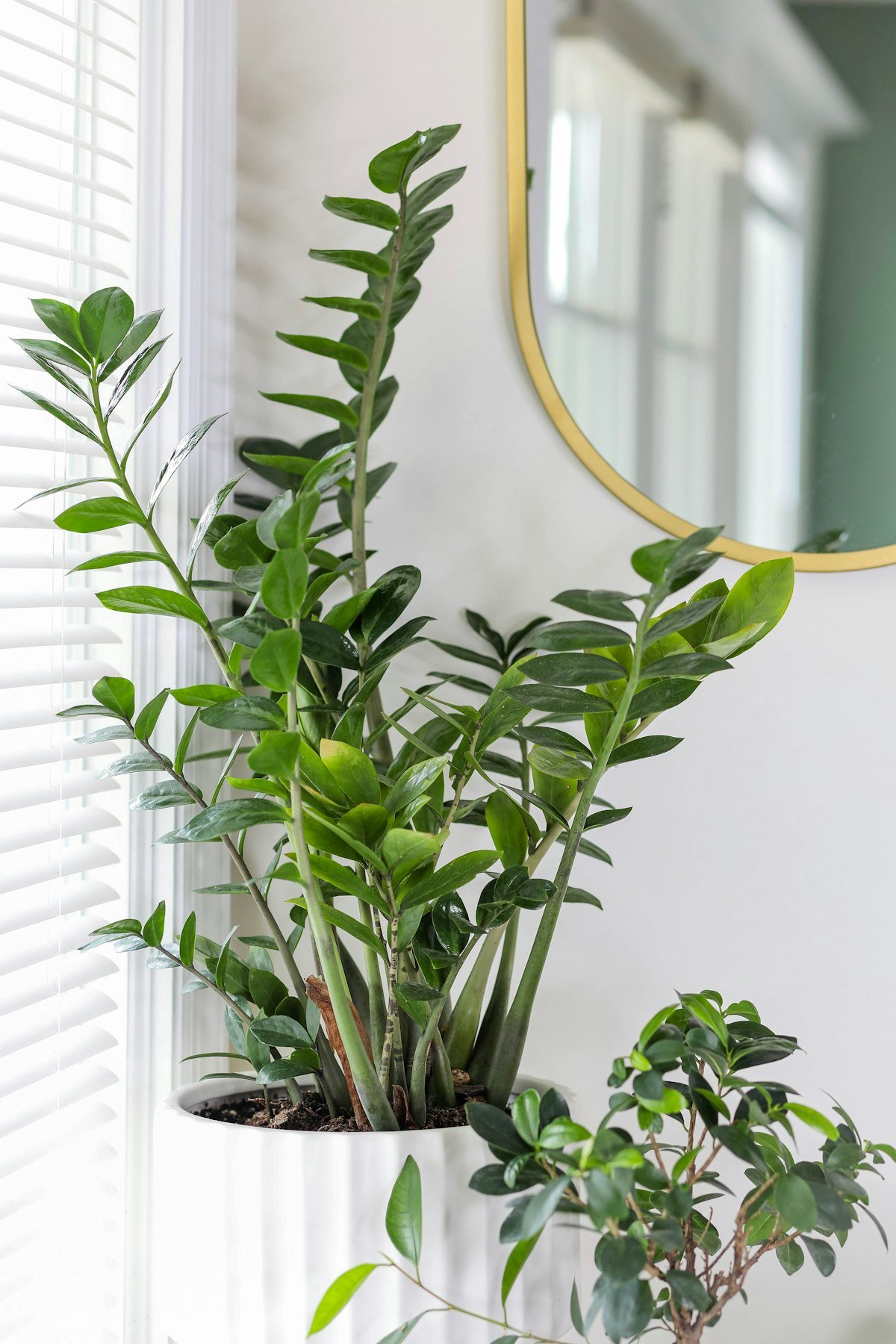
ZZ plants are another practical option for apartments with limited natural light. Their thick stems and glossy foliage give them a structured appearance, while their slow growth means they usually do not require constant pruning or repositioning.
3. Pothos
Pothos can adapt to lower-light conditions and works well on shelves, cabinets, or other elevated surfaces. Growth may become less vigorous and variegated varieties can show less contrast when light is very limited.
4. Heartleaf Philodendron
Heartleaf philodendron is a useful trailing plant for compact rooms. Give it bright indirect light when possible, but it can tolerate lower light than many sun-loving houseplants.
5. Cast Iron Plant
Cast iron plants are known for tolerating relatively low light and less frequent attention. Their broad leaves create a softer visual contrast against minimalist furniture and hard architectural lines.
How to choose between them
| Plant | Best for | Growth habit | Watering approach |
|---|---|---|---|
| Snake Plant | Very limited light | Upright | Let mix dry substantially |
| ZZ Plant | Low-maintenance spaces | Upright and compact | Let mix dry substantially |
| Pothos | Shelves and hanging spots | Trailing | Water when the mix has dried appropriately |
| Heartleaf Philodendron | Small rooms | Trailing | Check the mix before watering |
| Cast Iron Plant | Quiet, low-light corners | Clumping | Check moisture before watering |
Placement matters more than a plant label
Before choosing a plant, observe the room. Note which direction the windows face, whether sunlight reaches the floor, and how far the intended location is from the glass. A plant that handles low light near a window may struggle in a much darker hallway.
- Keep plants close enough to a useful light source for their needs.
- Rotate plants periodically if one side receives much more light.
- Use a grow light when a room has insufficient usable light.
- Do not increase watering simply because a plant is growing slowly.
Low light changes watering needs
Lower light often means slower growth and slower drying. That can increase the risk of overwatering. Instead of following a fixed calendar, check the potting mix and consider the plant species, pot size, temperature, humidity, and drainage.
For a broader watering framework, see our indoor plant watering schedule guide. For general care, continue with our indoor plant care system.
Low-light plants and minimalist design
Minimalist interiors benefit from deliberate placement. Use one tall plant to create vertical balance, a trailing plant to soften a shelf, or a compact plant to fill an otherwise empty corner. Avoid filling every available surface: a small number of healthy plants usually creates a cleaner composition.
Frequently asked questions
Can plants survive in a room with no windows?
Not indefinitely without a usable light source. If natural light is absent, a suitable grow light can provide the energy plants need.
Which low-light plant is easiest for beginners?
Snake plants and ZZ plants are commonly chosen for their tolerance of lower light and their relatively modest watering needs. They still need appropriate drainage and observation.
Should I water low-light plants less often?
Often, yes, because lower light can slow growth and drying. But the correct frequency varies by species, soil, pot, temperature, and humidity. Check the growing medium rather than relying on a universal schedule.
Final takeaway
A successful low-light apartment garden starts with realistic expectations: choose plants that match the available light, place them deliberately, and adjust watering to how quickly the soil dries. Snake plants, ZZ plants, pothos, heartleaf philodendrons, and cast iron plants offer several different shapes and habits without requiring a bright, sun-filled home.
Pingback: Indoor Plants for Home: How to Choose & Care for Them
Pingback: Snake Plant Care: Complete Beginner's Guide