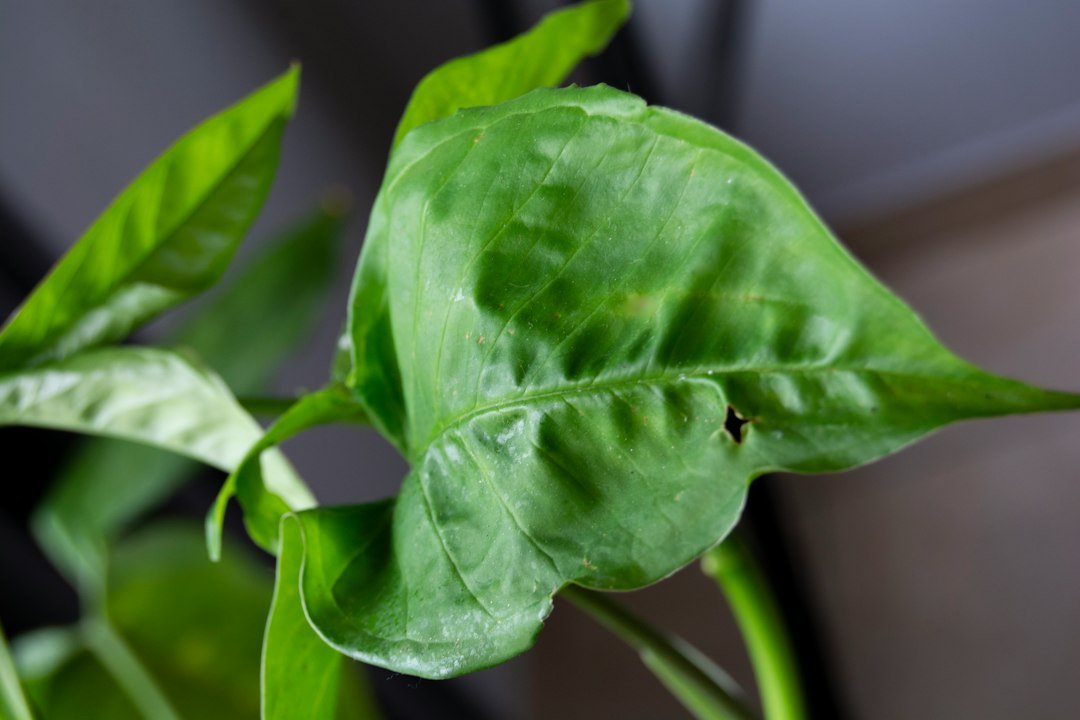
Houseplant pests are easier to manage when you identify the problem before choosing a treatment. Tiny flies around the soil, fine webbing, sticky residue, cottony clusters, and distorted new growth can point to very different pests. The first step is observation: where are you seeing the insect or damage, and what pattern is the plant showing?
Start with a plant inspection
Inspect both sides of the leaves, stems, leaf joints, the growing medium, and the area around the pot. Use a bright light if necessary. Check new plants before placing them beside an established collection, and inspect plants that have spent time outdoors before bringing them back inside.
| Sign | Possible pest | Where to look |
|---|---|---|
| Small flies around soil | Fungus gnats | Potting mix and saucer |
| Fine webbing and stippled leaves | Spider mites | Leaf undersides and stems |
| White cottony clusters | Mealybugs | Leaf joints and stems |
| Sticky residue | Aphids, scale, mealybugs or other sap-feeders | Leaves and surfaces below the plant |
| Silvery scars or distorted new growth | Thrips | Young leaves and flowers |
Fungus gnats
Fungus gnats are small flying insects commonly associated with moist organic potting media. Adults are mostly a nuisance, while larvae in the soil can affect roots when populations are high. Persistent wet soil and standing water can encourage the problem.
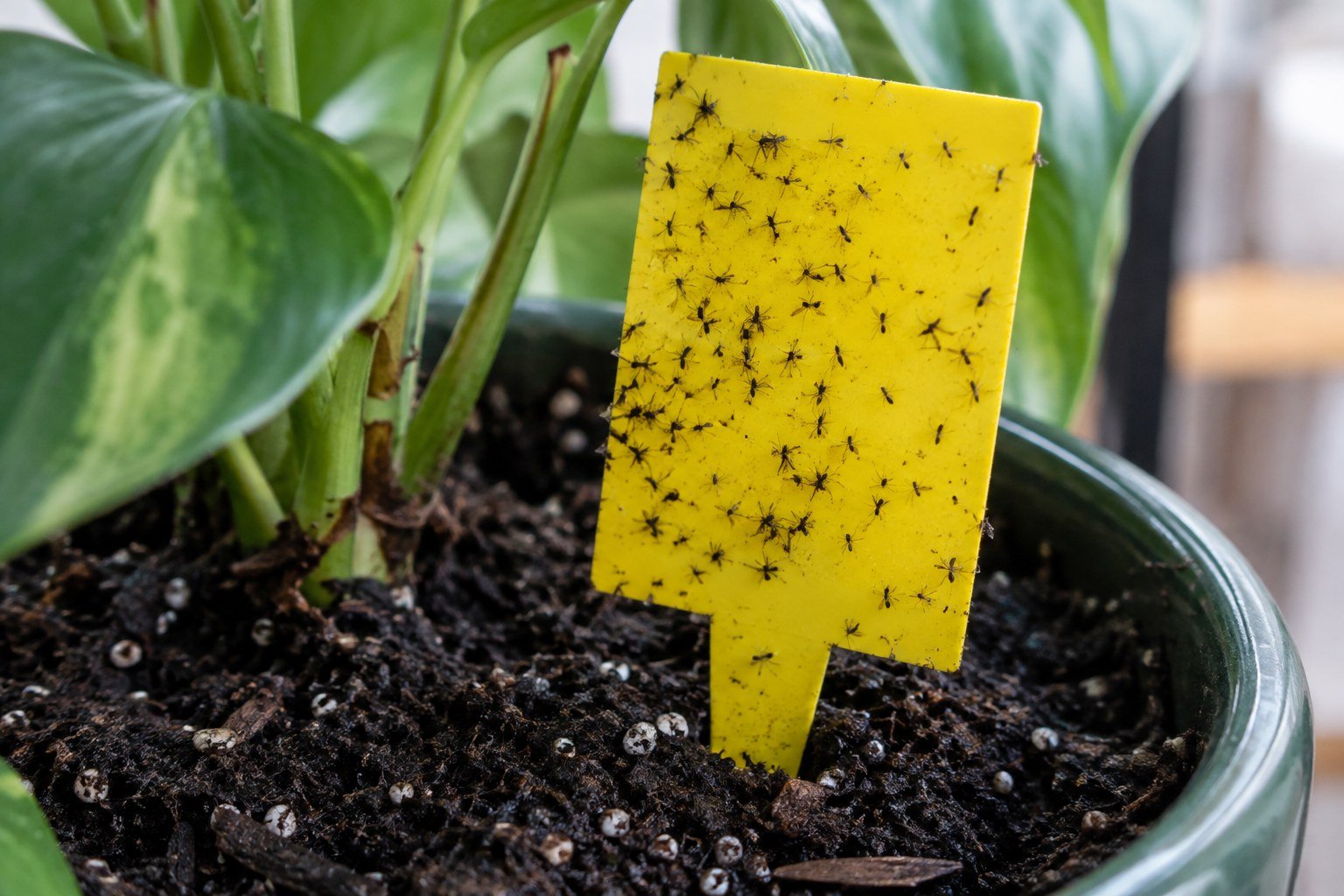
Start with cultural control: allow the growing medium to dry appropriately for the plant, remove standing water, improve sanitation, and inspect new plants. Yellow sticky traps can help monitor and reduce adult populations, but they do not address every life stage.
Spider mites
Spider mites are tiny and often easier to detect from their damage than from the insects themselves. Look for fine webbing, stippling, or a dusty-looking decline on leaf surfaces, especially underneath leaves.
Isolate an affected plant when practical and inspect nearby plants. Rinsing foliage can remove some pests, while repeated treatment may be necessary depending on the infestation and the product label; our guide on how to get rid of spider mites walks through a full repeat schedule. Follow the label exactly for any pesticide or soap product.
Mealybugs
Mealybugs often appear as small white, cottony clusters around stems, leaf joints, or other protected areas. They feed on plant sap and can cause yellowing, stunted growth, and decline.
For a small infestation, physically removing visible insects and isolating the plant can be useful first steps. Reinspect frequently because hidden individuals can remain in crevices.
Thrips and other pests
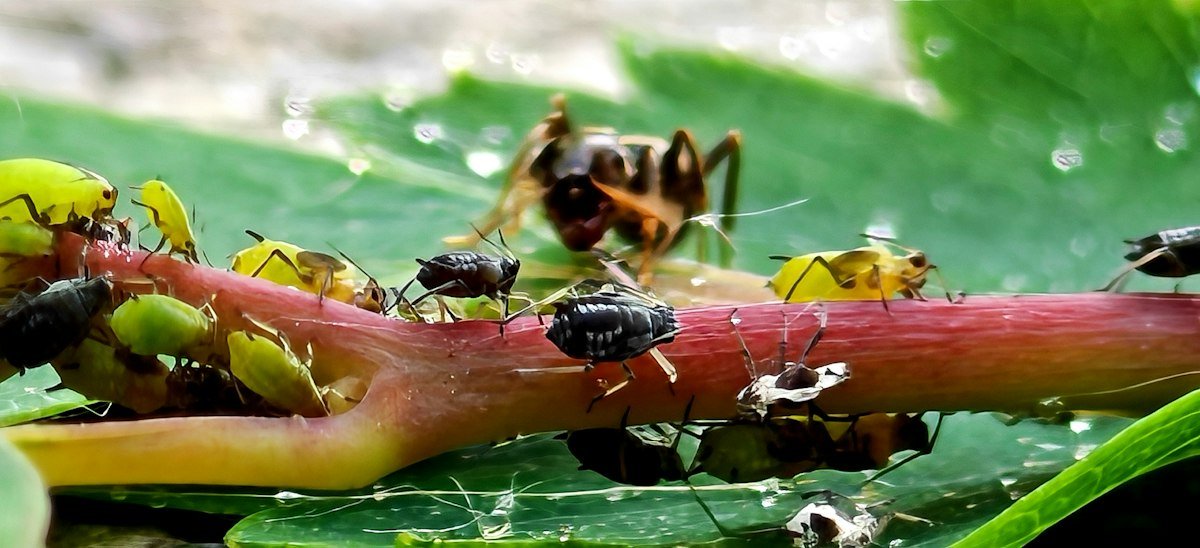
Thrips can be difficult to see and may be noticed through silvery scars, distorted growth, or small dark insects. Aphids tend to cluster on soft new growth. Scale insects can look like small fixed bumps on stems or leaves. Because treatment varies by pest, identification should come before selecting a control method.
A simple pest-response routine
- Isolate: move the affected plant away from nearby plants when practical.
- Identify: inspect leaves, stems, soil, and damage patterns.
- Clean: remove dead material and visible pests when appropriate.
- Choose a control: use a method suited to the pest and plant.
- Repeat inspections: one treatment is not always enough because pests can have multiple life stages.
- Monitor nearby plants: check the collection rather than treating only the visible symptom.
Prevention matters
Quarantine new plants when practical, inspect them carefully, avoid chronic overwatering, keep growing areas clean, and provide suitable light and watering conditions. Healthy growing conditions do not make a plant immune to pests, but they reduce avoidable stress and make changes easier to notice.
Watering is particularly relevant to fungus gnats. If moisture management is a recurring problem, review our houseplant watering guide and our flexible watering schedule guide.
When to discard a plant
A heavily infested plant can sometimes be difficult to manage without risking nearby plants. If the infestation is severe, persistent, or the plant is already declining badly, disposal may be a practical option. The decision depends on the plant’s value, the pest, the severity of the infestation, and the risk to the rest of the collection.
Frequently asked questions
Are houseplant pests caused by dirty homes?
No. Pests can arrive on newly purchased plants, enter from outdoors, or persist in potting media. Clean conditions and good inspection reduce risk but do not make a home pest-proof.
Should I spray every plant as a precaution?
Routine pesticide treatment without evidence of a pest is usually unnecessary. Regular inspection and appropriate growing conditions are a better first-line habit.
Can I use one treatment for every pest?
No. Different pests occupy different parts of the plant and have different life cycles. Accurate identification improves the chance that a control method will work.
Final takeaway
Do not treat a mystery bug blindly. Inspect the location of the damage, identify the likely pest, isolate when practical, choose an appropriate control, and keep monitoring. For broader plant troubleshooting, combine this guide with our yellow-leaf diagnosis guide and our indoor plant care system.
Pingback: Pothos Care Guide: How to Grow a Healthy Indoor Pothos
Pingback: Snake Plant Care: Complete Beginner's Guide