How to get rid of spider mites on houseplants starts with confirmation, not panic: fine pale stippling on leaves, tiny moving dots on the undersides, and—when the colony grows—light webbing in leaf joints. Wipe, rinse, isolate, then repeat a gentle spray on a schedule. Healthy new growth matters more than chasing every scarred leaf overnight.
Spider mites are tiny arachnids (not insects) that thrive in warm, dry indoor air. They pierce leaf cells and leave a dusty, speckled look that people often mistake for dust, sun stress, or random yellowing. This guide is a calm diagnostic and treatment path—no product shop pitch. For the wider pest map, use the common houseplant pests guide. For yellowing that may or may not be mites, see why houseplant leaves turn yellow. Indoor Plants, Made Simple.
Stippling first, webbing later—catch the pattern early and treatment stays simple.
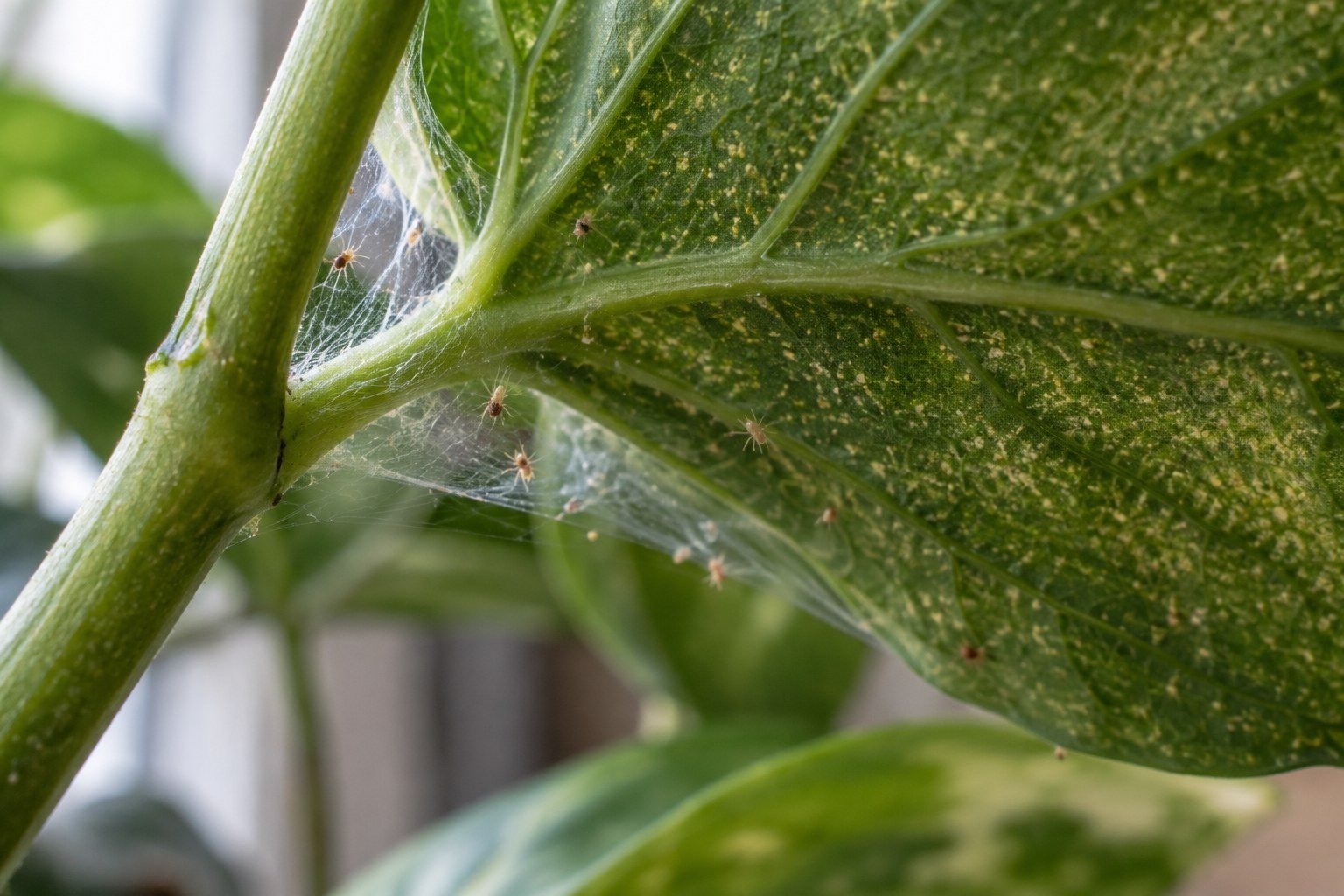
Early Signs of Spider Mites on Houseplants
Direct answer: Look for fine pale or bronze stippling (tiny pinprick dots), a dusty dull cast on leaves, and activity on the undersides. Fine silk webbing in leaf axils or along stems usually means the infestation has already built up. Shake a leaf over white paper; moving pepper-like specks that crawl are a strong mite clue.
Early spider mite damage is easy to miss because individual mites are nearly microscopic. What you notice first is the leaf surface:
- Fine speckled pale dots (stippling) that do not wipe off like dust
- Leaves that look slightly faded, dusty, or bronze even after cleaning
- Yellowing that starts as scattered dots rather than one soft wet patch
- Tiny dots on leaf undersides that may move if you watch closely in bright light
- Later: delicate webbing between leaves, petioles, or stem tips
Mites favor warm rooms with low humidity—think heated apartments, sunny windowsills, and plants crowded with little airflow. Dry air alone does not create mites, but it helps colonies explode once a few arrive on a new plant, a cutting, or even clothing and tools.
Diagnostic answer block (citable): When you ask how to get rid of spider mites on houseplants, start by confirming you are looking at mites—not dust, fertilizer residue, or thrips scarring. Flip leaves and inspect undersides with good light or a simple magnifier. Fine stippling plus moving specks on white paper is enough to act. Isolate the plant the same day, wipe both leaf surfaces with a soft damp cloth, rinse the canopy if the plant tolerates it, then follow with insecticidal soap, horticultural oil, or a neem-based spray used as labeled—repeating every few days until you stop seeing live mites. Do not jump straight to harsh pesticides indoors; mechanical removal and repeated gentle contact sprays clear most early cases. Scarred stippled tissue may not fully green again; watch for clean new leaves instead.
How to Confirm Spider Mites (Not Dust or Thrips)
Direct answer: Confirm on the leaf underside and with a paper test. Dust wipes away; mite stippling stays in the leaf tissue. Thrips often leave silvery streaks and tiny black varnish-like spots (frass); spider mites leave finer stippling and, later, silk webbing.
Use this quick confirmation checklist:
- Wipe a dull leaf with a damp cloth. If the “dust” pattern remains as pale dots in the tissue, think pests or scarring—not surface dirt.
- Hold a sheet of white paper under a leaf and tap firmly. Watch for tiny moving specks (mites). Static dust does not crawl.
- Check undersides of older and mid-canopy leaves, not only the newest tips.
- Look for webbing only as a late clue—many early infestations have little or no visible web.
- Scan neighboring plants, especially touching leaves on the same shelf.
| Clue | Spider mites | Thrips | Dust / residue |
|---|---|---|---|
| Leaf look | Fine stippling; dull or bronze cast | Silvery streaks; distorted new growth | Surface film that wipes off |
| Where to look | Leaf undersides; leaf joints | New growth, flowers, leaf folds | Upper leaf surface mostly |
| Webbing | Fine silk when colony is larger | No true mite webbing | None |
| Paper tap test | Tiny moving pepper-like dots | Slender insects may fall; less “speck swarm” | No movement |
| Common mix-up | Dry air + yellow speckles | Sun scorch streaks | Hard water spots |
If yellowing is soft, limp, and tied to a heavy wet pot, prioritize watering and roots first—see houseplant root rot signs and rescue and the houseplant watering guide. Mites can still appear on a stressed plant, but wet-root collapse and mite stippling are different stories. On pothos, stippling mixed with yellow patches can show up in pest rows of the leaf-position map in why is my pothos turning yellow.
Treatment Steps: Wipe, Rinse, Isolate, Repeat
Direct answer: Isolate the plant, physically remove as many mites as you can, then apply a labeled contact spray (insecticidal soap, horticultural oil, or neem oil product) several times over 1–2 weeks. One wipe is rarely enough because eggs and missed undersides restart the cycle.
Step 1 — Isolate the same day
Move the plant away from the shelf group. Mites walk along touching leaves and hitchhike on tools. Isolation is not drama; it is how you keep one plant from becoming five. Quarantine new purchases for a week or two when you can—mites love hitching a ride from nurseries.
Step 2 — Mechanical wipe and rinse
Support each leaf and wipe both surfaces with a soft cloth dampened with lukewarm water. For sturdy plants (many pothos, monsteras, rubber plants), a gentle lukewarm shower or sink rinse helps knock mites off. Avoid blasting delicate or fuzzy leaves; wipe those instead. Remove heavily webbed, collapsing leaves that no longer photosynthesize well—clean cuts reduce hiding spots.
Dispose of wiped cloths or rinse them hot; do not casually drag the same cloth across healthy plants afterward.
Step 3 — Choose a gentle contact spray and cover undersides
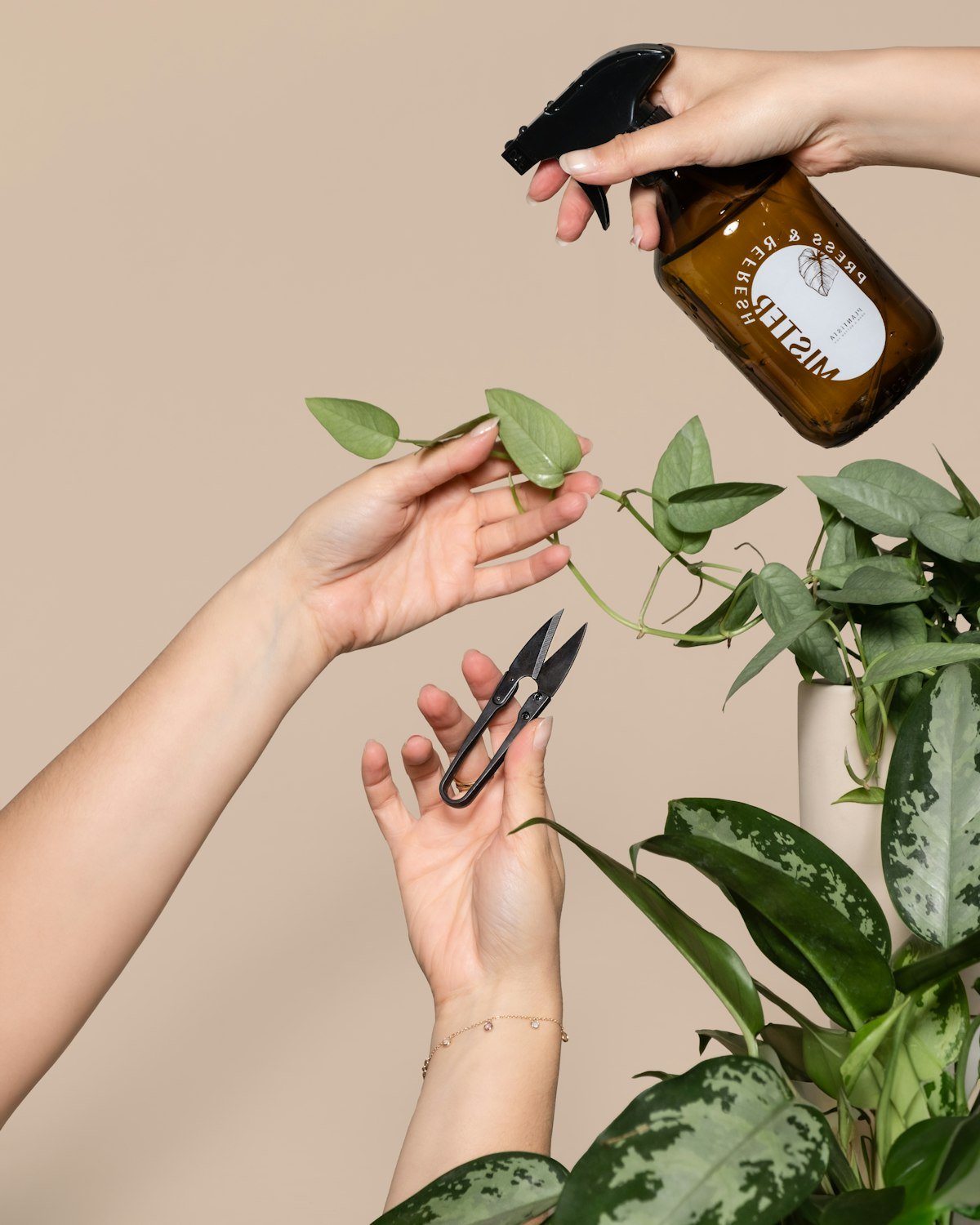
After the plant drains and foliage is dry enough for your product label, spray thoroughly—especially undersides and leaf joints. Common indoor options:
- Insecticidal soap — contact killer; must wet the mites. Follow the label; do not apply in harsh hot sun on soft leaves.
- Horticultural oil (lightweight / “summer” style oils labeled for houseplants) — smothers mites on contact; coat thoroughly, avoid stressed wilted plants.
- Neem oil products labeled for mites — useful as part of a repeat program; mix and apply as directed, and test a small leaf first on sensitive species.
These are tools, not magic. Coverage and repetition matter more than brand names. Skip homemade “mystery mixes” with dish soap ratios you cannot verify—leaf burn is a real risk. If a plant is severely wilted from drought or heat, water and cool it before oil or soap sprays.
Step 4 — Repeat on a schedule
Eggs hatch over several days. Plan applications about every 3–5 days (or as your product label states) for at least two to three cycles, then re-check with the paper test. Stop when you no longer find live mites on taps and new leaves emerge clean. Keep wiping between sprays if you still see webbing.
- Day 0: isolate, wipe/rinse, first thorough spray
- Day 3–5: wipe undersides again, second spray
- Day 6–10: third spray; re-check neighbors
- Following week: monitor; spot-treat only if live mites return
Step 5 — Improve the room conditions while you treat
Mites multiply faster in hot, dry, still air. You do not need a rainforest—just modest improvements:
- Increase humidity gently if your home is very dry (grouping plants, a room humidifier, or a pebble tray that does not keep the pot sitting in water)
- Add light airflow from a gentle fan—not a cold draft that stresses tropicals
- Avoid stacking drought stress on top of mites; water based on soil feel, not fear
- Keep leaves reasonably dust-free so you can spot stippling early next time
When the Infestation Is Too Far Gone
Direct answer: If the plant is mostly stippled bronze, heavily webbed, dropping leaves fast, and you still see clouds of mites after two solid treatment cycles, disposal can be the calmer choice—especially for a cheap, easily replaced specimen sitting next to a valued collection.
Signs the battle may not be worth the shelf risk:
- Dense webbing covering most growing tips
- Little or no green tissue left on key leaves
- Live mites still abundant after thorough wipe + repeated labeled sprays
- High-value neighbors within splash or touch distance you cannot keep isolated
Bag the plant (do not compost indoors), wash the pot and saucer with hot soapy water, and wipe the shelf. Take cuttings only from clearly clean tissue if you must save genetics—and quarantine those cuttings separately.
Prevention So Spider Mites Do Not Rebound
Direct answer: Quarantine new plants, inspect undersides monthly, keep dust down, avoid chronic drought on mite-prone species, and act at the first stippling—not after full webbing.
- Quarantine new plants 1–2 weeks away from the main shelf
- Inspect leaf undersides when you water
- Do not let mite-prone plants (many calatheas, ivies, palms, scheffleras, figs) sit bone-dry in hot sun for long stretches
- Clean tools and hands between a known infested plant and the rest of the collection
- Give plants a little breathing room; touching canopies spread mites fast
Prevention is quieter than treatment. A two-minute underside check beats a two-week spray schedule.
Quick Answers: Spider Mites on Houseplants
Can yellow leaves mean spider mites? Yes—when yellowing arrives as fine stippling or a dull bronze cast, especially with underside activity. Soft wet yellowing with a heavy pot is a different problem (watering/roots).
Do I need a strong pesticide indoors? Usually no for early cases. Isolation, wiping, rinsing, and repeated soap/oil/neem products used as labeled clear most household infestations.
Will stippled leaves turn green again? Often not fully. Judge success by fewer live mites and healthier new growth.
Are spider mites the same as thrips? No. Thrips are insects with different scarring and habits; mites are arachnids with stippling and possible silk webbing. Mis-ID wastes time—use the comparison table above.
Can mites come back after one spray? Yes. Eggs and missed undersides restart colonies. Plan repeats and keep checking neighbors.
Calm Next Steps
Confirm with stippling + underside check + paper tap. Isolate. Wipe and rinse. Spray thoroughly and repeat. Improve dry-room conditions without drowning the roots. For overlapping pest ID, return to common houseplant pests; for leaf-color confusion, use yellow leaves diagnosis. Indoor Plants, Made Simple—spot early, treat steadily, watch the new leaves.