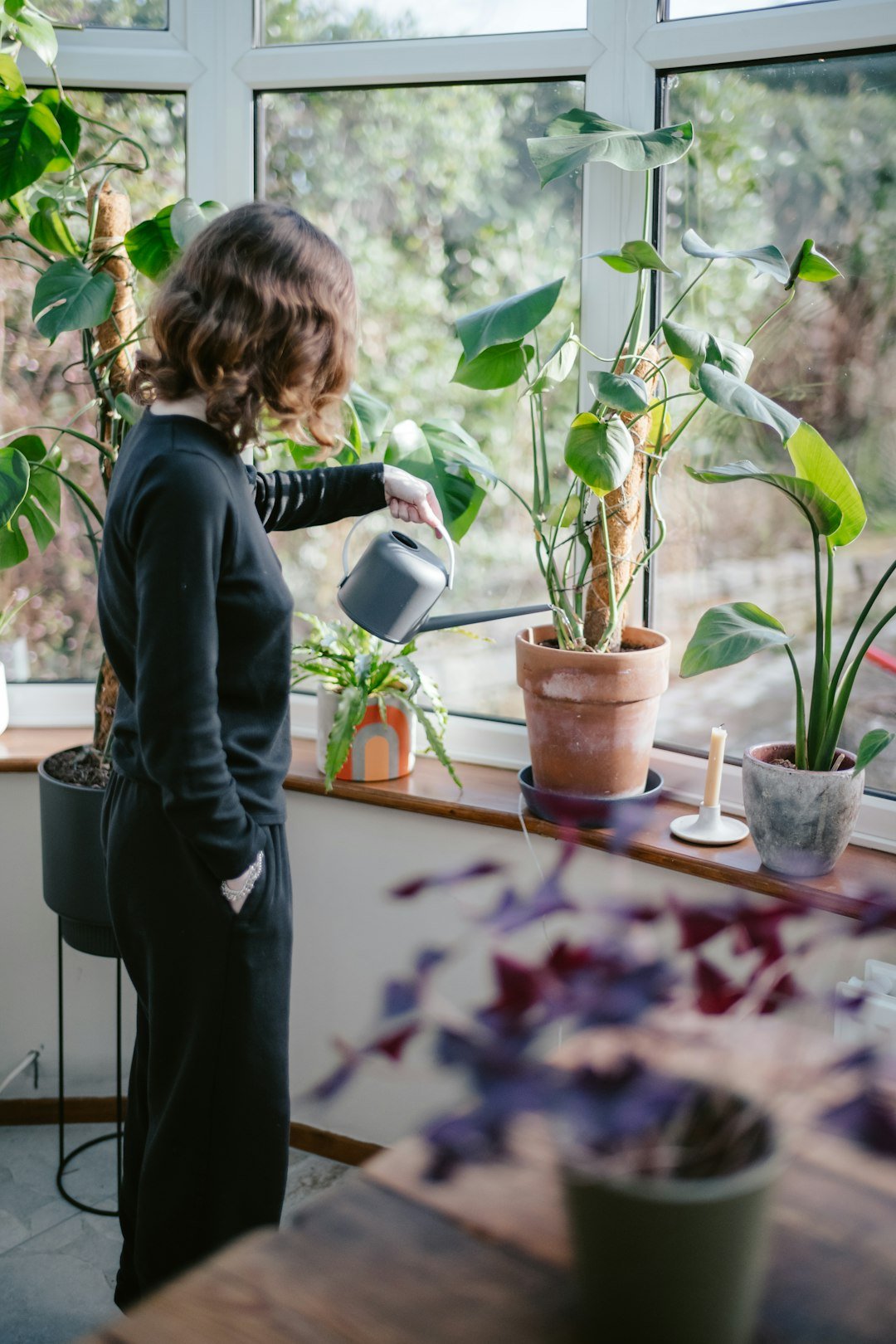
Watering houseplants well is less about following a calendar and more about reading the plant, its potting mix, and its environment. The same plant can need different amounts of water in summer and winter, or in a bright room versus a dim one.
The basic rule: check before you water
Before adding water, check the growing medium at the depth where the roots are active. Feel the mix with a clean finger or use a moisture meter as a secondary tool. If the mix is still appropriately moist for that species, wait. If it has dried to the level that plant prefers, water thoroughly.
Why fixed watering schedules fail
A schedule such as “every Sunday” sounds simple, but indoor conditions change constantly. Light intensity, temperature, humidity, pot size, soil composition, plant size, and season all affect how quickly moisture is lost.
- More light: often means faster growth and drying.
- Cooler or darker conditions: can slow drying.
- Terracotta: generally loses moisture faster than plastic.
- Large containers: can stay wet longer than expected.
- Dense soil: can retain water and reduce root aeration.
How to water correctly
- Check the potting mix and confirm that watering is appropriate for the plant.
- Apply water slowly and evenly across the surface.
- Continue until some water drains from the bottom of the container.
- Let the pot drain completely and do not leave it sitting in standing water.
- Return the plant to its normal location and check again when the medium has dried appropriately.
Match watering to the plant
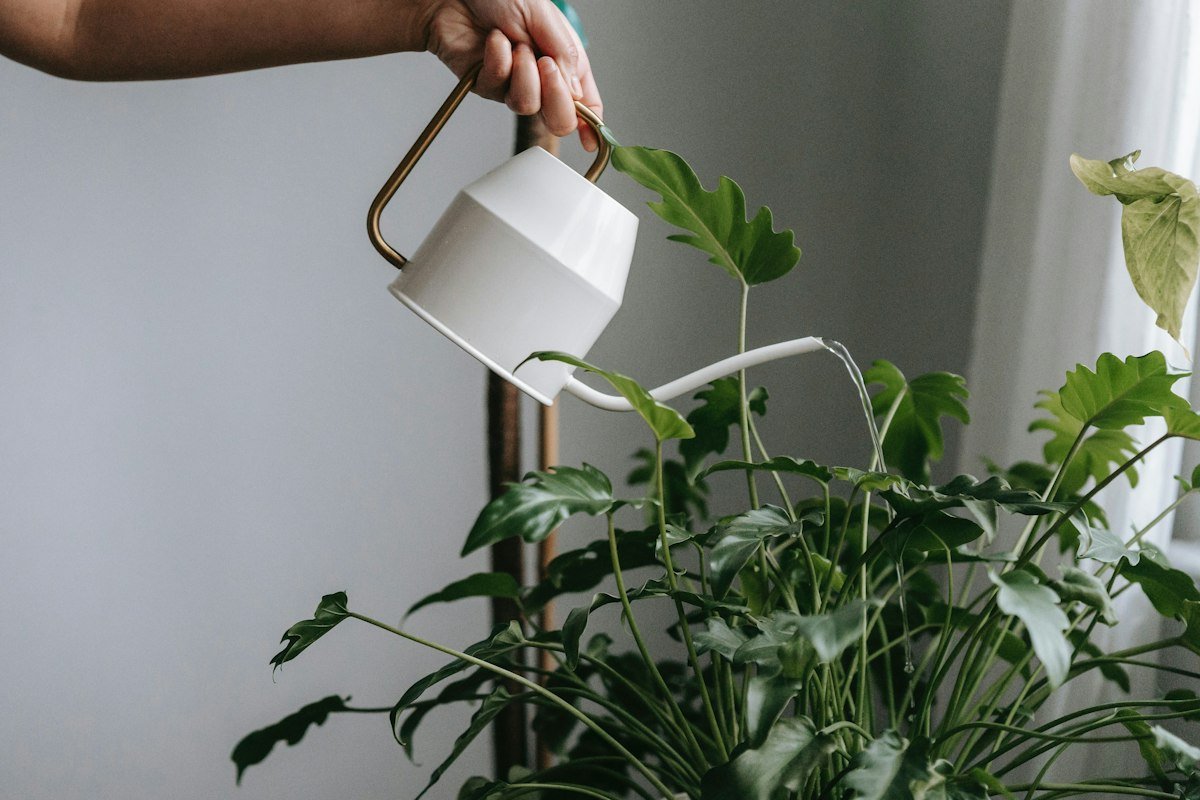
| Plant type | General approach | Common risk |
|---|---|---|
| Snake plant | Allow the mix to dry substantially between waterings | Overwatering |
| ZZ plant | Let the mix dry well before watering again | Overwatering |
| Tropical foliage plants | Water when the upper portion of the mix has dried appropriately | Inconsistent moisture or poor drainage |
| Succulents | Use very well-draining soil and allow substantial drying | Persistent wet soil |
Signs of overwatering and underwatering
Symptoms overlap, so do not diagnose watering problems from one leaf alone. Check the soil, roots when appropriate, pot weight, and recent watering history together.
- Possible overwatering: persistently wet soil, yellowing leaves, poor growth, unpleasant soil odor, or soft roots.
- Possible underwatering: very dry mix, a lightweight pot, wilting, curling, or crispy leaf edges.
- Possible drainage problem: water remains in the container for an unusually long time despite infrequent watering.
Moisture meters: useful, but not infallible
A moisture meter can help beginners compare moisture levels deeper in a pot, especially when the surface looks dry. Treat the reading as one piece of evidence rather than an absolute instruction. Probe the root zone and combine the reading with the plant’s species and growing conditions.
Seasonal adjustments
Indoor plants often use less water during periods of lower light and cooler temperatures. During brighter, warmer periods, they may dry more quickly. The right adjustment is to check the medium more frequently or less frequently as conditions change, rather than automatically changing to a fixed number of days.
A simple watering checklist
- Know the plant’s general moisture preference.
- Check the growing medium before watering.
- Confirm that the container has adequate drainage.
- Water thoroughly when the plant needs it.
- Allow excess water to drain away.
- Recheck conditions rather than following a rigid calendar.
If you want a room-by-room framework, continue with our indoor plant watering schedule guide. For the broader system covering light, placement, pests, drainage, and seasonal changes, see our indoor plant care guide.
Frequently asked questions
How often should I water houseplants?
There is no universal interval. Check the growing medium and consider the plant, pot, soil, light, temperature, and season.
Should I water until water comes out of the drainage hole?
For many potted houseplants, thorough watering until some water drains from the bottom helps wet the root zone evenly. Allow the container to drain afterward and empty standing water.
Is bottom watering better?
Bottom watering can be useful for some plants and potting mixes, but it is not inherently better for every plant. The important goals are appropriate moisture and good drainage.
Final takeaway
Good watering is an observation habit. Check the medium, understand the plant, account for the room, water thoroughly when needed, and let excess water drain. Once you stop treating a calendar as the authority, houseplant care becomes much easier to adapt.
Pingback: Pothos Care Guide: How to Grow a Healthy Indoor Pothos
Pingback: Indoor Plant Care: A Practical System for Healthy Plants