Quick answer: ZZ plant care comes down to three habits: give it bright, indirect light (it tolerates low light but grows slowly there), water only when the soil is completely dry, which is usually every 2–3 weeks in spring and summer and every 4–6 weeks in winter, and grow it in a fast-draining mix in a pot with a drainage hole. Most ZZ plants that struggle are loved too much, not too little.

The ZZ plant (Zamioculcas zamiifolia) earned its reputation as the plant you can’t kill because it stores water in thick underground rhizomes and waxy leaves. That same trait is why it fails in the most common way indoors: soggy soil. This guide covers where to put it, how to water it, which pot and soil to use, its real disadvantages, and how to read the signs when something goes wrong. It’s a practical care guide, not a shopping list.
ZZ Plant Care at a Glance
Direct answer: Bright indirect light, dry-out watering, gritty soil, normal room temperatures, and very little fertilizer.
| Need | What works | What to avoid |
|---|---|---|
| Light | Bright, indirect light; a few feet from an east or west window, or near a filtered south window | Hours of harsh afternoon sun on the leaves; a windowless corner long term |
| Water | Water deeply when the soil is dry all the way down; about every 2–3 weeks in the growing season, 4–6 weeks in winter | Watering on a fixed weekly schedule; leaving water in the saucer |
| Soil | Fast-draining mix: potting soil cut with perlite, pumice, or orchid bark, or a cactus/succulent mix | Dense, moisture-retentive mix with no added grit |
| Pot | Drainage hole; only 1–2 inches wider than the root mass | Oversized pots and decorative cachepots that hold water |
| Temperature | About 65–80°F (18–27°C) | Cold drafts and anything below about 50°F (10°C) |
| Humidity | Normal household humidity is fine | Misting (it adds nothing and keeps leaves wet) |
| Fertilizer | Diluted, balanced liquid fertilizer a few times in spring and summer | Feeding in winter or at full strength |
How Much Light Does a ZZ Plant Need?
Direct answer: A ZZ plant grows best in bright, indirect light. It survives in low light, which is why it shows up on every low-light list, but it grows very slowly there, stretches toward the window, and needs much less water.
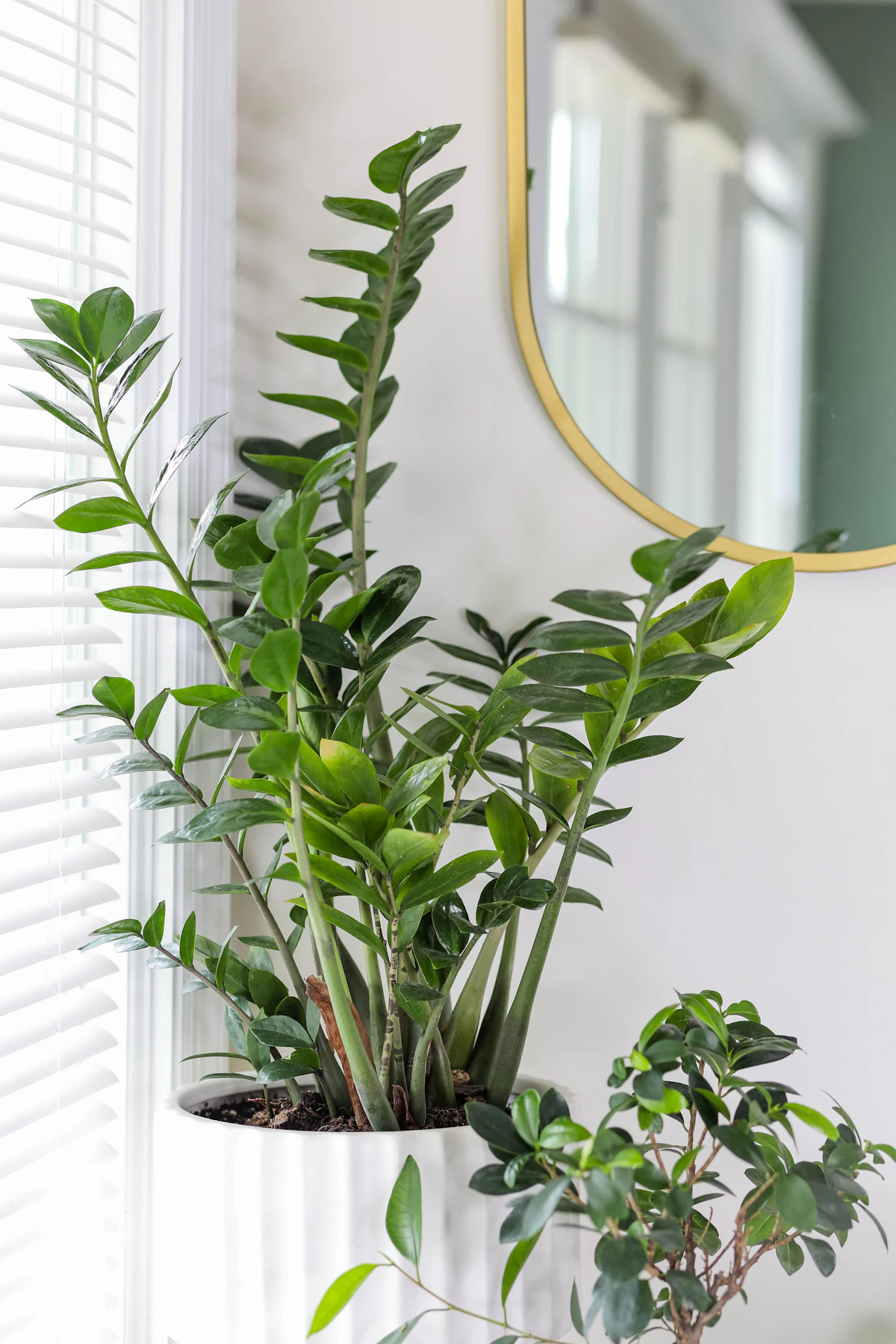
Best spots in a typical home
- East-facing window: gentle morning sun is ideal, right on the sill or a few feet back.
- West- or south-facing window: set it 3–6 feet back or behind a sheer curtain so afternoon sun doesn’t hit the leaves directly.
- North-facing window: workable close to the glass; expect slow growth.
- Offices and hallways: fine under bright fluorescent or LED light, as long as you water much less often.
Not sure how bright a spot really is? Our guide to how much light houseplants need shows how to read windows and rooms without a meter.
Can a ZZ plant live in low light?
Yes, for a long time, which makes it one of the more forgiving low-light plants for apartments. The catch is that a plant in dim light uses water slowly, so the soil stays wet much longer. Low light plus a normal watering routine is the classic recipe for yellow leaves and rotting rhizomes. In a dim room, check the soil, don’t count the days.
Direct sun is the other extreme. A few hours of soft morning sun is fine, but strong afternoon sun through glass can bleach leaves or leave dry, brown patches.
How Often Should You Water a ZZ Plant?
Direct answer: Water a ZZ plant only when the soil is dry all the way through. In bright light during spring and summer that usually means every 2–3 weeks; in winter or low light it can stretch to every 4–6 weeks. When in doubt, wait another week.
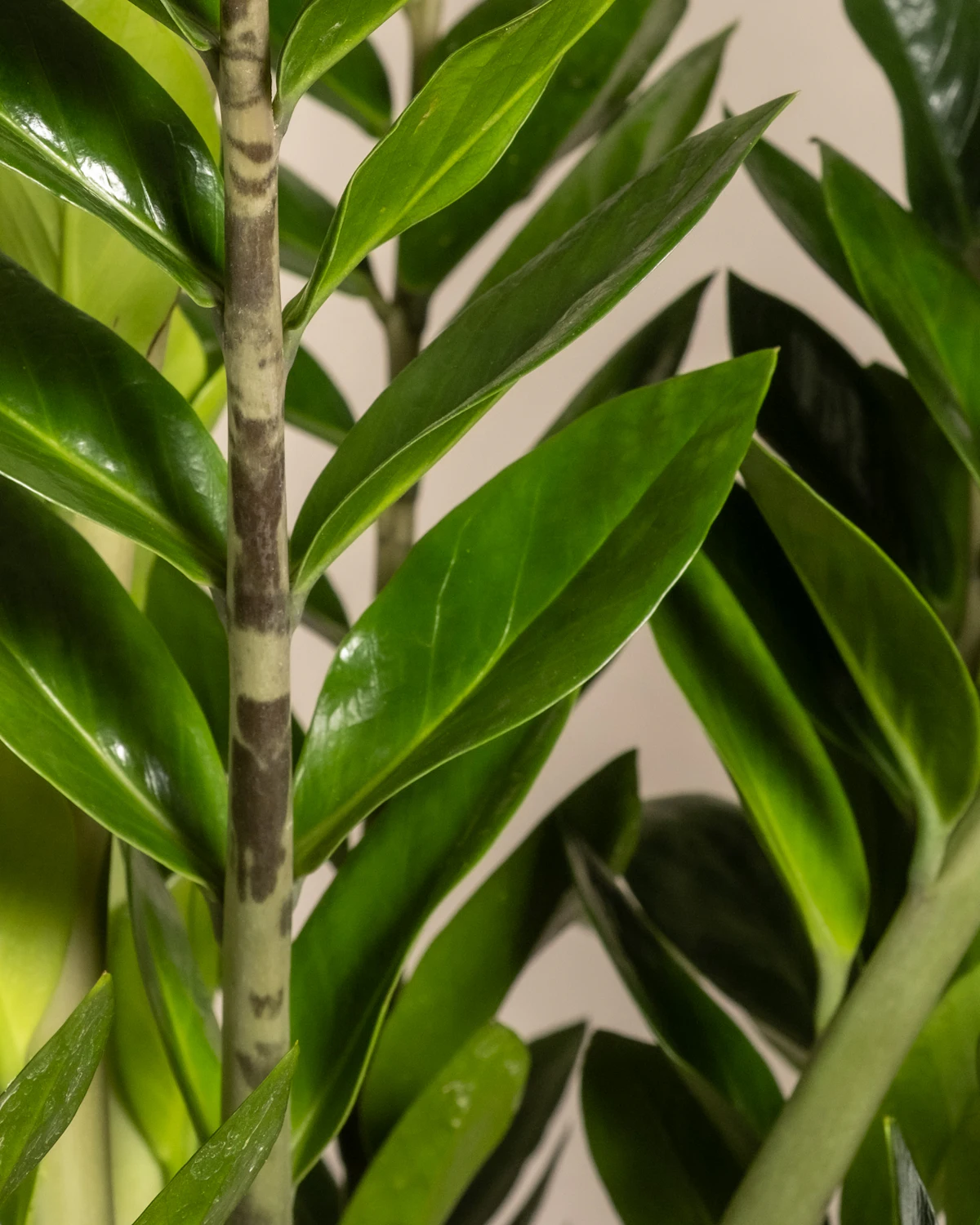
How to check if it needs water
- Finger or chopstick test: push a wooden chopstick to the bottom of the pot. If it comes out with damp soil stuck to it, wait.
- Pot weight: lift the pot right after watering and again a week later. A dry pot feels noticeably lighter.
- Moisture meter (optional): useful in deep pots; water when the reading at root level is in the dry range.
- Leaf signs (last resort): slightly wrinkled or curling leaflets mean the plant has used up its reserves. Water soon, but don’t panic: ZZ plants recover quickly from thirst.
How to water
Water slowly until it runs out of the drainage hole, let it drain fully, and empty the saucer after 15 minutes. A deep soak followed by a long dry spell works better than small, frequent sips, which keep the top of the soil wet and the bottom stale. If you’re still building the habit, our practical houseplant watering guide covers the finger test and pot-weight method in more detail.
What an overwatered ZZ plant looks like
Overwatering shows up as yellowing that starts on lower leaflets, stems that turn soft or mushy at the base, leaning or collapsing stems, and soil that smells sour. Underwatering looks different: leaflets wrinkle, curl, or drop, but stems stay firm. If you suspect rot, unpot the plant and check the rhizomes. Healthy ones are firm and pale; rotten ones are brown, soft, and smell bad. Our houseplant root rot rescue guide walks through trimming and repotting.
Best Soil and Pot for a ZZ Plant
Direct answer: Use a fast-draining, airy mix and a pot with a drainage hole that’s only slightly bigger than the root mass. Drainage matters more than any other single choice.
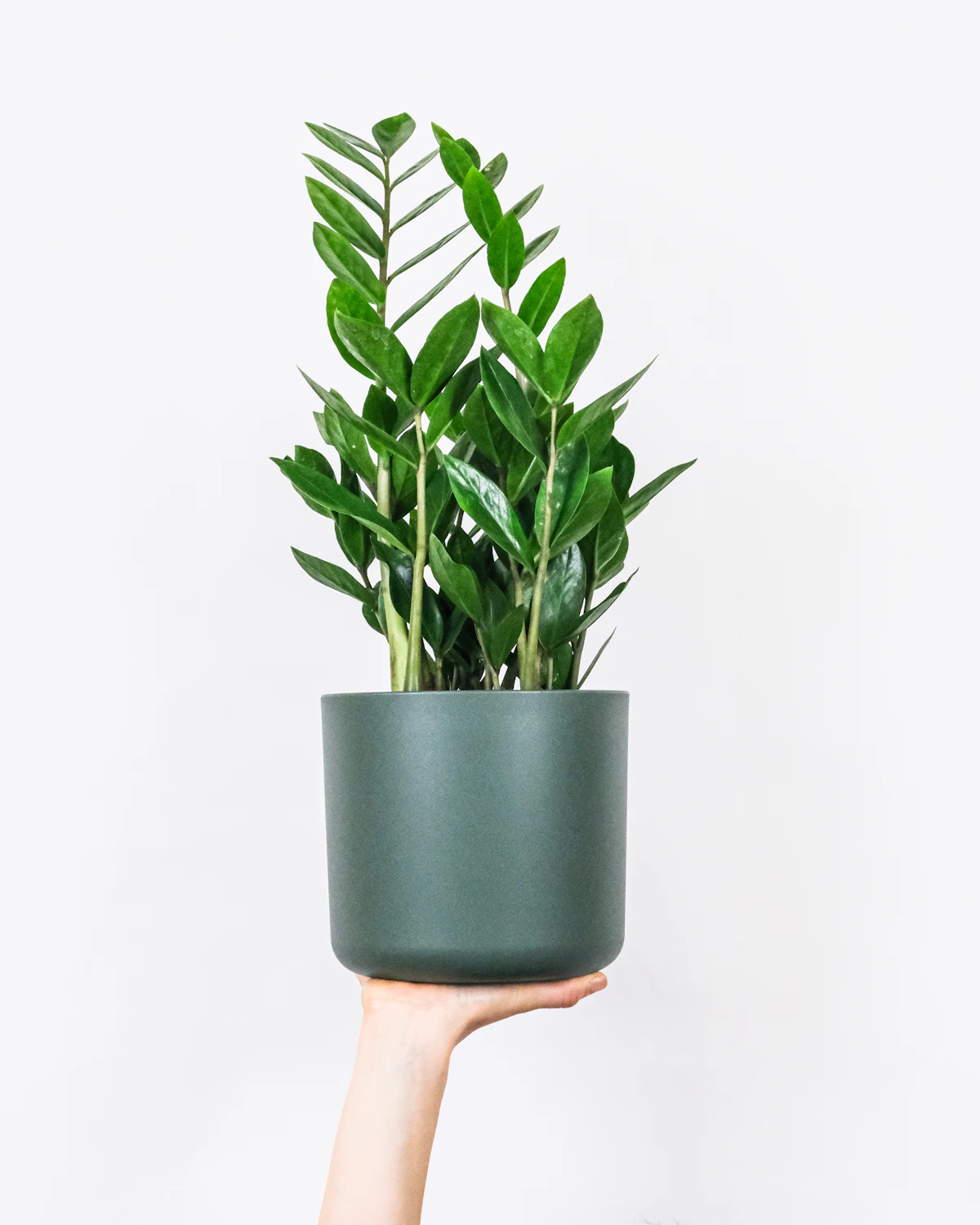
- Simple mix: about two parts indoor potting soil to one part perlite or pumice, plus a handful of orchid bark if you have it. A bagged cactus and succulent mix also works.
- Pot material: terracotta dries fastest and suits heavy-handed waterers; plastic or glazed ceramic is fine if you water less often.
- Pot size: when you repot, go up only 1–2 inches in diameter.
When to repot
ZZ plants like being a little snug and usually need repotting only every 2–3 years. Repot in spring or early summer when you see roots or rhizomes pushing at the drainage hole, the pot bulging or cracking, or water running straight through because the pot is packed with rhizomes. Our step-by-step repotting guide covers the process; for a ZZ, wait about a week before the first watering so any broken roots can callus.
Temperature, Humidity, and Fertilizer
Direct answer: Normal room conditions suit a ZZ plant. Keep it warm and away from cold drafts, skip the humidifier, and feed lightly only during active growth.
- Temperature: 65–80°F (18–27°C) is ideal. Keep it away from drafty doors and cold windows in winter, and don’t leave it outside once nights drop toward 50°F (10°C).
- Humidity: average indoor humidity is fine. Misting doesn’t help and can encourage leaf spots.
- Fertilizer: a balanced liquid houseplant fertilizer at half strength, two or three times between spring and late summer, is plenty. Don’t feed in fall and winter.
- Cleaning: wipe dust off the leaves with a damp cloth every month or two so they can use the light they get. Skip leaf-shine products.
Disadvantages of a ZZ Plant
Direct answer: ZZ plants are mildly toxic if chewed, grow slowly, and are easy to overwater. None of these are deal-breakers, but they’re worth knowing before you buy one.
- Toxicity: like many aroids, every part of the plant contains calcium oxalate crystals. Chewing it can irritate the mouth, throat, and stomach of pets and people. Place it where cats, dogs, and small children won’t nibble, and wash your hands after handling cut stems or sap.
- Slow growth: expect only a few new stems a year, fewer in low light. Buy the size you want rather than waiting for a small plant to fill a corner.
- Easy to overwater: its drought tolerance tempts people to water it like other plants, and soggy soil is what kills most ZZ plants.
- Heavy when mature: dense rhizomes make large plants top-heavy; a sturdy pot helps.
Common ZZ Plant Problems: Cause, Sign, and Fix
Direct answer: Most ZZ problems trace back to water or light. Match what you see to the table, then fix the cause, not just the symptom.
| What you see | Likely cause | What to do |
|---|---|---|
| Yellow leaves, starting low, soil still damp | Overwatering or poor drainage | Let the soil dry completely; check rhizomes for rot; move to a pot with drainage |
| Soft, mushy stems at the base | Rhizome or root rot | Unpot, cut away soft brown tissue, repot in fresh gritty mix, water sparingly |
| Wrinkled or curling leaflets, firm stems | Underwatering for a long stretch | Water deeply; leaves usually smooth out within a week or two |
| Stems leaning or stretching toward the window | Not enough light | Move closer to a bright window; rotate the pot a quarter turn every few weeks |
| Bleached or crispy brown patches | Direct, harsh sun | Move back from the glass or filter the light; damaged leaflets won’t recover |
| Brown leaf tips | Fertilizer salts or very irregular watering | Flush the soil with plain water; feed less |
| A single old stem yellowing slowly | Normal aging | Cut it off at soil level once it’s fully yellow |
A ZZ plant with yellow leaves usually has a watering problem. For a broader look at how leaf position points to the cause, see our yellow leaves diagnosis guide. ZZ plants rarely get pests, but mealybugs and scale can show up on stressed plants; our common houseplant pests guide helps you identify them.
Can You Propagate a ZZ Plant?
Direct answer: Yes. The fastest method is dividing the rhizomes when you repot; stem and single-leaf cuttings also root, but they can take several months to form a new rhizome and shoot.
When you repot an overcrowded plant, gently pull or cut the rhizome clump into sections that each have a few stems, let any cut surfaces dry for a day, and pot each one in gritty mix. Water lightly until new growth appears.
A Simple ZZ Plant Care Routine
- Every 2 weeks: check soil moisture at the bottom of the pot; water only if it’s dry.
- Every month or two: wipe the leaves and rotate the pot a quarter turn.
- Spring to late summer: feed at half strength two or three times.
- Every 2–3 years: repot in spring if rhizomes are crowding the pot.
- Fall and winter: water less, stop feeding, and keep it away from cold glass.
If you like low-effort plants, the ZZ pairs well with the snake plant, which follows almost the same rules. See our snake plant care guide for beginners.
ZZ Plant Care FAQ
How often should I water a ZZ plant?
Only when the soil is completely dry: usually every 2–3 weeks in spring and summer and every 4–6 weeks in winter or low light. Check the soil instead of following a calendar.
Where is the best place to put a ZZ plant?
In bright, indirect light, such as near an east-facing window or a few feet back from a west- or south-facing one. It tolerates dim rooms but grows slowly there.
Can a ZZ plant survive without sunlight?
It can survive for months under bright artificial light in an office or hallway, but it needs some light to keep growing. In a room with no light at all it will slowly decline.
Is a ZZ plant toxic to cats and dogs?
It contains calcium oxalate crystals, which irritate the mouth and stomach if chewed. Serious poisoning is uncommon, but keep it out of reach of pets that nibble plants and contact your vet if your pet shows drooling, pawing at the mouth, or vomiting.
Why is my ZZ plant falling over?
Floppy stems usually mean overwatering (check for soft bases and rot) or too little light, which makes stems stretch and lean. Very tall, old stems can also flop under their own weight; a slightly heavier pot or a discreet stake helps.
Should I mist my ZZ plant?
No. ZZ plants are comfortable in normal household humidity, and misting only keeps the leaves wet without improving growth.
Do ZZ plants like small pots?
Yes, they prefer to be slightly snug. A pot only 1–2 inches wider than the rhizome mass dries out evenly and lowers the risk of rot.