Quick answer: Brown tips on houseplant leaves are almost always a sign of stress at the far end of the plant’s water supply, not a disease. The most common causes are dry indoor air, uneven watering (bone-dry, then soaked), a buildup of fertilizer or tap-water salts in the soil, and fluoride or softened water on sensitive plants like spider plants and dracaenas. Brown tips won’t turn green again, but you can trim them and stop new ones by fixing the cause: water deeply and evenly, flush the soil every few months, ease off fertilizer, and raise humidity if the air is dry.
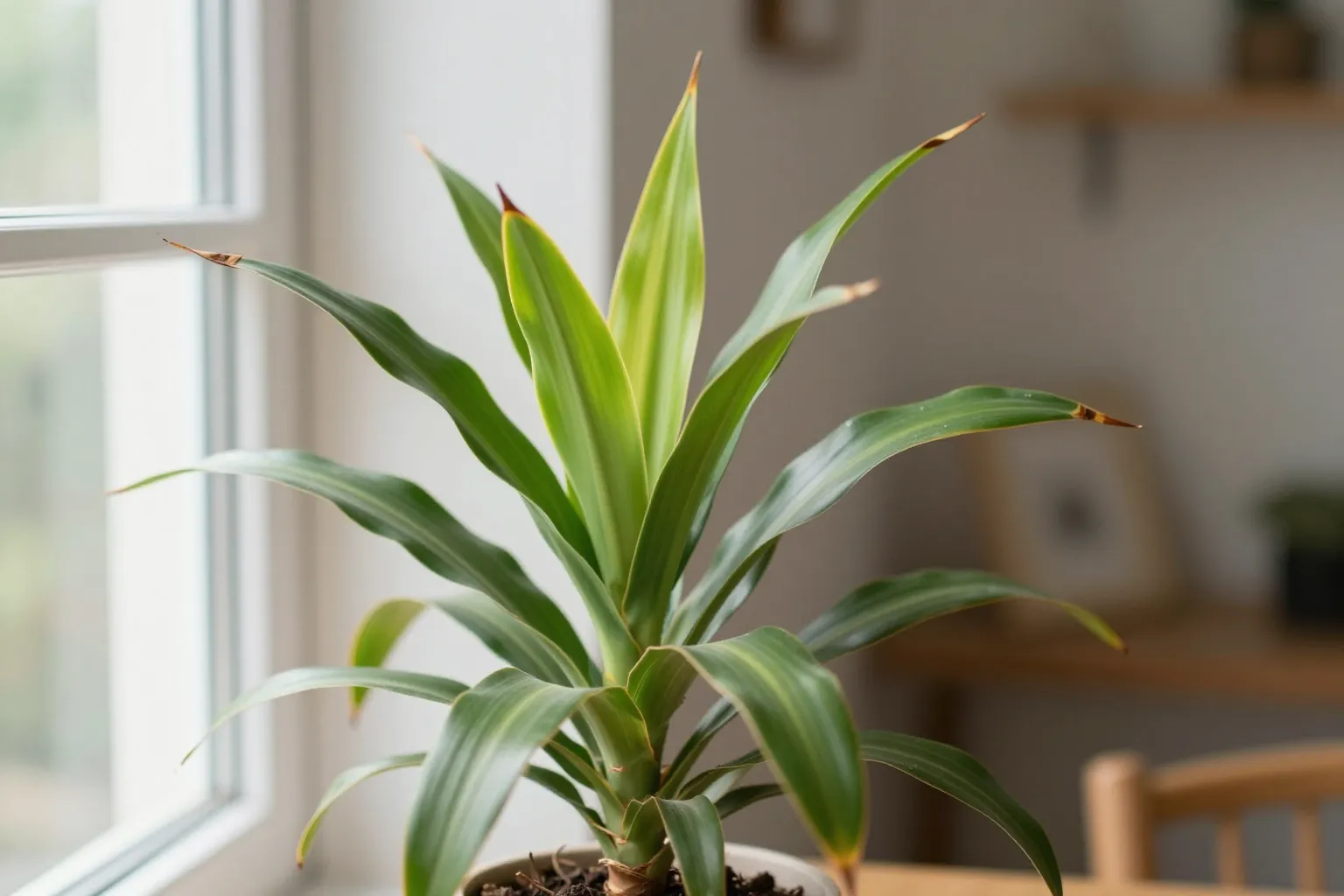
If the ends of your plant’s leaves are turning brown and crispy, you’re in good company: it’s one of the most common houseplant complaints, especially once the heating comes on in fall. The frustrating part is that several different problems produce the same symptom; as extension horticulturists point out, brown tips and edges can come from dry air, watering, salts, or water quality, and often a mix of them. This guide walks you through that diagnosis step by step, so you fix the real cause instead of guessing.
Why Leaves Turn Brown at the Tips
Direct answer: Leaf tips and edges are the last stop for water moving up through the plant. When water runs short, or when the water carries too many salts or fluoride, the tissue at the tips dries out or builds up toxic levels first, and it dies there before anywhere else.
Think of a leaf as the end of a long pipe. Water enters at the roots, travels up the stem, and evaporates from the leaf surface. Anything that interrupts that flow (dry soil, damaged roots, very dry air pulling moisture out faster than roots can replace it) starves the tips first. And anything dissolved in that water, such as fertilizer salts or fluoride, is left behind as the water evaporates, so it concentrates at the tips and margins until the tissue burns.
That’s why the same brown tip can come from opposite problems: too little water, or water that’s “too salty.” The pattern on the leaf and the conditions around the plant tell you which one you’re dealing with.
Brown Tips, Brown Edges, or Brown Spots? Read the Pattern First
Direct answer: Dry, crispy tips and edges point to water, humidity, or salt problems. Soft, dark, spreading brown patches point to overwatering or rot. Isolated spots with yellow rings point to sunburn, cold damage, or sometimes disease.
- Crispy brown tips only, sharp line between brown and green: classic dry-air, underwatering, salt, or fluoride damage.
- Brown tips with a thin yellow band before the green: very typical of salt or fluoride buildup, which keeps creeping inward.
- Crispy brown edges along the whole leaf margin: dry air, heat, or a severe salt problem; common on calatheas and ferns.
- Soft, dark brown areas that spread from the base or middle: usually too much water and struggling roots, not dry air.
- Brown, papery patches on the side facing a window: sun scorch, especially after moving a plant to a brighter spot.
- Brown only on the oldest, lowest leaves, one at a time: often natural aging. A plant shedding one old leaf now and then is normal.
If the leaves are turning yellow as well as brown, read our guide to why houseplant leaves turn yellow alongside this one; the two symptoms often share a cause.
6 Causes of Brown Leaf Tips: Signs and Fixes
Direct answer: Match what you see to the table below, then fix one thing at a time. New leaves are your scorecard: if they come in clean, you’ve found the cause.
| Cause | What you’ll notice | How to fix it |
|---|---|---|
| Dry indoor air (low humidity) | Crispy tips and edges, worse in winter or near heaters; thin-leaved tropicals (calathea, ferns, palms) hit hardest | Move away from heat vents and radiators, group plants, use a humidifier; aim for roughly 40–60% humidity |
| Uneven watering (soil going bone-dry) | Tips brown after the soil dried out completely; pot feels very light; soil pulls away from the pot edge | Water thoroughly until it drains, then water again when the top inch or two is dry; don’t let thirsty plants dry out fully |
| Overwatering and root damage | Brown tips plus yellowing lower leaves, soil that stays wet for days, a sour smell, or a wilting plant in damp soil | Let the soil dry more between waterings, check the roots, repot into fresh mix if roots are brown and mushy |
| Fertilizer salt buildup | White crust on the soil or pot rim; browning with a yellow band; recent or frequent feeding | Flush the soil with plenty of water, skip feeding for a while, then feed at half strength only in the growing season |
| Tap water: fluoride, softened water, hard water | Brown tips on spider plants, dracaenas, ti plants and similar plants, even when care is otherwise good | Use rainwater, distilled, or filtered (reverse-osmosis) water for sensitive plants; never use water from a salt-based softener |
| Heat, cold drafts, or strong sun | Damage on the side facing a window, heater, or door; sudden browning after a move or a cold night | Keep leaves off cold glass and out of hot, dry air streams; shift sun-sensitive plants back from harsh afternoon sun |
Most of the time it’s a combination: a plant in a dry, heated room that also dries out between waterings and gets fed on a summer schedule. Fixing the biggest stress usually stops most of the browning.
Dry Air and Low Humidity: The Classic Cause of Crispy Brown Edges
Direct answer: When indoor air is very dry, leaves lose water faster than the roots can supply it, and the tips and edges dry out first. It’s most common in winter, when heating can push indoor humidity well below what tropical plants are used to.
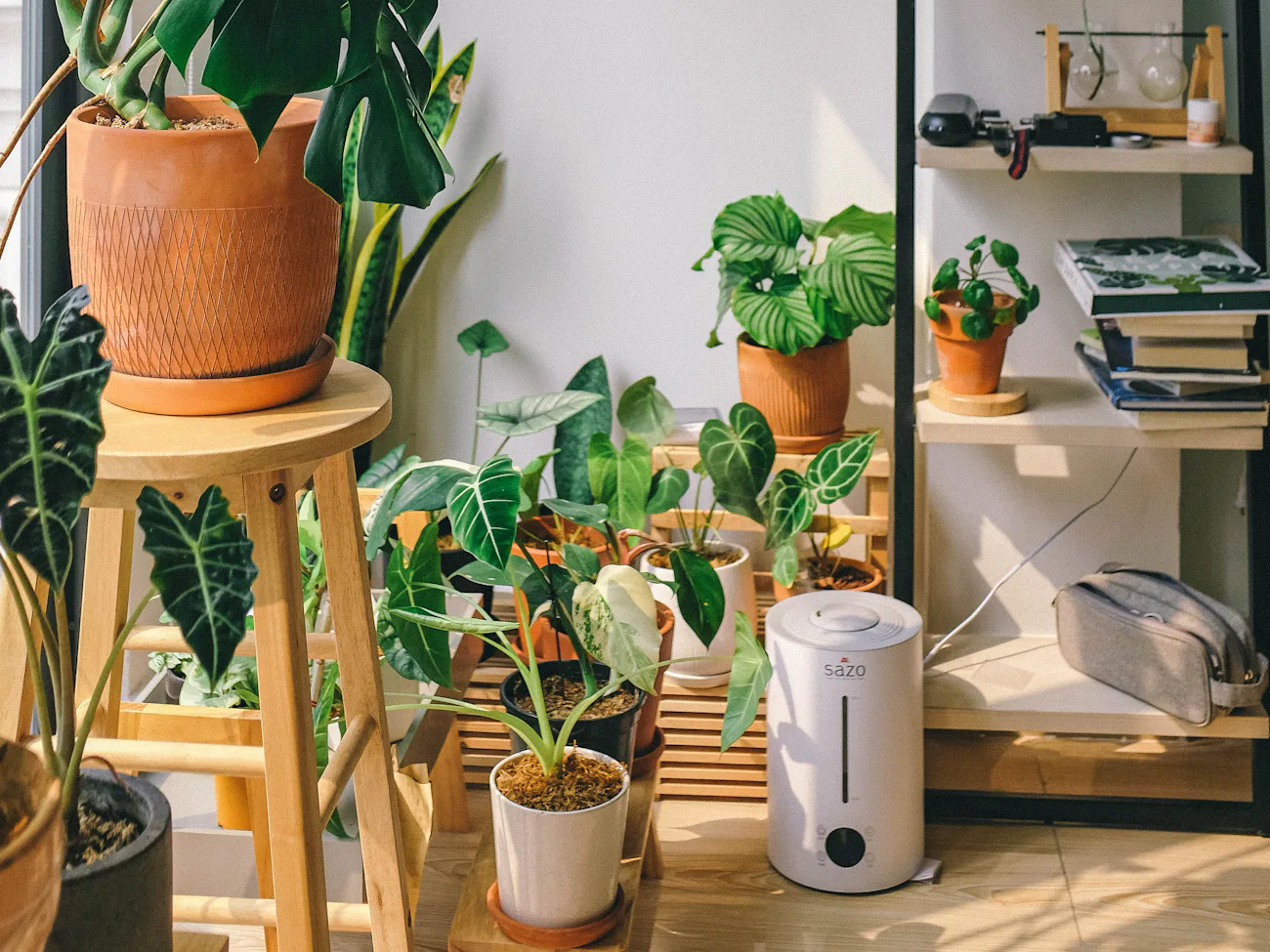
Most common houseplants are fine in average home humidity, but thin-leaved tropicals are not. Calatheas and other prayer plants, ferns, palms, and many aroids show dry air quickly as crispy brown edges. Tough, thick-leaved plants such as snake plants and ZZ plants rarely do.
- Check where the plant sits. A spot above a radiator, beside a heat vent, or next to a space heater can brown tips in days even if the rest of the room is fine.
- Use a humidifier for the plants that need it. A small humidifier near a cluster of tropicals raises humidity far more than any tray or spray. A cheap hygrometer tells you whether you’re near the 40–60% range most tropicals like.
- Group plants together. Plants release moisture as they grow, so a tight group holds a slightly more humid pocket of air than a single pot on its own.
- Don’t count on misting. Misting raises humidity for minutes, not hours, and wet leaves in a cool, still room can invite leaf-spot problems.
- Check for pests too. Dry, warm air is exactly what spider mites love; if crispy leaves also look speckled or have fine webbing, see spider mites on houseplants: early signs and treatment.
Watering Problems: Too Dry, Too Wet, or Too Inconsistent
Direct answer: Letting a plant swing between bone-dry and soaked is one of the most common reasons for brown tips. Each time the soil dries out completely, the finest roots die back and the tips lose water first. Constant wetness causes browning too, by damaging the roots.
Underwatering usually shows as crisp, light-brown tips on a plant whose pot feels light and whose soil has shrunk away from the sides. Water slowly and thoroughly until water runs from the drainage holes, then let the top inch or two of soil dry before watering again. If the soil has gone so dry that water runs straight through, soak the pot in a basin for 20–30 minutes so the mix can rehydrate.
Overwatering looks different: brown tips appear alongside yellowing lower leaves, the soil stays damp for a week or more, and the plant may droop even though it’s wet. That’s a root problem, and adding more water makes it worse. Check the roots, and if they’re dark and mushy, follow our houseplant root rot rescue guide.
The fix for both is the same habit: water by checking the soil, not the calendar. Our houseplant watering guide shows how to read soil moisture and adjust for the season.
Water Quality: Fluoride, Softened Water, and Salt Buildup
Direct answer: Minerals and fluoride in tap water, softened water, and leftover fertilizer salts all build up in the soil, get pulled into the leaves, and concentrate at the tips and edges, where they kill the tissue. Spider plants, dracaenas, and ti plants are especially sensitive to fluoride.
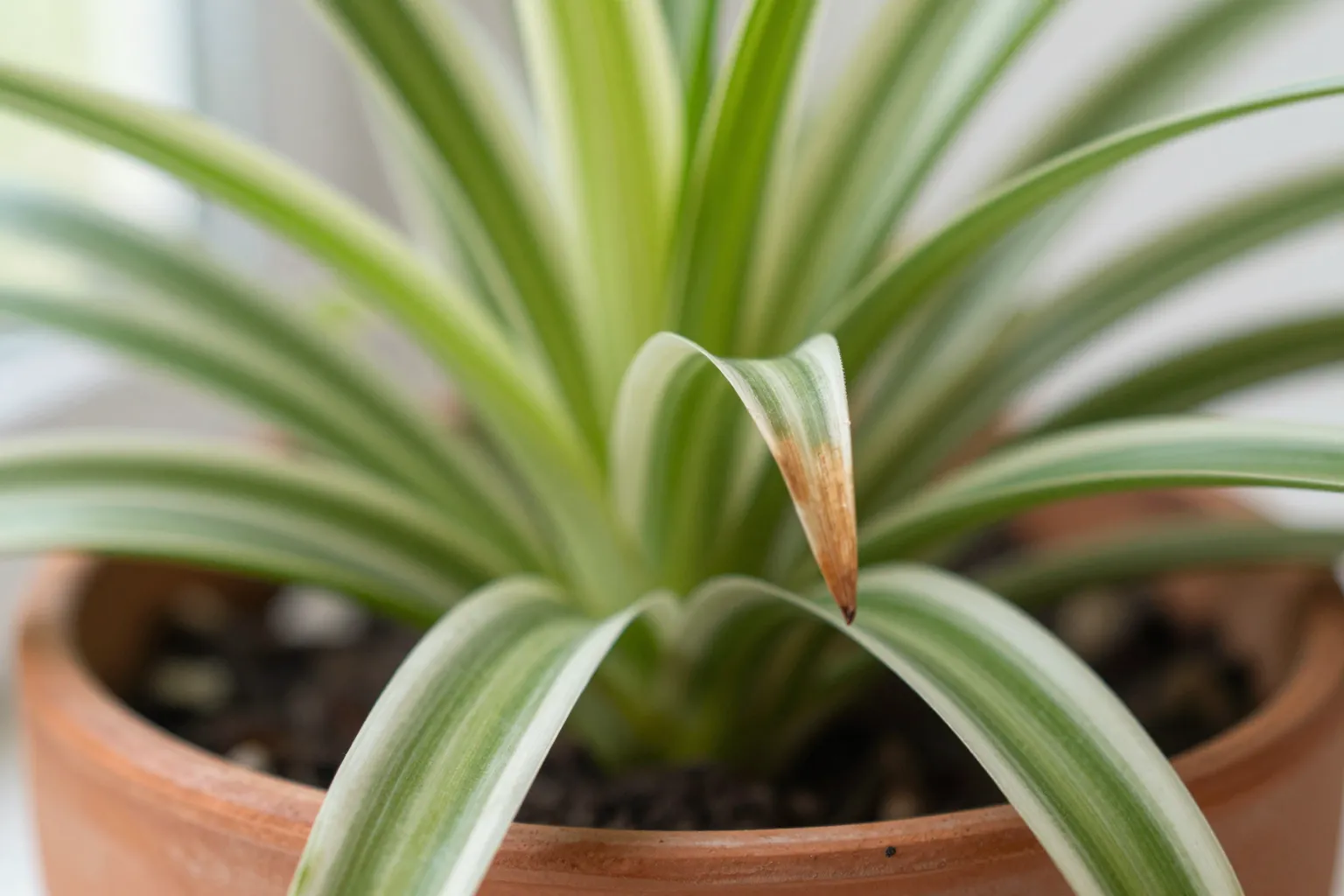
According to the University of Missouri’s IPM program, fluoride taken up by sensitive plants is carried to the edges and tips of the leaves, where it builds up to a lethal concentration. Michigan State University Extension notes that monocots such as spider plants, lilies, spikes, and dracaenas are among the most susceptible, and that the damage on affected leaves can’t be reversed.
- Fluoride: many cities add fluoride to drinking water. It’s harmless for most plants but can brown the tips of sensitive ones over months. If a spider plant or dracaena keeps browning despite good watering and humidity, switch it to rainwater, distilled water, or reverse-osmosis water.
- Softened water: salt-based water softeners swap calcium for sodium, which builds up in the soil much like excess fertilizer. Use water from a tap that bypasses the softener.
- Fertilizer salts: feeding too often, or at full strength through winter, leaves salts in the pot. A white crust on the soil surface or pot rim is the giveaway.
- Chlorine: letting tap water sit overnight lets chlorine escape, but it does not remove fluoride or salts, so it won’t fix those problems.
How to flush salts out of the soil: take the plant to a sink or tub and slowly pour water through the soil, about twice the volume of the pot, letting it drain freely. Repeat every few months for plants you fertilize regularly. If the crust is heavy or the mix is old and compacted, repotting into fresh potting mix is faster; our step-by-step repotting guide covers it.
Heat, Drafts, and Too Much Sun
Direct answer: Hot, dry air from heaters, cold drafts from doors and single-pane windows, and harsh direct sun can all scorch leaf tips and edges, usually on the side of the plant facing the source.
Look at where the damage is. If only the leaves touching a cold window or facing a heat vent are brown, the location is the problem, not your watering. Sun scorch tends to show as pale, papery or brown patches on the most exposed leaves, often right after you moved the plant somewhere brighter. Move it back a little or diffuse the light with a sheer curtain. Our guide to how much light houseplants need helps you find the right distance from the window.
Should You Cut Off Brown Leaf Tips?
Direct answer: Yes, if they bother you. Brown tissue is dead and will never turn green again, so trimming it is purely cosmetic and won’t hurt the plant. Use clean, sharp scissors and follow the natural shape of the leaf.
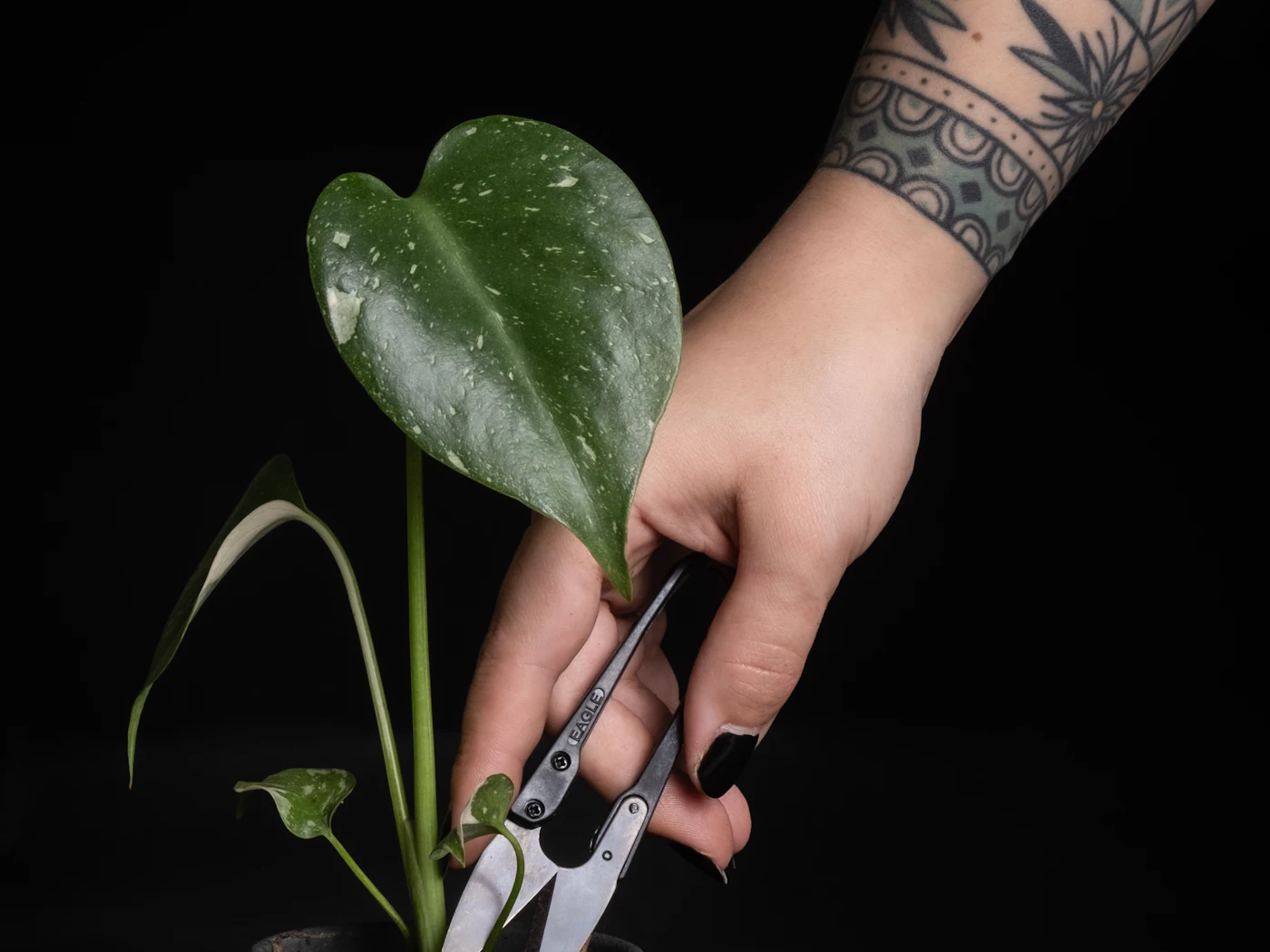
- Wipe your scissors with rubbing alcohol so you don’t move anything from plant to plant.
- Cut at an angle that copies the leaf’s natural point. On long, narrow leaves (spider plants, dracaenas, palms), a slanted cut on each side keeps a natural-looking tip instead of a blunt square end.
- Leave a very thin line of brown. Cutting into healthy green tissue opens a fresh wound that often browns again, leaving a new brown edge.
- Remove the whole leaf only if most of it is brown or yellow. A leaf that’s more than about half damaged isn’t doing much for the plant; cut it at the base.
Trimming only hides the symptom. If new leaves keep browning, go back to the cause table above.
How to Stop Brown Tips From Coming Back
Direct answer: Keep watering deep and consistent, keep salts from building up, and keep the plant out of hot, dry, or drafty spots. Then judge your progress by the new leaves over the next 4–8 weeks, not the old ones.
- Water thoroughly, then wait. Water until it drains, empty the saucer, and water again when the top inch or two is dry (less often in winter).
- Flush the soil every 3–4 months if you fertilize, and repot into fresh mix every year or two.
- Feed lightly. Half-strength fertilizer during spring and summer is plenty for most houseplants; skip or reduce it in fall and winter when growth slows.
- Match the water to the plant. Give fluoride-sensitive plants rainwater or distilled water; most others are fine with ordinary tap water.
- Watch the seasons. The first weeks of heating season are when brown tips suddenly appear. Move tropicals away from vents and add a humidifier before the damage shows.
Some plants show brown tips more than others. Peace lilies are a common example, and they’re also quick to droop when stressed; see why your peace lily is drooping if you’re seeing both.
Brown Leaf Tips FAQ
Why does my plant have brown tips?
Usually because the leaf tips aren’t getting enough water, or the water carries too many salts or too much fluoride. Common triggers are dry indoor air, soil that dries out completely between waterings, fertilizer buildup, and fluoride or softened tap water. Overwatering can cause brown tips too, by damaging the roots.
Do brown leaves mean overwatering?
Not always. Crispy, dry brown tips usually point to underwatering, dry air, or salt buildup. Overwatering is more likely when the brown areas are soft or dark, the lower leaves are also yellowing, and the soil stays wet for days. Check the soil and the roots before changing your watering.
Should I cut the brown tips off my spider plant?
You can. Trim with clean scissors at an angle that keeps the leaf’s pointed shape, leaving a thin sliver of brown so you don’t cut into healthy tissue. Spider plants are sensitive to fluoride and salts, so if new leaves keep browning, try rainwater or distilled water and flush the soil.
How often should indoor plants be watered?
There’s no single schedule. Most houseplants want water when the top inch or two of soil is dry, which may be weekly in bright summer conditions and every two to three weeks in winter. Drought-tolerant plants like snake plants and ZZ plants can go even longer. Check the soil rather than watering by the calendar.
Can brown leaf tips turn green again?
No. Once leaf tissue turns brown, it’s dead. The goal is to stop the browning from spreading and to make sure new leaves grow in healthy. Trim the old tips for looks if you like.
Can tap water cause brown tips on houseplants?
Yes, for some plants. Fluoride in city water can brown the tips of spider plants, dracaenas, and similar plants, and water from a salt-based softener adds sodium that burns leaf tips. Most houseplants tolerate ordinary tap water well, especially if you flush the soil now and then.
Why are only the new leaves getting brown tips?
Browning on new growth suggests a current problem, often dry air from recently switched-on heating, a recent bout of dry soil, or fertilizer and salt buildup. Browning limited to the oldest leaves is more often natural aging or an old problem that has already been fixed.
Sources: University of Missouri Integrated Pest Management, Houseplant Problems; Michigan State University Extension, Fluoride toxicity in plants irrigated with city water; University of California Statewide IPM Program, Nutrient and Mineral Excesses, Salinity, and Salt Toxicity.