Quick answer: Should you mist houseplants? For most of them, no, at least not as a humidity fix. A spritz of water raises the humidity around the leaves for a few minutes, then evaporates, so it can’t fix a dry room. Misting is genuinely useful for a short list of plants and jobs: air plants (Tillandsia), mounted plants such as staghorn ferns, orchid aerial roots, moss and terrarium plantings, and cuttings or seedlings under a dome. Skip it for fuzzy-leaved plants (African violets), succulents and cacti, and any plant already showing leaf spots. If your real goal is higher humidity, use a humidifier or group plants instead.

The mister is one of the most common houseplant tools, and one of the most misunderstood. It feels like care: the leaves look fresh and glossy for a moment. But what a plant needs from you depends on why you’re misting. This guide sorts the myth from the useful habit, shows which plants actually benefit from misting, and explains how to do it without causing problems. If you came here because the air in your home is dry, read the short answer below, then jump to our guide to raising humidity for houseplants, which compares every method side by side.
Does misting houseplants help? The humidity myth explained
The idea behind misting is simple: tropical plants like humid air, so spraying water on them should help. The problem is timing. A fine mist on leaves and in the air evaporates within minutes in a heated room. Humidity next to the plant goes up briefly, then falls back to whatever the room was before. To keep a fern at 50–60% relative humidity by misting alone, you’d have to spray it every 10–15 minutes all day.
You can check this yourself. Put a cheap digital hygrometer next to a plant, note the reading, mist thoroughly, and watch it. In a typical apartment the number rises a few points and drifts back within a quarter of an hour. That’s why horticulture extension services and most experienced growers describe misting as a minor, short-lived effect rather than a humidity strategy.
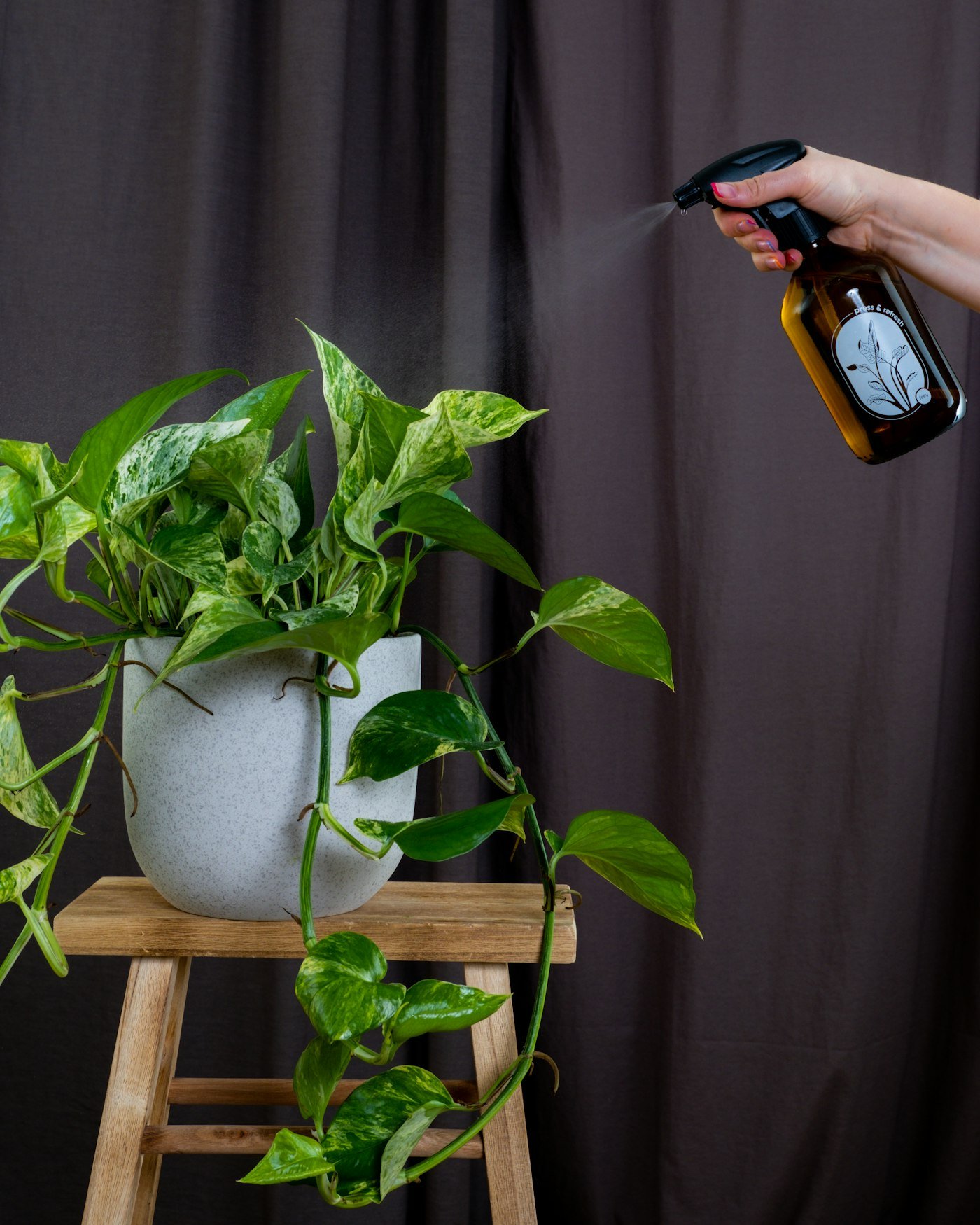
So when people ask “does misting plants increase humidity?”, the honest answer is: yes, for minutes; no, for the hours that matter. If you’re seeing crispy brown tips or curling leaves since the heating came on, misting won’t solve it. Those symptoms come from a room that stays dry around the clock (see protecting houseplants from dry air when the heat turns on).
Misting myth vs reality at a glance
| Common belief | What actually happens | Better approach |
|---|---|---|
| Misting raises humidity for tropical plants | Humidity rises for 5–15 minutes, then drops back | Humidifier, grouping plants, or a naturally humid room |
| Misting stops brown leaf tips | Tips keep browning if the room stays dry or water quality is the cause | Raise room humidity steadily; check water and fertilizer salts |
| Misting waters the plant | Leaves of most potted plants absorb very little water | Water the soil when the top layer is dry |
| Misting keeps pests away | A quick spritz does little; a thorough rinse of leaf undersides helps against spider mites | Shower or wipe leaves and inspect undersides weekly |
| More misting is always gentler | Leaves that stay wet in cool, still air can develop fungal or bacterial spots | Mist only in the morning, with good airflow, and only plants that benefit |
Which plants benefit from misting
Misting earns its place when a plant takes up water through its leaves or exposed roots, or when it lives in a small enclosed space where moisture can’t escape. These are the cases where a spray bottle is a real tool:
- Air plants (Tillandsia): they absorb water through tiny scales on their leaves. Misting 2–3 times a week between regular soaks keeps them hydrated, especially in dry winter air. Misting alone is rarely enough; a 20–30 minute soak every week or two does the heavy lifting.
- Mounted plants: staghorn ferns, mounted orchids and other epiphytes on boards dry out fast because there’s no pot of soil to hold water. Misting the mount and roots between waterings helps.
- Orchid aerial roots: a light mist on silvery aerial roots of phalaenopsis can help in very dry rooms. Keep water out of the crown, where it can cause rot.
- Moss, terrariums and kokedama: moss surfaces and closed or semi-closed containers hold the extra moisture, so misting actually changes their conditions.
- Cuttings, seedlings and propagation domes: under a humidity dome or clear bag, a mist keeps the enclosed air moist while roots form.

Ferns, calatheas and other humidity lovers sit in a grey zone. A morning mist won’t hurt a healthy fern in a well-ventilated room, and some people enjoy the routine. Just don’t count on it: if a maidenhair or calathea is crisping, the fix is steady humidity around 50%, explained in our indoor humidity guide for tropical houseplants.
When misting can hurt: plants to skip
Misting isn’t harmless for every plant. Water that sits on leaves for hours, especially in cool rooms with little air movement, creates the conditions fungal and bacterial leaf spots need. Some plants are particularly prone to trouble:
- Fuzzy-leaved plants: African violets, gloxinias, some begonias and purple passion plants trap droplets in their hairs. Cold water on African violet leaves can also leave pale ring spots.
- Succulents and cacti: they’re adapted to dry air. Water collecting in rosettes (echeverias, for example) can lead to rot.
- Low-maintenance dryland plants: snake plants and ZZ plants handle average home humidity well and gain nothing from misting.
- Plants with existing leaf spots or mildew: wet leaves spread spores. Fix airflow and remove badly affected leaves instead.
- Plants in dim, cold spots: in winter, leaves dry slowly in low light and cool air, so any misting is more likely to cause spots than help.
Misting also doesn’t replace watering. Most potted houseplants take in water through their roots, so a plant that looks limp needs its soil checked, not its leaves sprayed. Our houseplant watering guide covers how to tell when it’s time, and in winter less water is usually safer.
Quick decision table: should you mist this plant?
| Plant or situation | Mist? | Why |
|---|---|---|
| Air plants (Tillandsia) | Yes, 2–3× a week | Leaves absorb water; still soak them regularly |
| Mounted staghorn fern or orchid | Yes, between waterings | No soil reservoir; roots and mount dry fast |
| Cuttings under a dome | Yes, lightly | Enclosed air holds the moisture |
| Ferns, calatheas, prayer plants | Optional, mornings only | Harmless with airflow but won’t fix dry air |
| Monstera, pothos, philodendron | Not needed | Adapt to average humidity; wipe dust instead |
| African violets and fuzzy leaves | No | Droplets cause spots and rot |
| Succulents, cacti, snake plant, ZZ | No | Built for dry air; water in rosettes can rot |
| Any plant with leaf spot or mildew | No | Wet leaves spread disease |
How to mist houseplants correctly (if you do)
If your plant is on the “yes” or “optional” list, a few habits make misting useful instead of risky:
- Mist in the morning. Leaves then have the whole day to dry. Avoid evening misting, when cooler night air keeps leaves wet for hours.
- Use room-temperature water. Cold water can mark sensitive leaves. Rainwater, filtered or distilled water avoids white mineral spots on dark foliage if your tap water is hard.
- Aim for a fine mist, not drips. You want a light, even film that dries within an hour or so, not water running into the crown or pooling on leaves.
- Keep air moving. A slightly open door or gentle room airflow helps leaves dry and lowers disease risk.
- Keep your mister clean. Empty and rinse it regularly so stale water doesn’t grow algae or bacteria.
One related habit is worth keeping for almost every leafy plant: an occasional lukewarm shower or a wipe with a damp cloth. It removes dust so leaves get more light, and a thorough rinse of leaf undersides helps knock back spider mites, which thrive in warm, dry rooms. That’s cleaning, not humidity, and it’s far more useful than a daily spritz.
What to do instead if your air is dry
If you were misting because your plants look stressed by dry indoor air, these steps actually change the conditions they live in:
- Measure first. A hygrometer tells you whether humidity is really the issue. Most common houseplants are fine at 40–50%; below about 30% sensitive species start to suffer.
- Run a humidifier near humidity-loving plants for steady, measurable gains.
- Group plants together so they share the moisture they release, and keep them away from radiators and heating vents.
- Use naturally humid rooms such as a bright bathroom or kitchen for ferns and calatheas.
Our what works vs what doesn’t humidity guide goes into placement, target percentages and pebble trays in detail. And if the symptom you’re chasing is browning or curling, start with the diagnosis: brown leaf tips and curling leaves both have several causes besides humidity.
FAQ: should you mist houseplants?
Does misting houseplants help?
It helps a few plants, such as air plants, mounted epiphytes, orchid aerial roots, moss and cuttings under a dome. For most potted houseplants it does little, because the extra humidity disappears within minutes.
Is misting plants a myth?
Misting as a way to raise humidity is largely a myth: the effect lasts minutes, not hours. Misting as a way to hydrate air plants or keep propagation domes moist is real and useful.
Which plants should not be misted?
Avoid misting fuzzy-leaved plants like African violets, succulents and cacti, snake plants and ZZ plants, and any plant with leaf spots or powdery mildew. Water left on their leaves can cause spots or rot.
How often should I mist my plants?
Only plants that benefit need it: air plants 2–3 times a week between soaks, mounted plants between waterings, cuttings whenever the dome looks dry. For ferns and calatheas, an occasional morning mist is optional and won’t replace steady humidity.
Is it better to mist or water plants?
Water. Most houseplants absorb water through their roots, so watering the soil when it’s dry is what keeps them hydrated. Misting is a supplement for specific plants, never a replacement.
Should I mist plants in winter?
Be careful. Heated air is dry, but leaves also dry more slowly in low winter light and cool spots, which raises the risk of leaf spot. Mist only plants that benefit, early in the day, and use a humidifier or grouping for the rest.
Can I mist plants with tap water?
Usually yes, at room temperature. If your tap water is hard, it can leave white mineral spots on dark leaves; filtered, distilled or rainwater avoids that.