Modern indoor plants are living design elements chosen for both their appearance and their ability to suit a room’s light, temperature, space, and maintenance routine. For most contemporary homes, the strongest starting shortlist is a snake plant for low-maintenance structure, a Monstera for bold tropical foliage, and a fiddle-leaf fig for vertical impact—provided each plant is matched to the conditions it can actually tolerate.
What makes a plant “modern”?
“Modern” describes the relationship between the plant, its container, and the room—not a separate botanical category. A modern houseplant usually has a clear silhouette, restrained color palette, architectural leaves, or a useful scale that supports contemporary furniture and uncluttered layouts.
The most successful choices do two jobs at once: they soften hard surfaces such as glass, metal, and plaster, while also providing a deliberate visual anchor. A tall plant can balance a low sofa; a compact plant can occupy an empty shelf without creating visual noise. The plant should look intentional rather than like an object squeezed into the nearest available corner.
The three design roles plants perform
- Vertical anchor: a fiddle-leaf fig, rubber plant, or tall snake plant beside a console or lounge chair.
- Focal point: a Monstera or large-leaf philodendron where its foliage can be seen from the main seating area.
- Quiet filler: a small ZZ plant, pothos, or snake plant on a shelf, desk, or kitchen ledge.
Shape matters more than novelty. Upright leaves create order in a minimalist room; broad leaves add softness and movement; trailing stems work best where their length is expected, such as a high shelf. Repeating too many dramatic plants can make a room feel busy, so use one dominant silhouette and let smaller plants support it.
Pot choice is part of the composition. A cylindrical pot emphasizes verticality, while a low, wide planter makes a spreading plant feel grounded. Neutral finishes—matte white, charcoal, stone, terracotta, or warm wood—usually make foliage the focal point. Drainage remains non-negotiable: the RHS advises using containers and compost suited to indoor growing and avoiding conditions that leave roots persistently wet (RHS houseplant care guidance, accessed 2026).
Why light and scale matter more than appearance
A plant can be visually perfect and still fail if its light exposure is wrong. Before buying, assess the actual spot rather than the room’s general brightness. A bright living room may contain a dim corner, and a window with strong afternoon sun can be very different from one receiving soft northern light.
Translate the room into a light decision
Use the window direction, distance from glass, obstructions, and seasonal changes as a practical starting point. Light intensity falls rapidly as a plant moves away from a window, so a plant placed several feet into a room may receive much less usable light than it appears to receive.
- Bright, indirect light: within roughly 1–4 feet of a bright window, filtered by a sheer curtain or nearby building. Suitable for Monstera and many fiddle-leaf figs.
- Medium light: a bright room with less direct exposure, often a few feet farther from the window. Suitable for pothos, rubber plants, and many ZZ plants.
- Lower light: a genuinely dim location away from windows. A snake plant or ZZ plant is a more realistic choice, though “low light” does not mean “no light.”
- Strong direct sun: glass-facing exposure with intense rays for several hours. Acclimate plants gradually, because sudden exposure can scorch leaves.
The University of Minnesota Extension recommends evaluating light, temperature, humidity, and the amount of care a plant needs before selecting a houseplant; its selection guidance is useful because it treats plant choice as a conditions-matching exercise rather than a style decision alone (University of Minnesota Extension houseplant selection, accessed 2026).
Match plant height to furniture and circulation
Scale should be measured in the finished room, including the pot and expected growth. A plant that is 3 feet tall at purchase may eventually block a picture, crowd a doorway, or press against a ceiling fixture. Leave clear walking space and avoid placing large containers where someone will regularly brush against leaves.
| Room situation | Useful starting choice | Why it works |
|---|---|---|
| Small apartment entry | Snake plant, 2–3 feet tall | Upright profile with a small footprint |
| Bright living-room corner | Monstera, medium to large | Broad leaves create a clear focal point |
| Home-office shelf | ZZ plant or pothos | Compact presence without blocking the screen |
| Open-plan lounge | Fiddle-leaf fig or rubber plant | Vertical volume helps define a zone |
For interior designers and homeowners furnishing from a plan, sketch the pot diameter and mature height onto the floor plan. This simple step exposes conflicts with radiators, curtains, outlets, and door swings before the plant arrives.
How the main modern plant choices behave

Different plants solve different design problems. The following comparison is more useful than ranking plants from “best” to “worst,” because the right choice depends on the room and the owner’s habits.
Snake plant: the reliable structural choice
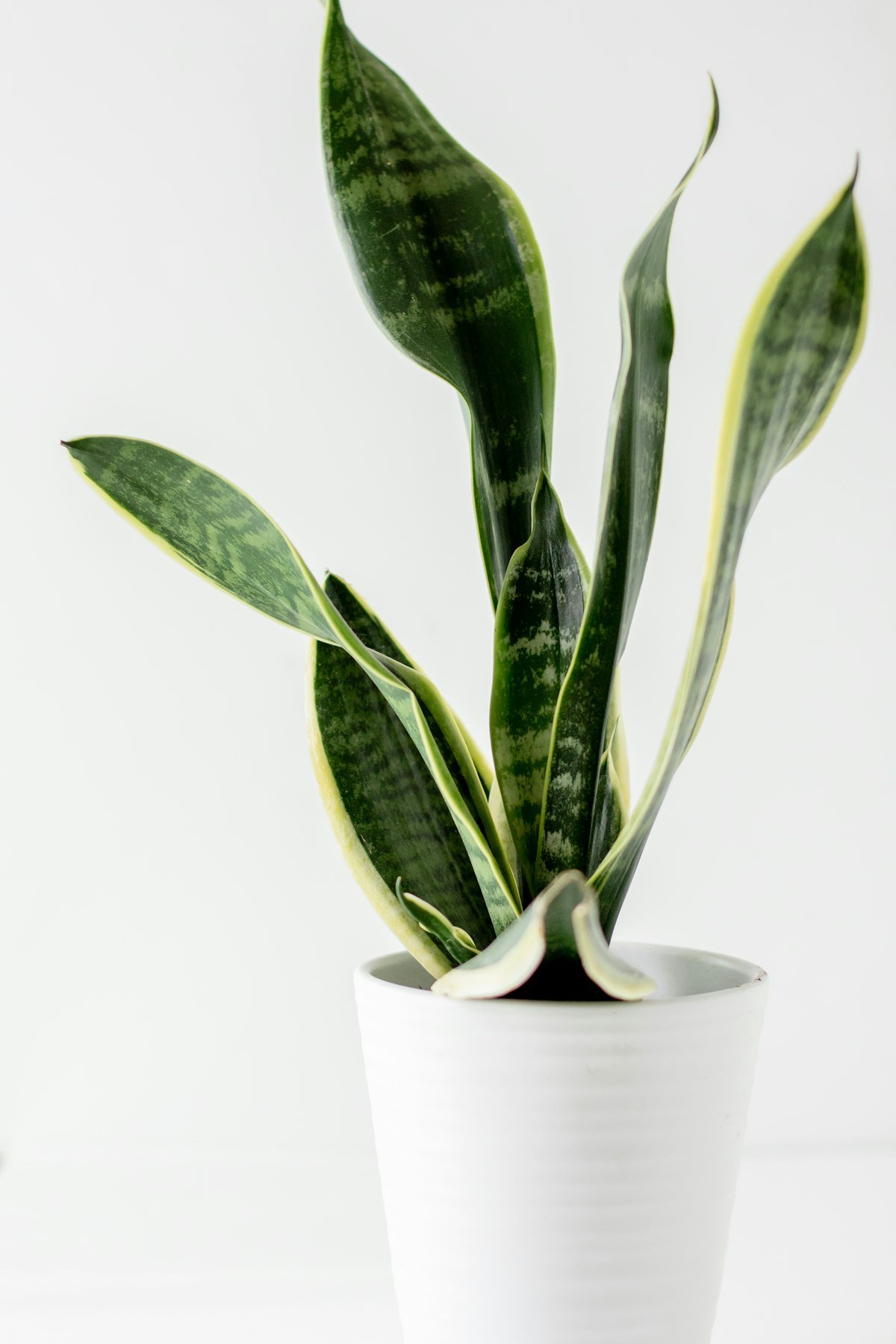
Snake plants have stiff, upright leaves and tolerate a wider range of indoor conditions than many foliage plants. They suit renters, beginners, and rooms where a narrow footprint matters. Their main failure mode is usually excess water rather than neglect: roots can deteriorate when the potting mix stays wet for too long.
Choose a snake plant for a hallway with some daylight, a bedroom corner, or beside a media unit. Water only after the mix has dried substantially, then allow excess water to drain fully. Do not place it in a decorative cachepot that quietly holds runoff.
Pet owners should check the individual plant before purchase. The ASPCA lists snake plant as toxic to dogs and cats if eaten, with possible gastrointestinal signs, so it should be kept away from pets that chew foliage (ASPCA snake plant information, accessed 2026).
Monstera: the expressive focal point
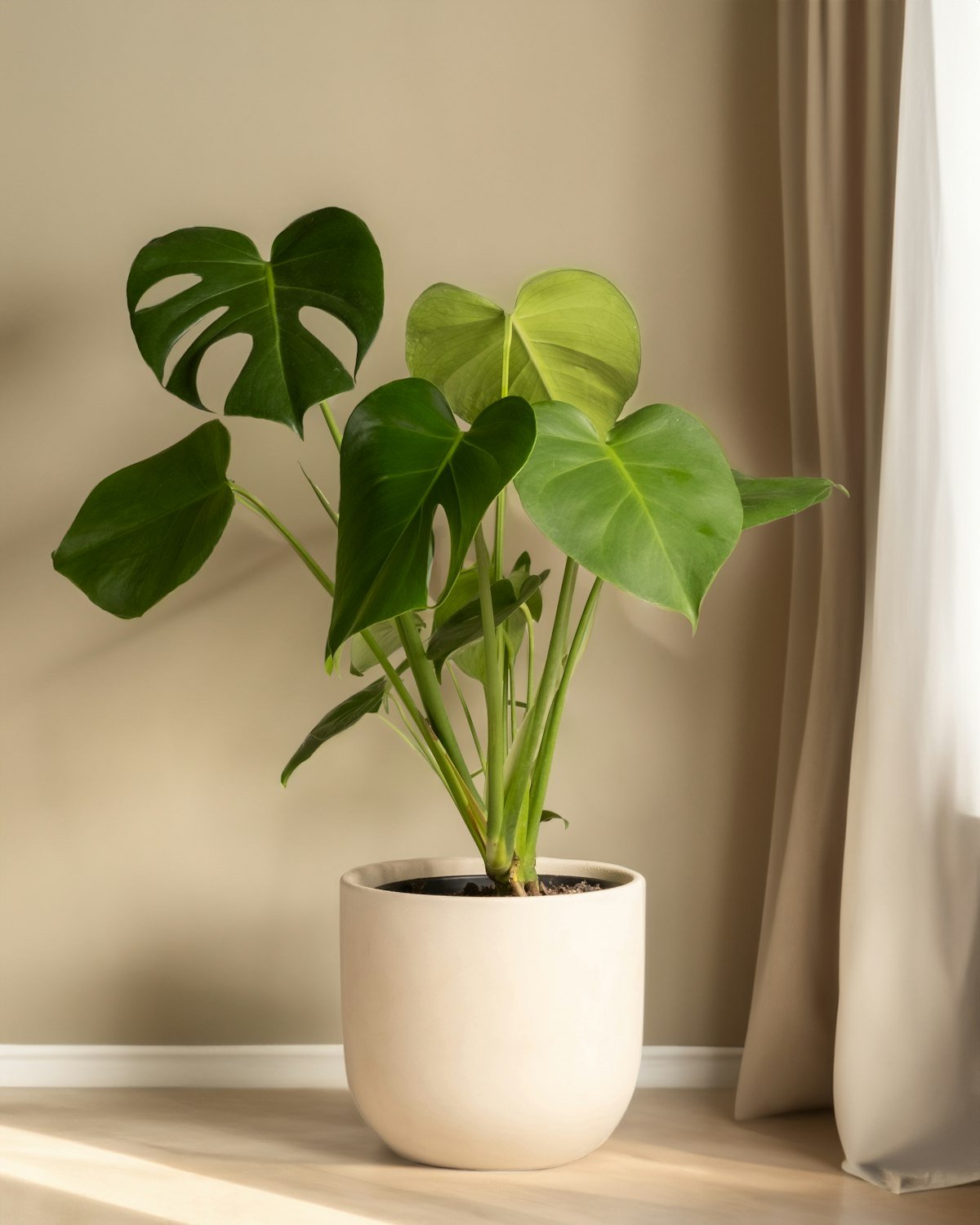
Monstera brings large, divided leaves and a strong tropical character. It is most effective where there is room for the foliage to spread and where the plant can be turned periodically for balanced growth. A moss pole or other support may become useful as the stems lengthen.
Give it bright, indirect light and let the upper portion of the potting mix dry before watering again. Yellowing leaves, persistently wet soil, or a sour smell from the pot are warnings to inspect the roots rather than simply adding fertilizer. The ASPCA lists Monstera as toxic to dogs and cats if ingested, so it is not a carefree choice for a leaf-chewing pet household (ASPCA Monstera information, accessed 2026).
Fiddle-leaf fig: the high-impact, higher-attention option
A fiddle-leaf fig can provide the strongest sculptural effect in a bright living room, but it is less forgiving of abrupt changes. It may react to moving, inconsistent watering, cold drafts, or insufficient light by dropping leaves. Choose it when the room has a stable, bright position and someone can monitor it during the first weeks.
Keep it away from heating vents and frequently opened exterior doors. Water thoroughly when the mix has partly dried, but do not follow a fixed weekly schedule without checking the soil. Rotate the pot gradually if even growth matters; rotating it dramatically or relocating it repeatedly can create another adjustment problem.
- Choose snake plant when the footprint is narrow, care time is limited, or light is modest.
- Choose Monstera when the room needs one leafy focal point and there is space for expansion.
- Choose fiddle-leaf fig when the room is bright, stable, and the owner accepts closer observation.
Where modern indoor plant plans break down
Most failures come from a mismatch between a plant’s needs and a household routine, not from a lack of enthusiasm. A polished styling plan can conceal practical problems such as poor drainage, inaccessible pots, or a plant being chosen for a dark corner because it looks good there.
Overwatering is usually a system problem
People often water because a calendar says it is time. Indoor plants lose water at different rates depending on pot size, light, temperature, humidity, root health, and the composition of the growing mix. A large pot in low light can stay wet far longer than a small pot near a bright window.
Use a repeatable inspection instead:
- Check the surface and the weight of the pot before watering.
- Push a finger into the mix or use a wooden stick to assess moisture below the surface.
- Water thoroughly when the plant’s needs and the mix indicate it is ready.
- Let excess water drain, then empty the saucer or cachepot.
This does not mean every plant should dry completely. Tropical plants such as Monstera generally prefer more even moisture than a snake plant, while fiddle-leaf figs dislike both prolonged saturation and severe repeated drought. The useful rule is water by plant and conditions, not by weekday.
Decorative decisions can create care obstacles
Heavy planters are attractive but difficult to rotate or move for watering. A pot without drainage may look cleaner, yet it makes it harder to judge how much water has collected around the roots. Plants positioned behind sofas or on high shelving can also become invisible during routine cleaning, so missed watering and pest outbreaks go unnoticed.
- Use a lightweight nursery pot inside a decorative cover for easier inspection.
- Place a saucer beneath containers on wood, stone, or painted surfaces.
- Keep enough clearance to lift the inner pot without disturbing furniture.
- Leave room to wipe leaves and inspect stems for pests.
Also account for people and animals. A low plant beside a walkway may be knocked over repeatedly, while a toxic species within reach of a curious pet creates an avoidable risk. If safety is uncertain, choose a non-toxic alternative and verify the species rather than relying on a common name.
How to apply the method in a real home
A practical plant plan begins with constraints and ends with a manageable routine. The goal is not to fill every empty surface; it is to assign each plant a job and make its care visible enough to happen.
Use a three-pass selection process
Pass one: map the room. Mark windows, drafts, heaters, walkways, pets, and surfaces that cannot tolerate water. Take a photo from the main viewpoint so you can judge whether a plant will frame the furniture or compete with it.
Pass two: assign roles. Select one focal plant for a large room, one structural plant for a narrow or transitional space, and smaller plants only where they can be reached. This prevents a common mistake: buying several unrelated small plants that create clutter but no visual hierarchy.
Pass three: create the care route. Group plants with similar watering needs only when their light requirements also match. Keep a simple note with the purchase date, plant name, location, and last inspection. A reminder should prompt a check, not force water into soil that is still wet.
For an illustrative starting policy in a two-bedroom apartment, consider:
- One focal plant in the brightest suitable living-room position.
- One narrow plant near the entry or media unit where circulation remains clear.
- Two small plants on accessible surfaces rather than scattered across every room.
- One monthly reset to rotate plants, wipe leaves, inspect drainage, and check for pests.
These numbers are a planning example, not a universal benchmark. A darker apartment may need fewer plants; a bright home with a dedicated plant shelf may support more. Start with fewer specimens than you think you need, observe how the spaces function, and add only when the existing routine is reliable.
Build a first-week settling routine
When a new plant arrives, inspect the leaves, stems, and soil before placing it near an existing collection. Keep it separate from other plants for a short observation period if pests are a concern. Avoid immediately repotting a healthy plant unless the container is damaged, lacks drainage, or the roots and soil clearly require intervention.
During the first week, observe light changes from morning to afternoon, check whether leaves touch cold glass, and note how quickly the potting mix dries. That information is more useful than a generic watering calendar because it describes the actual room.
The best modern indoor plants are therefore not simply the most fashionable varieties. They are plants whose form suits the room, whose light needs match the window, and whose care fits the owner’s routine. For a balanced first collection, begin with a snake plant for structure, add a Monstera where you want foliage drama, and choose a fiddle-leaf fig only for a bright, stable location.
CozyPlant publishes practical guides for choosing and keeping these plants healthy in real rooms. Start with the species guides and care systems below, then add plants only when the first routine is working.
Related CozyPlant guides
- Snake Plant Care: Complete Beginner’s Guide
- How to Choose and Care for a Fiddle Leaf Fig
- Pothos Care Guide
- How Much Light Do Houseplants Need?
- Houseplant Watering Tips
- How to Style an Indoor Plant Shelf Without Clutter
- Why Houseplant Leaves Turn Yellow
- Common Houseplant Pests
Authored with NotFair SEO