An indoor snake plant is a drought-tolerant houseplant with stiff, upright leaves that suits apartments, offices, and minimalist interiors. For reliable results, give it bright indirect light when possible, use a pot with drainage, and let the potting mix dry substantially before watering again. The most common failure is not neglect but excess moisture held around the roots.
What an Indoor Snake Plant actually is
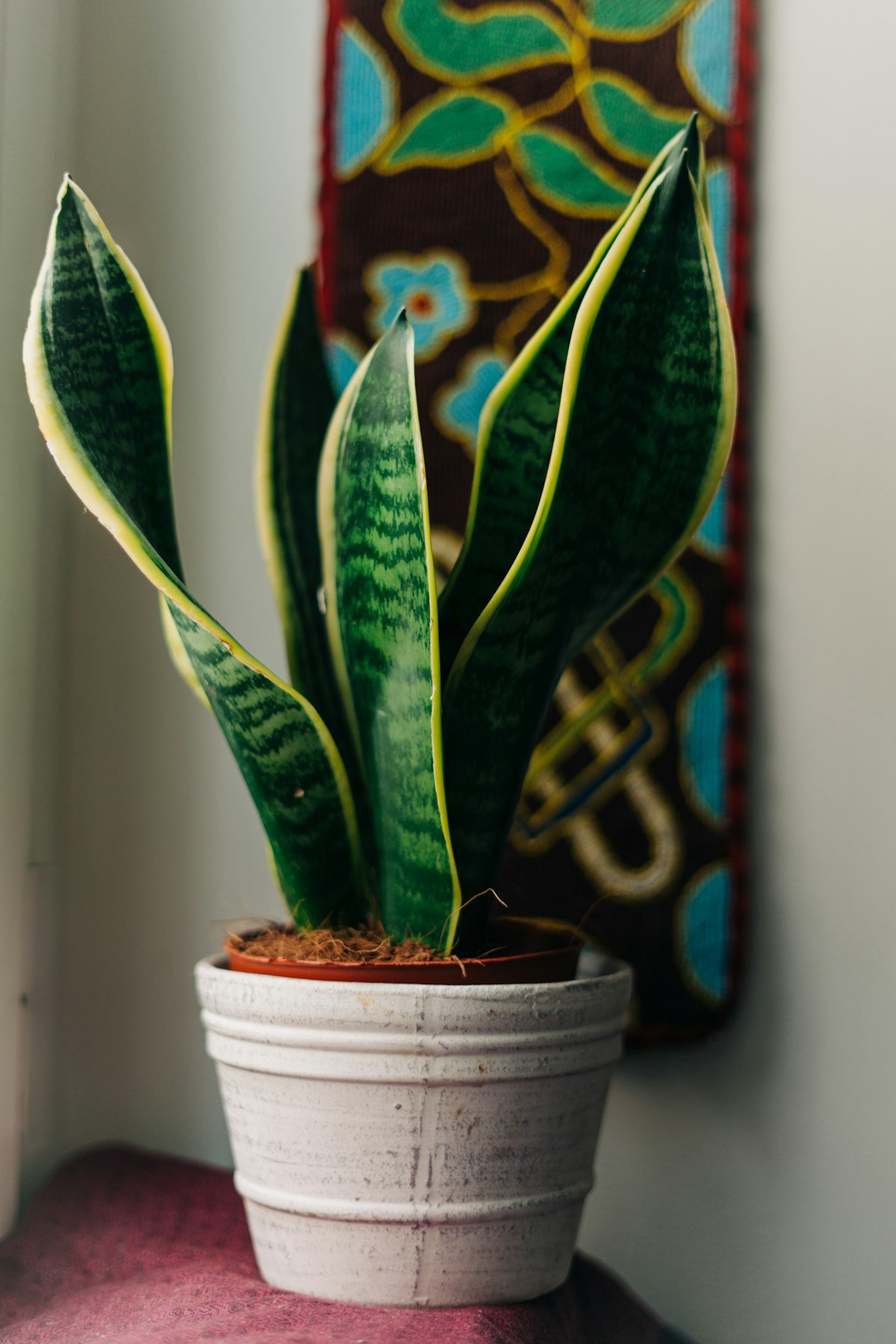
“Snake plant” is the familiar name for plants once grouped under the genus Sansevieria. Many commonly sold forms are now classified as Dracaena trifasciata, including the tall, banded plant often sold as ‘Laurentii’. The reclassification changes the botanical label, not the practical care: these plants are evergreen, architectural, and adapted to periods of dryness. The Royal Horticultural Society lists snake plants as tender houseplants suited to indoor cultivation in temperate climates. The RHS plant profile provides a useful reference for the older and newer naming.
The plant grows from short underground stems called rhizomes. New leaves and offsets emerge from this base, so a container can gradually become a cluster rather than one expanding trunk. That growth pattern explains two useful design and care facts: the plant stays visually upright, while the root zone can become crowded below the surface.
Recognizing the main forms
Choose by the shape you need rather than by the name alone. Cultivars vary considerably in height, leaf width, color, and growth habit. Common forms include:
- Tall, sword-like types: useful beside a sofa, doorway, or narrow console because their footprint is relatively slim.
- Short rosette types: better for a desk, shelf, bedside table, or shallow plant stand.
- Variegated types: marked with pale green, yellow, or cream bands and often slower-looking in growth because each new leaf takes time to mature.
- Compact cylindrical types: built from rounder leaves and suited to contemporary arrangements where repeated vertical lines matter.
A healthy specimen should have leaves that feel firm and stand according to the cultivar’s natural form. Avoid a plant with a sour-smelling pot, mushy leaf bases, widespread brown collapse, or soil that remains saturated. A small amount of cosmetic scarring is less serious than damage at the crown, where the leaves meet the soil.
Why snake plants work in modern indoor spaces
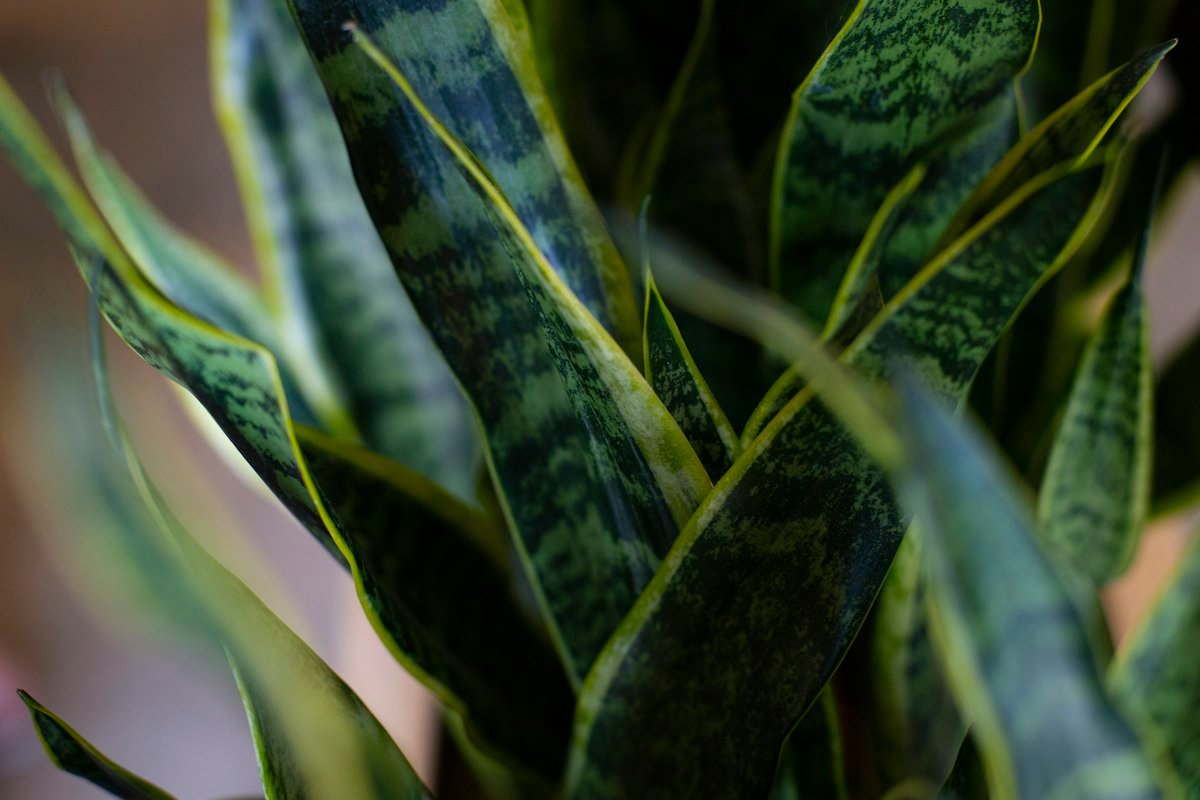
Snake plants solve a particular furnishing problem: they add height, texture, and a strong vertical silhouette without requiring a broad canopy. That makes them useful when a room needs greenery but cannot spare much floor area. A tall specimen can balance a low cabinet; a short rosette can soften a stack of books without obscuring artwork.
Their value is not that they thrive in every dark corner. Rather, they tolerate missed waterings better than many soft-leaved houseplants, and their leaves do not demand frequent pinching or training. North Carolina State Extension describes Dracaena trifasciata as a low-maintenance plant that tolerates a range of indoor light conditions while warning against overly wet soil. Its plant toolbox profile is a useful care reference.
Match the plant to the room, not the trend
For homeowners and designers, the decision is mostly about scale and light. Use the following as an illustrative room-planning exercise, not a universal sizing rule:
- For a narrow entry with indirect daylight, start with a short or medium plant on a stable stand so coats and bags do not strike the leaves.
- For a living-room corner beside a low sofa, a taller, narrow cultivar can supply vertical balance without competing with a broad-leaved Monstera.
- For a desk near a bright window, select a compact rosette and leave enough surface space to lift the pot for inspection.
- For a dim interior corner more than several feet from a window, treat the plant as a temporary decorative placement rather than assuming it will grow normally there.
Low light and low water are not the same condition. A plant in weak light uses water slowly, so watering on a fixed weekly schedule can keep the mix wet for too long. Conversely, a plant near a bright window may dry faster, especially in a warm room or an unglazed terracotta pot. Light controls demand; the potting mix controls available oxygen.
A realistic safety note for households with pets
Snake plants are not a sensible choice for a home where a cat or dog regularly chews foliage. The ASPCA lists snake plant as toxic to dogs and cats, with ingestion potentially causing gastrointestinal signs such as nausea, vomiting, or diarrhea. The ASPCA plant safety entry should be checked alongside advice from a veterinarian if a pet has eaten part of the plant.
Placement behind furniture is not a dependable safety strategy for a determined animal. Choose a genuinely pet-safe plant instead, or use a physical barrier that the animal cannot move. Also keep fallen leaves and offsets out of reach, particularly during repotting.
How snake-plant care works

Good care is a feedback system rather than a calendar. Inspect the plant, assess the soil and pot weight, then adjust water and light to the conditions in that room. The following routine is a practical starting policy for a beginner; it is not a universal watering interval.
Water from the root zone outward
- Press a finger into the upper part of the mix or lift the pot to judge whether it has become noticeably lighter.
- If the mix is still damp below the surface, wait and check again later rather than adding a small “top-up.”
- When the mix has dried substantially, water slowly across the surface until a little drains from the bottom.
- Empty the saucer or decorative cachepot so the pot does not sit in collected water.
- Record what happened only if it helps you learn the room’s pattern; do not copy the same interval after a seasonal change.
Small sips are risky because they may wet only the upper layer while leaving dry pockets around the roots. A complete watering followed by a meaningful dry-down is easier to evaluate. The aim is not to make the soil bone-dry for a predetermined number of days; it is to restore moisture without removing the air spaces roots need.
Build a forgiving container system
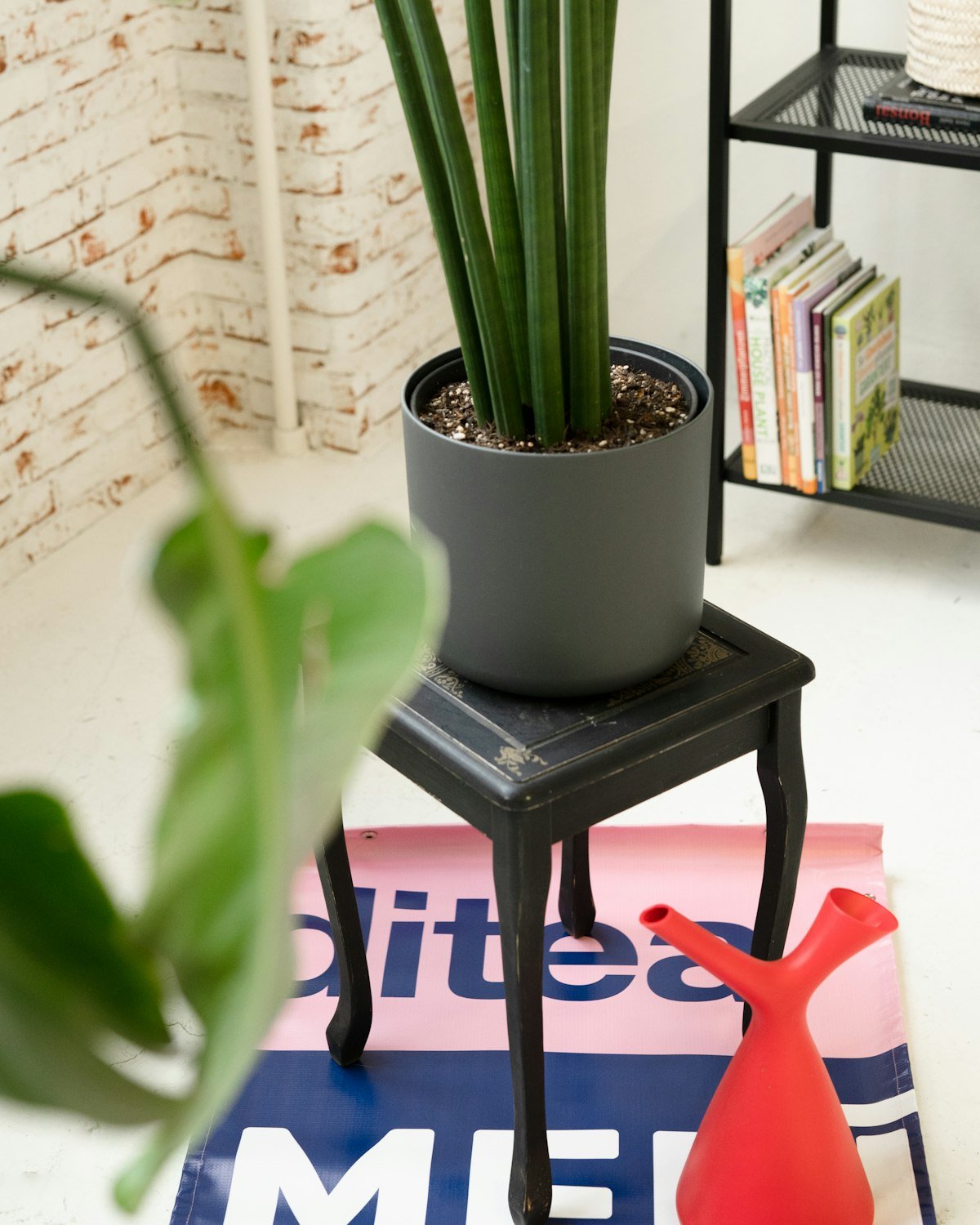
Use an inner pot with a drainage opening inside a waterproof cover pot. This lets you remove the nursery pot, inspect the roots, and discard excess water. A decorative container without a drainage path creates a hidden reservoir, which is particularly hazardous for a plant that already grows slowly in weak light.
A suitable mix should drain freely while holding enough moisture for roots to access between waterings. A commercial houseplant mix amended with a coarse, aerating material can work, but the exact recipe depends on particle size, pot dimensions, room temperature, and how heavily you water. Drainage is a system, not a claim printed on a bag: a hole helps only if water can move through the mix and out of the container.
Repot when roots circle densely, the plant repeatedly tips over, water runs straight down the gap between soil and pot, or the mix has collapsed into a dense mass. Move up only modestly in container size. A very large pot holds more wet mix around a relatively small root system, increasing the time needed to dry.
Use light as a growth and shape control
Bright, indirect light is a dependable default for maintaining compact growth and clearer variegation. Snake plants can remain alive in lower light, but “survives” is a weaker standard than “grows well.” In a dark room, leaves may stretch toward the nearest window and watering demand may fall sharply.
Introduce a plant to strong direct sun gradually, especially after moving it from a shaded shop or interior room. Sudden exposure through hot glass can scorch leaves. Rotate the pot occasionally if one side leans, but do not treat rotation as a substitute for better light. If a room has no useful daylight, a suitable grow light may be more predictable than repeatedly moving the plant between rooms.
Dust can collect on broad, upright leaves and obscure their markings. Wipe them gently with a damp cloth when needed. Avoid oily leaf-shine products: they can leave residue, attract dust, and do not solve an underlying light or watering problem.
Where Indoor Snake Plants break down
Most problems can be narrowed by looking at the location of the damage. Softness at the base points to a different issue than a dry, papery edge. A single damaged leaf may be mechanical injury; a pattern affecting several leaves usually reflects the environment or roots.
| What you see | Likely mechanism | First response |
|---|---|---|
| Soft, yellowing leaves at the base | Persistently wet mix or crown rot | Stop watering, inspect roots, and remove collapsed tissue with clean tools |
| Wrinkled, curling, or thin leaves | Extended dryness, damaged roots, or severe root restriction | Check the whole root zone rather than watering repeatedly in small amounts |
| Brown, crispy patches on the window side | Sudden intense sun, heat, or physical damage | Move to bright filtered light and review recent changes |
| Long, leaning leaves | Insufficient directional light or an unstable pot | Move closer to suitable light and support only if necessary |
| Tiny insects or cottony clusters | Possible scale, mealybugs, or another pest | Isolate the plant and identify the pest before choosing treatment |
Separate watering trouble from pest trouble
Yellow leaves do not automatically mean thirst. On a drought-tolerant plant, repeated watering in response to yellowing can worsen the original cause. Check three things together: leaf firmness, soil moisture below the surface, and the condition of the crown and roots.
For pests, inspect leaf folds, the undersides of leaves, and the point where leaves emerge from the soil. Isolate a suspect plant from the rest of a collection. Remove obvious pests manually where practical, then use a treatment appropriate to the identified pest and label directions. Do not spray a stressed plant in harsh sun or treat an unidentified symptom with several products at once.
Understand the limits of “indestructible”
Snake plants are forgiving, not indestructible. They can fail after months of excess moisture even when the leaves look acceptable at first, because root and crown damage develops below the surface. They can also decline in a cold draft, scorch after a sudden move into strong sun, or become unstable in an oversized pot.
Indoor air quality claims are another area where expectations need restraint. A plant can contribute visual softness and a connection to nature, but it should not replace ventilation, moisture control, filtration, or a properly maintained heating and cooling system. For practical household air-quality guidance, the U.S. Environmental Protection Agency explains the importance of source control, ventilation, and air cleaning in its guide to indoor air quality.
How practitioners apply snake plants successfully
Interior designers, plant buyers, and beginners benefit from treating the plant as both a living organism and a spatial element. The best placement makes care observable: you can reach the pot, see the leaves, and notice whether the room is too dim or the soil remains wet.
Use a placement brief before buying
- Measure the footprint: include the pot, saucer, stand, and clearance needed to remove the inner pot for watering.
- Identify the light direction: note whether the nearest window faces a bright open view, a shaded courtyard, or a building that blocks much of the day.
- Check household constraints: account for pets, children, radiators, drafts, and high-traffic paths.
- Choose the mature visual effect: decide whether you need a narrow vertical accent, a low rosette, or a group of repeated forms.
- Plan maintenance access: leave enough room to lift, rotate, wipe, and inspect the plant without moving several objects first.
For a minimalist room, repetition is often more successful than clutter. One tall plant beside a low cabinet may create a clear vertical counterpoint; three small plants scattered across every surface can make the room feel busier without improving the light conditions. A restrained combination might pair one snake plant’s linear leaves with a softer trailing plant, while avoiding a collection in which every leaf has the same stiff outline.
Buy for condition, not just size
When shopping, examine the base of the leaves and the soil surface. Choose a plant with firm foliage, no persistent odor, and no unexplained wetness in a heavy pot. If you are furnishing a project, specify the intended light level, pot dimensions, pet requirements, and maintenance access before selecting a cultivar.
After bringing the plant home, keep it in its existing container long enough to observe how quickly the mix dries in the new room. Immediate repotting is sometimes necessary when the soil is waterlogged or the pot lacks drainage, but unnecessary handling adds stress and makes it harder to identify which condition caused a later problem.
Make one change at a time
If the plant declines, avoid moving it, repotting it, fertilizing it, and changing the watering routine on the same day. A controlled sequence produces better information. First check moisture and roots; next correct the container or light issue; then give the plant time to respond before adding another intervention.
For most modern homes, the specific recommendation is simple: choose a healthy snake plant sized to the room, place it in the brightest practical indirect light, keep it in a draining inner pot, and water only after the mix has dried substantially. If you want help selecting a plant for a minimalist space, CozyPlant CozyPlant offers curated indoor plants and guidance for choosing greenery that fits your home and care routine.
Authored with NotFair SEO