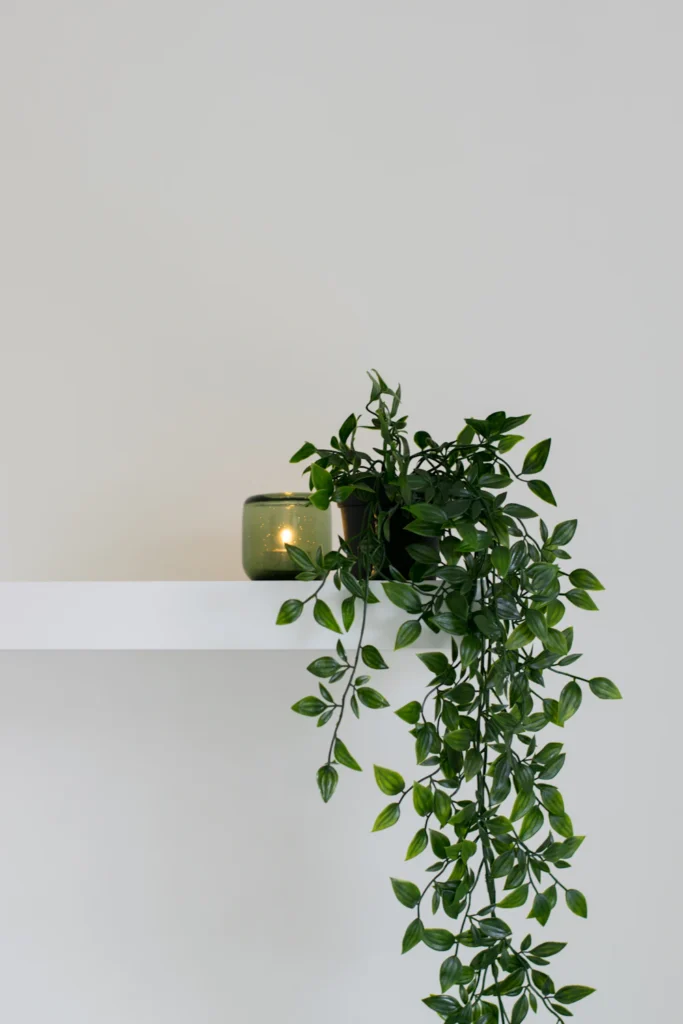
A plant shelf can add greenery without taking over a room. The goal is not to fit as many pots as possible, but to create a composition that leaves enough space for plants, books, storage, and everyday movement.
Start With Light, Not Decoration
Choose the shelf location based on the light available there, then choose plants that fit that location. A shelf that looks attractive but stays too dark will eventually produce weak or stretched growth. Use the houseplant light guide to assess the space before arranging the display.
Use Three Different Plant Shapes
A simple composition is easier to control when the plants have different visual roles:
- Upright: a snake plant or ZZ plant provides height and structure.
- Compact: a smaller plant fills the middle without dominating the shelf.
- Trailing: a pothos or similar trailing plant softens the edge and adds movement.
Leave Intentional Empty Space
Do not fill every gap. Empty shelf surface gives the arrangement visual breathing room and makes the plants look deliberate rather than crowded. Start with fewer objects than the shelf can physically hold, then add only what improves the composition.
Repeat One or Two Materials
Containers do not need to match exactly. Repeating a small palette—such as terracotta, white ceramic, black, or natural wood—creates cohesion while allowing different shapes and sizes.
Build the Shelf in Layers
- Place the largest or tallest plant first.
- Add a medium-height plant at a different position.
- Place a trailing plant near an edge where it has room to grow.
- Add one non-plant object, such as a small stack of books or a simple ceramic piece.
- Step back and remove anything that feels redundant.
Keep Care Practical
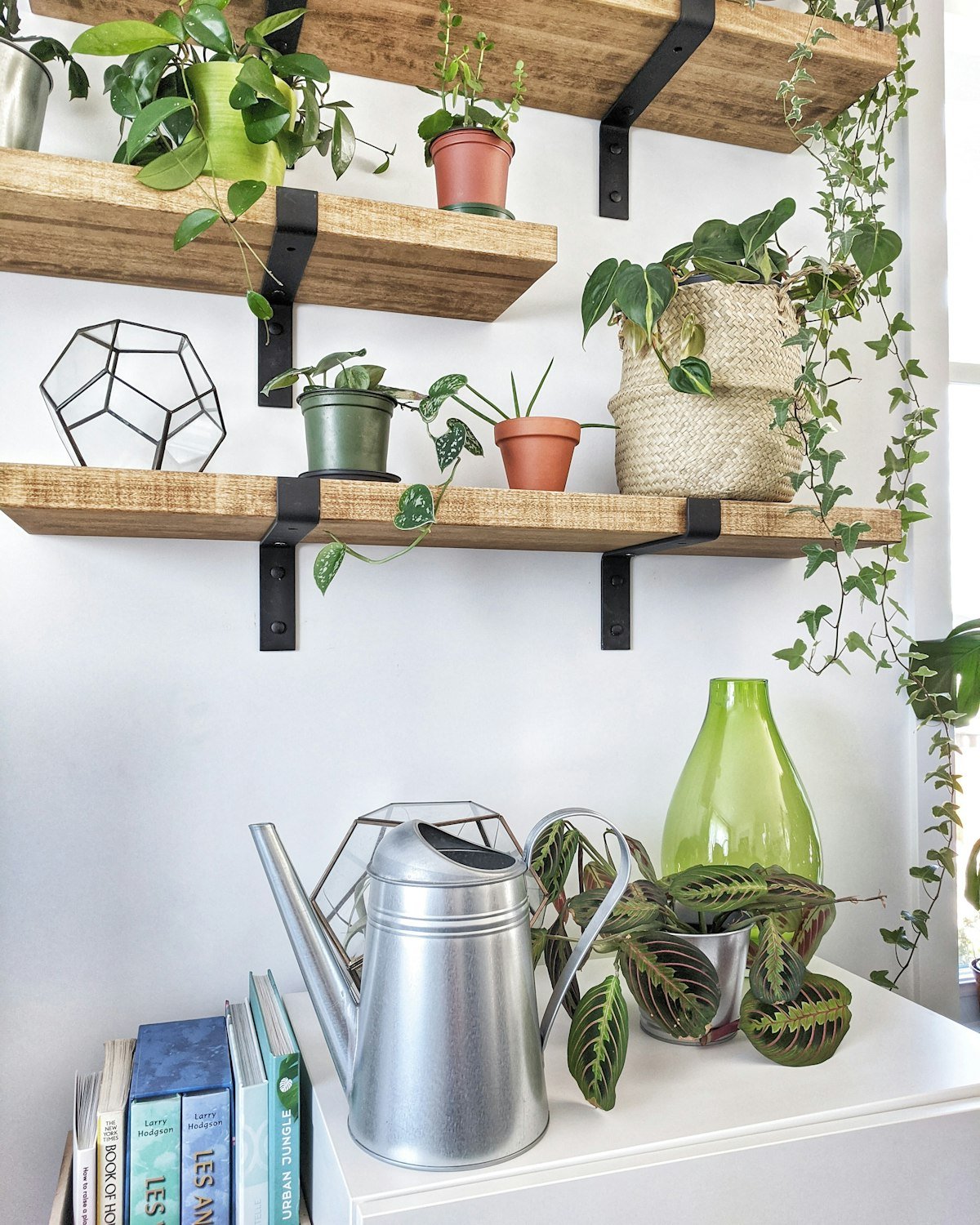
Beautiful arrangements still need to be easy to maintain. Leave enough room to remove pots for watering, avoid blocking drainage, and keep water from sitting directly on wooden shelves. If a plant needs significantly different care, give it enough space that it can be moved without dismantling the whole display.
For watering decisions, use the houseplant watering guide rather than following a fixed calendar.
Small-Apartment Shelf Ideas
In a compact apartment, use vertical space: a narrow bookcase, a freestanding plant stand, or an existing shelf can hold greenery without consuming another large section of floor. Renters can favor movable solutions when wall mounting is not practical.
Common Styling Mistakes
- Putting every plant at the same height.
- Using too many tiny pots in one row.
- Ignoring the light requirements of the plants.
- Using more decorative objects than plants can visually support.
- Making the shelf difficult to water or clean.
FAQ
How many plants should I put on a shelf?
Start with three to five plants and adjust according to shelf width, plant size, and available light. A smaller number with clear spacing often looks more intentional.
Can a plant shelf work in a low-light room?
Only if the plants and light level are compatible. Low-light tolerant does not mean no-light. If natural light is insufficient, a suitable grow light may be necessary.
How do I keep a plant shelf from looking cluttered?
Vary plant height and shape, repeat a limited pot palette, leave empty space, and remove objects that do not contribute to the composition.
Takeaway
The most useful plant shelf is one that balances design with plant health. Start with light, use contrasting plant shapes, leave breathing room, and make watering and maintenance easy.