Quick answer: Yes, plants can grow in a north-facing window, as long as you pick the right ones and use the light well. In the Northern Hemisphere a north window gets no direct sun for most of the year, only soft, even, indirect light. That suits low-to-medium light plants such as ZZ plants, snake plants, pothos, philodendrons, peace lilies, ferns and calatheas. The care rules are simple: keep plants within about 1 metre (3 ft) of the glass, keep the glass clean and the curtains open, water less often than you would in a sunny room, skip or reduce fertilizer, and rotate pots every couple of weeks. Expect slow, steady growth rather than fast growth.
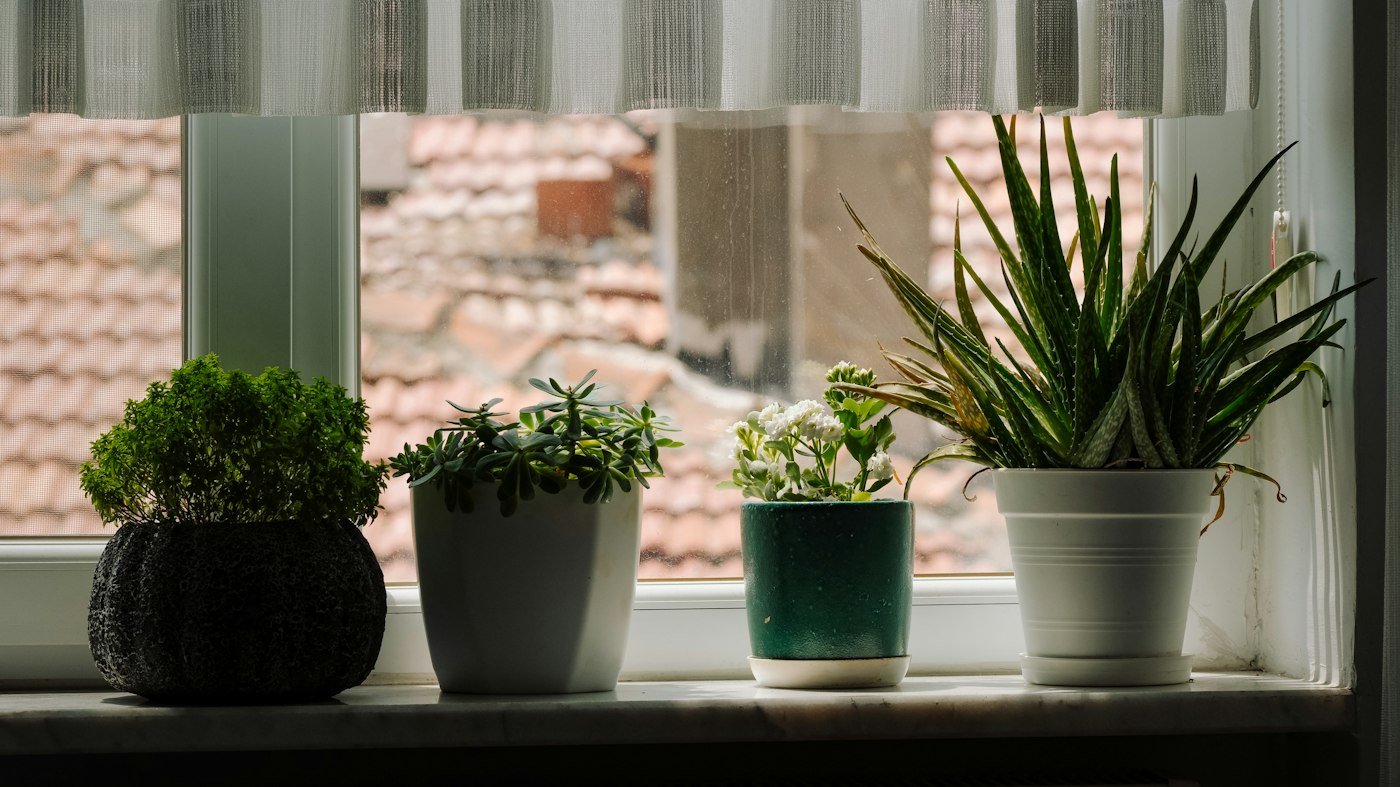
A north-facing window is often written off as “too dark for plants”. It isn’t. It is simply a different kind of light: gentle, consistent and without the hot afternoon rays that scorch leaves in a west window. The mistakes people make in north rooms are almost always the same: placing plants too far from the glass, choosing sun-lovers, and watering on the same schedule they would use in a bright room. This guide focuses on how to care for plants in a north window. For the bigger picture on light levels in every direction, read our pillar guide How Much Light Do Houseplants Need?
Hemisphere note: everything here applies to north-facing windows in the Northern Hemisphere. If you live in the Southern Hemisphere (Brazil, Australia, South Africa), it is your south-facing windows that behave this way, and your north windows get the strong sun.
What light does a north-facing window really get?
The sun moves across the southern part of the sky in the Northern Hemisphere, so a north window looks away from it. The result is bright, indirect “sky light” for most of the day. A few points matter for plant care:
- Light is even but lower. There are no strong peaks, so plants that need several hours of direct sun (most cacti, many succulents, citrus, herbs like basil) usually struggle.
- Distance matters more than anywhere else. Light intensity drops quickly as you move away from the glass. A plant on the sill can get several times more light than the same plant two or three metres into the room.
- Seasons change it a lot. Around midsummer, the sun rises and sets far enough north that a north window may catch a little gentle early-morning or late-evening sun. In late autumn and winter, days are short and the light is at its weakest.
- Obstacles count. A tree, a building across the street, a deep balcony overhang or sheer curtains can turn a decent north window into a genuinely low-light spot.
Quick test: is your north window bright enough?
You don’t need special tools. At midday, hold your hand about 30 cm (12 in) above the spot where the plant will sit. If you see a soft but recognizable shadow, the spot works for most low-to-medium light plants. If you barely see any shadow, it is low light: choose only the toughest plants (ZZ, snake plant, cast iron plant) or move the spot closer to the glass. A free light-meter app on your phone gives a rough reading if you want a number, but the shadow test is enough to make good decisions.
Best plants for a north-facing window

This is not a shopping list. It is a short guide to which common houseplants tolerate north light, and what to watch for with each, so you can work with what you already own.
| Plant | How it handles north light | Main thing to watch |
|---|---|---|
| ZZ plant (Zamioculcas) | Excellent; one of the most tolerant plants for low light | Overwatering. In low light it may need water only every 3–5 weeks. See our ZZ plant care guide. |
| Snake plant (Dracaena trifasciata) | Very good; grows slowly but stays healthy | Soggy soil and root rot. More in our snake plant care guide. |
| Pothos (Epipremnum) | Good; keeps growing in moderate north light | Variegated types lose some variegation and stretch if too far from the glass. See our pothos care guide. |
| Heartleaf philodendron | Good; very similar to pothos | Long gaps between leaves = needs to move closer to the window |
| Peace lily (Spathiphyllum) | Good for foliage; flowers less in low light | Dramatic droop when dry. Read why peace lilies droop. |
| Calathea and prayer plants | Good; they dislike harsh sun anyway | Dry air and hard tap water, not light. See calathea brown edges. |
| Ferns (Boston, bird’s nest) | Good; north light is close to their natural shade | Need steadier moisture and humidity than most |
| Cast iron plant (Aspidistra) | Excellent; handles the darkest spots | Very slow growth; don’t over-pot or overwater |
| Cacti, most succulents, herbs | Poor; usually stretch and weaken | Move to a south or west window, or add a grow light |
How to care for plants in a north-facing window
Low light changes how fast a plant uses water and nutrients. Almost every care adjustment follows from that one fact: less light means slower growth, so the plant needs less of everything else.
1. Place plants close to the glass

In a north room, the windowsill and the first metre in front of the window are prime real estate. Put the plants that need the most light (pothos, philodendron, peace lily) right at the glass, and keep the most tolerant ones (ZZ, snake plant, cast iron plant) a little further back. North light won’t scorch leaves, so there is no need to pull plants away from the glass except on very cold winter nights, when leaves touching a cold pane can get damaged.
2. Get every bit of light into the room
- Clean the window inside and out; dust and grime cut light noticeably.
- Open curtains and blinds fully during the day; replace heavy drapes with sheer ones or none.
- Light-colored walls and a mirror on a side wall bounce extra light back onto plants.
- Wipe dust off leaves every few weeks so they can use the light that reaches them.
3. Water less often, and check first
This is the most important rule. In low light, soil dries slowly, roots sit wet for longer, and overwatering becomes the number one killer. Always check before watering: push a finger 3–5 cm (1–2 in) into the soil, or lift the pot to feel its weight. Water only when the top layer (or, for ZZ and snake plants, most of the pot) is dry, then water thoroughly and let the excess drain away. Never leave the pot standing in water. Our houseplant watering guide explains the full method, and the winter watering guide covers the darker months, when north rooms get even less light.
4. Feed lightly, or not at all in winter
A plant growing slowly in north light can’t use much fertilizer. Use a balanced liquid fertilizer at half strength, about once a month in spring and summer, and stop in autumn and winter. Extra fertilizer doesn’t make up for missing light; it only builds up salts in the soil. Our guide on when to stop fertilizing in fall explains the timing.
5. Rotate pots and choose the right pot
Plants lean toward the window. Give each pot a quarter turn every two weeks so growth stays even. Use pots with drainage holes and a well-draining mix (add perlite or bark for aroids). Avoid oversized pots: a lot of extra soil around a small root ball stays wet for a long time in low light. If you need to size up, follow our step-by-step repotting guide and go only one size bigger.
6. Add a grow light when the window isn’t enough
If the shadow test shows very little light, or the room has a large obstacle outside, a simple full-spectrum LED grow bulb in a normal lamp, on for 10–12 hours a day, makes a big difference. It is the only real way to grow higher-light plants in a north room.
Signs your plant needs more light
| What you see | Likely cause | What to do |
|---|---|---|
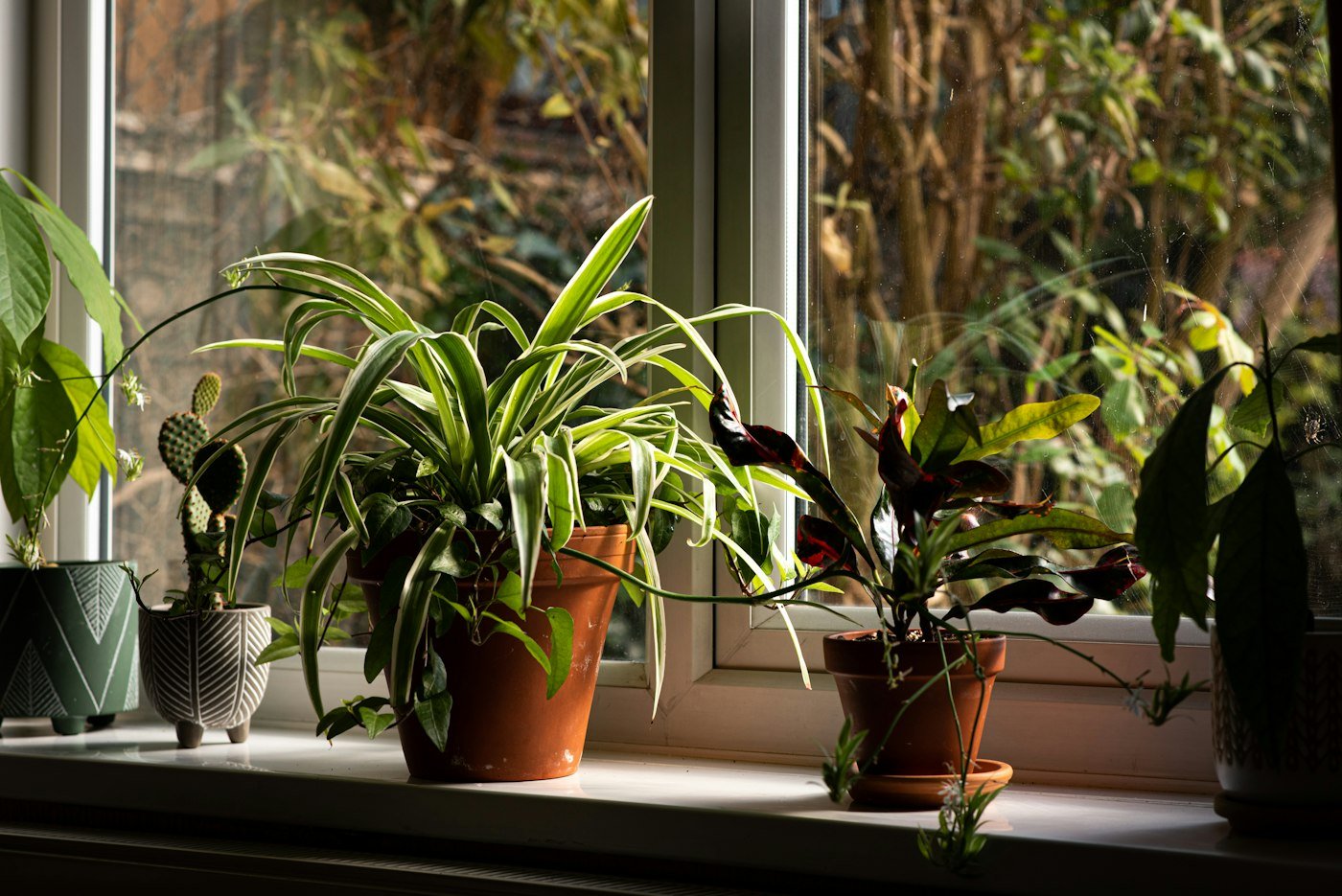
| Long, bare stems with big gaps between leaves (leggy growth) | Too far from the window; plant is stretching for light | Move it to the sill; trim long stems back to encourage bushier growth |
| Plant leaning hard toward the glass | Light coming from one side only | Rotate the pot a quarter turn every 2 weeks |
| New leaves smaller than old ones | Not enough energy from light | Move closer to the glass or add a grow light |
| Variegated leaves turning mostly green | Low light; the plant makes more chlorophyll | Give it the brightest spot in the window |
| Lower leaves yellowing, soil stays wet for days | Overwatering in low light, not lack of light alone | Let soil dry more between waterings; check roots. See why leaves turn yellow. |
| Small flies around the pot | Constantly damp soil (fungus gnats) | Water less; see our fungus gnats guide |
| Mushy stems, sour smell from the soil | Root rot from soil that never dries | Act quickly with our root rot rescue steps |
Seasonal adjustments for a north window
- Spring and summer: the best months. Plants grow most now, so this is the time to repot, feed lightly and take cuttings. Around midsummer, a little early or late sun may reach the sill; it is gentle and rarely a problem.
- Autumn: light drops quickly. Move plants as close to the glass as possible and start stretching the time between waterings. Our fall houseplant care checklist covers the rest.
- Winter: the darkest period. Water sparingly, stop fertilizing, keep leaves off cold glass at night, and watch for dry air from heating (see indoor humidity for tropical plants). A grow light helps most now.
Common mistakes in north-facing rooms
- Treating “low light tolerant” as “no light”. Even a ZZ plant needs to see the sky. A dark corner far from the window is not the same as a north window.
- Watering on a calendar. A weekly schedule that works in a sunny room drowns roots in a north room.
- Buying sun-loving plants for the sill. Succulents and cacti usually stretch and decline here without a grow light.
- Over-fertilizing to “boost” growth. It can’t replace light and leads to salt build-up and brown tips.
- Keeping heavy curtains closed. Every hour the curtains stay shut is light the plant never gets.
FAQ
Can plants grow in a north-facing window?
Yes. Many popular houseplants, including ZZ plants, snake plants, pothos, philodendrons, peace lilies, calatheas and ferns, grow well in a north window as long as they sit close to the glass and are not overwatered. Growth will be slower than in a bright south or west window.
What are the best plants for a north-facing window?
The most reliable are ZZ plant, snake plant, cast iron plant, pothos and heartleaf philodendron. Peace lilies, calatheas, prayer plants and ferns also do well because they naturally prefer soft, indirect light.
Is a north-facing window low light?
It is usually low-to-medium indirect light. Right at the glass, a clear north window can be bright enough for most foliage plants; a few metres into the room it becomes low light. Trees, buildings and curtains can reduce it further.
How far from a north window should plants be?
As close as possible: ideally on the sill or within about 1 metre (3 ft) of the glass. North light doesn’t burn leaves, so the main reason to move a plant back is cold glass on winter nights.
Do plants in a north window need less water?
Yes. Lower light means slower growth and slower drying soil, so plants usually need water less often than the same plants in a sunny room. Check the soil before every watering instead of following a fixed schedule.
Can succulents live in a north-facing window?
Most struggle. They tend to stretch, lose color and become weak. If you want succulents in a north room, add a full-spectrum LED grow light for 10–12 hours a day, or keep them in your sunniest window instead.
With the right plants close to the glass, a careful hand with the watering can and a few seasonal tweaks, a north-facing window can hold a healthy, green collection all year. For a complete routine that ties light, water and feeding together, see our practical indoor plant care system.