If you are asking why is my peace lily drooping, the most common answer is a water signal: the plant is either too dry (classic dramatic wilt) or too wet (root stress that looks limp). Droop is often reversible once you match soil moisture, light, and temperature—not a reason to panic or repot on sight.
Peace lilies (Spathiphyllum) are unusually expressive. They wilt when thirsty, then often perk up after a thorough drink. That same limp look can also appear when roots sit wet and cannot move water well. This guide uses calm, pattern-based diagnosis so you can tell which story you are seeing and revive the plant without product pitches or guesswork.
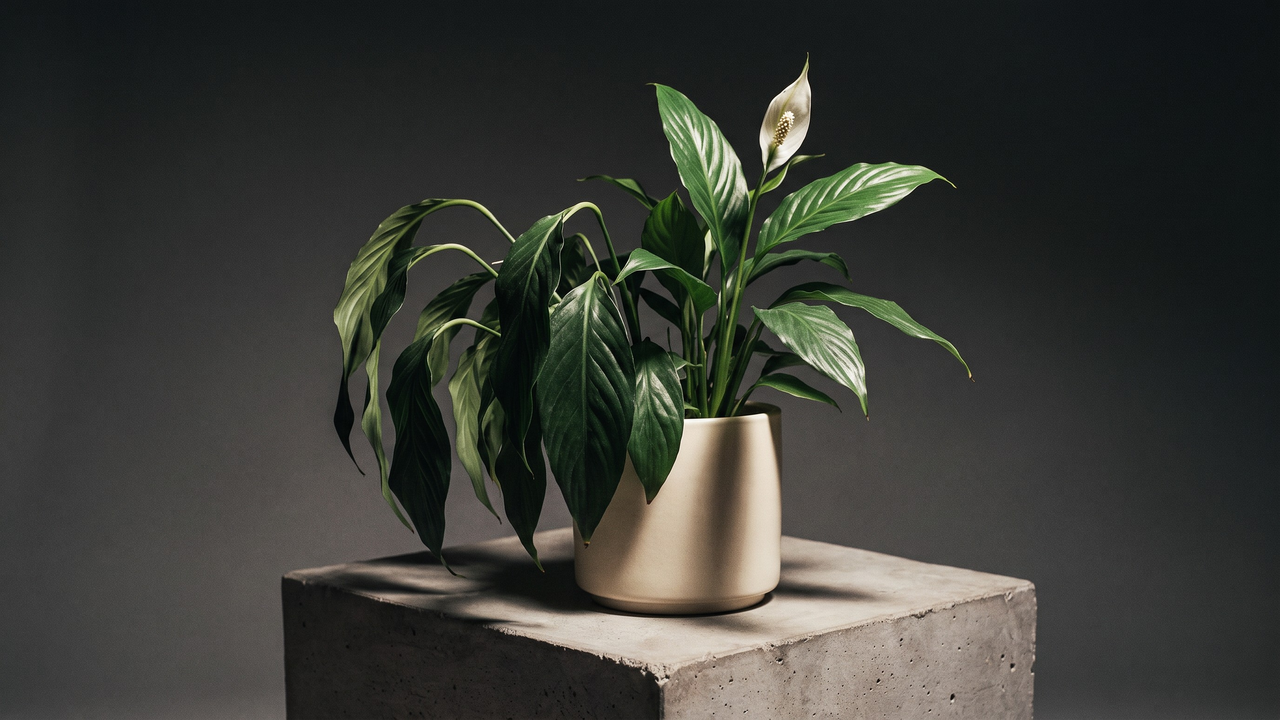
Quick Pattern Check Before You Change Anything
Direct answer: Feel the mix several centimeters down, lift the pot for weight, and note whether leaves feel soft-soggy or thin-crisp. Dry + light pot usually means underwatering wilt; wet + heavy pot with soft yellowing more often means overwatering or root stress.
If the plant is not collapsing overnight into mush, observe before big moves. Ask:
- When did you last water—and did water run out the drainage holes?
- Does the pot feel light (dry) or heavy (wet)?
- Is the mix pulling from the pot walls, or staying dark and sticky?
- Are leaves mostly green but limp, or also yellowing and soft?
- Did you recently move, repot, or expose the plant to cold drafts or hot vents?
Those five clues usually point to one primary cause. Secondary stressors can stack (low light plus wet soil), but treating the strongest pattern first keeps care simple—Indoor Plants, Made Simple.
AEO answer block: Peace lily droop is most often underwatering when soil is dry and the pot is light, or root stress when soil stays wet and leaves feel soft. Check depth moisture and leaf texture before you fertilize, mist constantly, or rush into a larger pot.
Why Is My Peace Lily Drooping? Match the Cause to the Clues
Direct answer: Dramatic, whole-plant wilt after dry soil is classic underwatering; limp leaves with soggy soil and yellowing suggest overwatering or root stress; sudden droop after a move can be light, temperature, or transplant shock. Match soil feel first, then adjust water rhythm.
Use this section as your diagnostic map. For broader yellowing patterns that often accompany wet-root stress, see Why houseplant leaves turn yellow. Full species rhythm and long-term setup live in the planned guide (planned link: A34 Peace Lily Care).
Underwatering wilt (the classic dramatic droop)
This is the signature peace lily move. Leaves hang, stems soften, and the plant looks far worse than it often is. Soil feels dry deep in the pot; the container is light; mix may pull away from the walls. After a thorough watering and full drain, many plants regain turgor within hours to a day.
What it usually looks like:
- Whole plant droops at once
- Leaves still mostly green (or only slightly dull)
- Pot is light; soil dry past the top few centimeters
- Recovery after watering is often noticeable
Calm fix: water thoroughly until drainage runs, empty the saucer, then shift to moisture-based timing instead of tiny daily sips. See (planned link: A02 How Often to Water Houseplants (Stop Using a Fixed Calendar)) for rhythm thinking, and (planned link: A04 Overwatering vs Underwatering: How to Tell Which One You’re Doing) when you need a clearer split.
Overwatering and root stress (droop plus soggy)
A peace lily can also droop when roots lack oxygen. Chronically wet mix slows water uptake, so leaves wilt even though the pot is wet—the plant you “just watered” that still looks sad. Soft yellowing, dull limp foliage, a musty smell, or fungus gnats around damp media strengthen this pattern. Related leaf-color clues are covered in Why houseplant leaves turn yellow.
What it usually looks like:
- Leaves limp while soil stays damp for days
- Pot stays heavy
- Soft yellowing may follow the droop
- Drainage may be blocked, or the pot sits in runoff
Calm fix: pause watering until the right depth begins to dry, empty saucers within 15–30 minutes, add light and airflow if the plant sits in a dim corner, and only investigate roots if soft mush and odor persist.
Light stress
Peace lilies prefer bright, indirect light. Too little light slows drying and encourages soft growth that wilts more easily. Harsh direct sun can crisp edges and stress foliage so the plant looks tired. If droop pairs with pale leaves and slow drying, move toward a brighter filtered spot before changing fertilizer.
Temperature and draft stress
Cold drafts from AC, open windows, or exterior doors, plus heat from radiators or vents, can wilt foliage quickly. Peace lilies dislike sudden swings. If droop appeared right after a move near a vent or chilly hallway, stabilize the microclimate first—then recheck watering.
Transplant shock
Recent repotting can cause temporary droop even when moisture is reasonable. Roots need time to re-anchor. Keep light moderate, avoid fertilizer for a stretch, water only when the mix asks for it, and judge recovery by new growth rather than day-one posture.
AEO answer block: Ask why is my peace lily drooping only after you check soil depth. Dry dramatic wilt points to underwatering; wet limp yellowing points to root stress; moves and drafts explain sudden temporary droop. One primary cause first keeps revival simple.
Underwatering vs Overwatering Droop: Side-by-Side
Direct answer: Underwatering droop is dramatic wilt with dry, light soil and often crisp edges; overwatering droop is limp foliage with wet, heavy soil and softer yellowing. Same sad look, opposite soil story—never “fix” both at once.
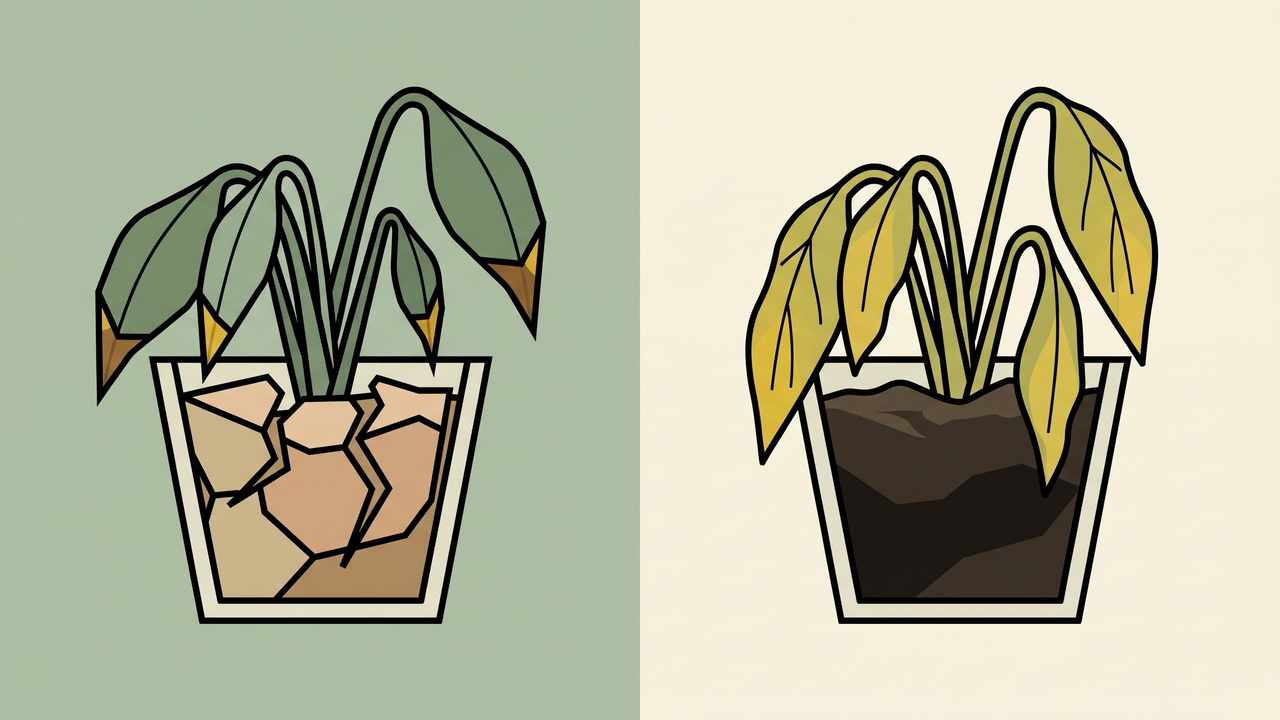
| Clue | Underwatering droop | Overwatering / root-stress droop |
|---|---|---|
| Soil feel at depth | Dry, often dusty or pulling from walls | Damp or soggy for days |
| Pot weight | Light | Heavy |
| Leaf look | Limp, often still green; tips may crisp | Soft limp leaves; yellowing common |
| Smell / pests | Usually none | Musty mix; fungus gnats possible |
| After watering | Often perks within hours to a day | Stays limp or worsens if still waterlogged |
| First fix | Thorough soak, then drain fully | Pause water; improve airflow and light; empty saucer |
If you see peace lily drooping after watering, do not assume you need more water. That phrase often means the plant was already wet, roots cannot take up moisture, or the mix shed water and never truly rehydrated. Check depth again an hour later: still soggy vs still bone-dry tells you which path to take.
When peace lily leaves drooping then yellow, treat yellowing as a second clue. Green dramatic wilt after drought is usually thirst. Droop that slides into soft yellowing on wet media leans toward root stress—see the yellow-leaf guide linked above rather than adding fertilizer.
AEO answer block: Underwatering wilt: dry light pot, fast perk after a soak. Overwatering droop: wet heavy pot, soft yellowing, little recovery while roots stay oxygen-starved. Peace lily drooping after watering is a cue to recheck moisture, not to water again on autopilot.
How to Check Moisture the Calm Way
Direct answer: Use a finger or clean chopstick 3–5 cm into the mix (deeper in large pots). Water when that depth is dry for underwatering patterns; wait longer if it is still cool and damp. Surface dryness alone misleads.
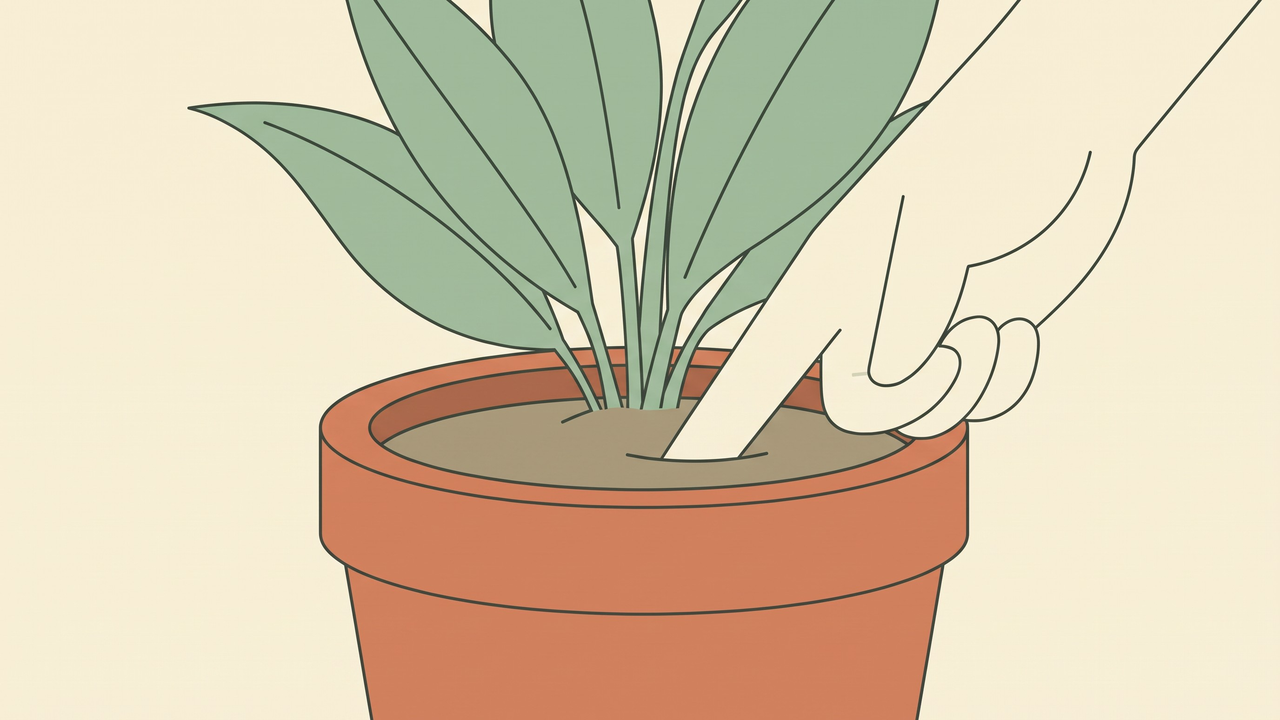
- Insert a finger or chopstick into the root zone, not just the crust.
- Lift the pot: light often means dry; heavy often means wet.
- Confirm drainage holes are open and the saucer is empty.
- If the mix sheds water (hydrophobic after drought), soak the pot 10–20 minutes in a basin, then drain fully.
- Resume moisture-based watering; skip fixed daily calendars.
Peace lily wilt underwatering recovers best when you rehydrate thoroughly once, then avoid bouncing between bone-dry and swampy. Consistency beats volume theater.
AEO answer block: Check soil at depth before every rescue. Dry depth plus light pot supports a full watering. Cool damp depth plus heavy pot means wait. Surface-only checks cause most false “I just watered” confusion.
How to Revive a Drooping Peace Lily (Numbered Steps)
Direct answer: Diagnose soil first, correct water once in the right direction, stabilize light and temperature, then wait for turgor and new growth. Most underwatering wilts rebound quickly; wet-root cases need patience, not more water.
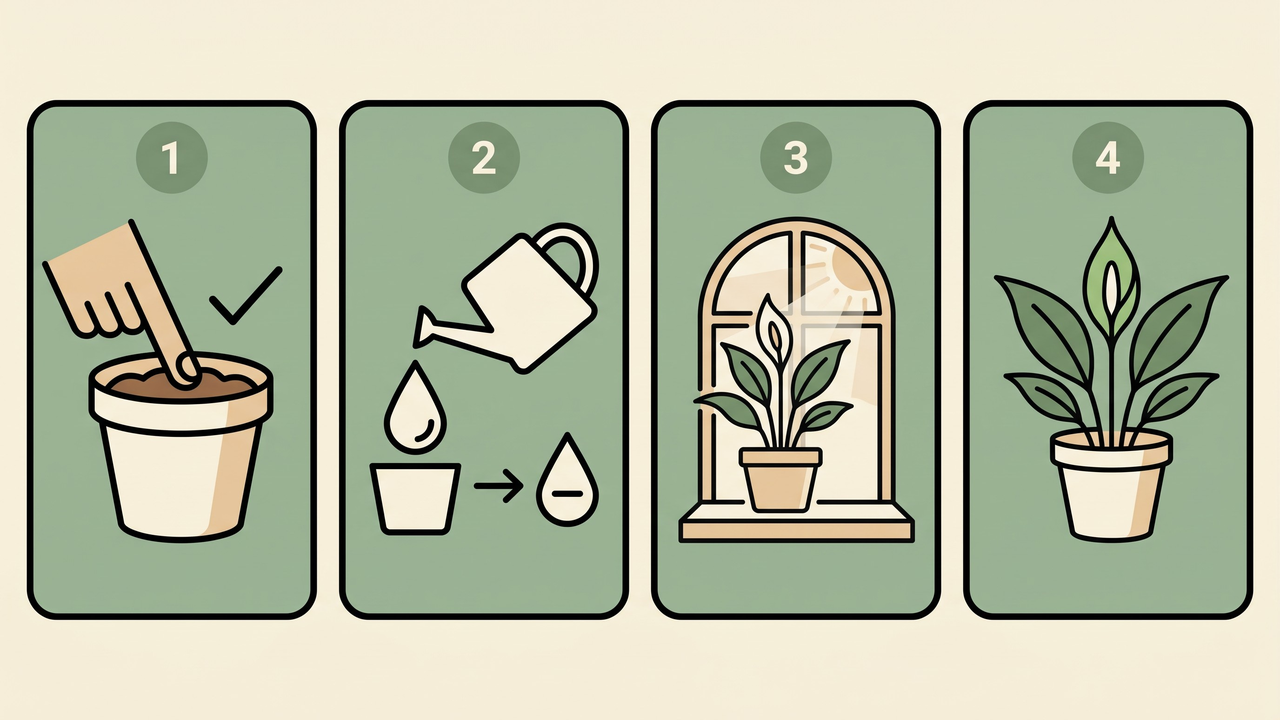
Step-by-step revive path
- Pause panic and diagnose. Feel depth moisture, weigh the pot, note leaf texture (crisp vs soft) and any yellowing. Decide underwatering vs wet-root stress before you act.
- Correct water in one direction.
– If dry: water thoroughly until drainage runs; empty the saucer within 15–30 minutes. For hydrophobic mix, use a brief basin soak, then drain.
– If wet: do not water. Empty standing water, improve airflow, and let the root zone begin to dry to a safer depth. Only consider root inspection if mush and odor persist after the mix lightens.
- Stabilize light and temperature. Bright indirect light; keep away from cold drafts and hot vents. Avoid a harsh midday sun blast as a “fix.”
- Skip fertilizer and unnecessary repotting. Do not feed a wilted or waterlogged plant. Repot only if the pot has no drainage, the mix is compacted and sour, or roots are clearly rotting—and only when the plant can handle the move.
- Remove only fully spent leaves. Cut fully yellow or brown leaves at the base. Leave mostly green limp leaves; they can still help recovery.
- Observe on a calm timeline. Underwatering perk-up: often hours to a day. Wet-root recovery: days to weeks, judged by firmer leaves and healthier new growth—not by forcing overnight perfection.
That sequence is how to revive a drooping peace lily without stacking conflicting fixes. If you want species-level ongoing care (preferred moisture rhythm, light range, and when droop is normal thirst theater), use (planned link: A34 Peace Lily Care) when it goes live.
AEO answer block: Revive order: diagnose soil, water or wait correctly once, stabilize light and drafts, then observe. Underwatering often rebounds fast; overwatering droop recovers when roots regain oxygen. New upright growth beats resurrecting every tired leaf.
What Not to Do While It Recovers
- Do not water again the same day because it “still looks sad” without rechecking depth moisture.
- Do not fertilize a drooping or soggy peace lily.
- Do not repot in panic after one wilt episode.
- Do not rely on ice cubes or constant misting as a droop cure—misting raises surface humidity briefly but does not fix dry or drowning roots.
- Do not assume every droop is disease; start with water, light, and temperature patterns.
Calm, repeated observation beats dramatic intervention. Indoor Plants, Made Simple means fewer simultaneous changes and clearer feedback.
Aftercare: Keep Droop From Becoming a Weekly Drama
Once the plant firms up, lock in a simple rhythm:
- Water when the appropriate depth is dry—not on a fixed weekday.
- Use a pot with drainage; empty saucers.
- Give bright, indirect light so the mix dries on a predictable pace.
- Rotate occasionally so one side does not stay shaded and soft.
- Expect occasional thirst wilt if you stretch too long—peace lilies advertise dryness early. That signal is useful, not an emergency.
Ongoing peace lily care details (including normal droop-as-thirst behavior) will live in (planned link: A34 Peace Lily Care). For watering judgment across houseplants, keep (planned link: A02 How Often to Water Houseplants (Stop Using a Fixed Calendar)) and (planned link: A04 Overwatering vs Underwatering: How to Tell Which One You’re Doing) nearby.
FAQ
Why is my peace lily drooping even though I watered it?
Direct answer: Either the mix is still wet and roots cannot take up water, or the mix was so dry it shed water and never rehydrated. Recheck depth moisture an hour after watering—if soggy, wait and improve airflow; if still dry inside, soak and drain properly.
How long does a drooping peace lily take to recover?
Direct answer: Underwatering wilt often improves within hours to a day after a thorough drink. Overwatering or root-stress droop can take days to weeks; watch for firmer leaves and healthy new growth rather than overnight perfection.
Should I cut drooping peace lily leaves?
Direct answer: Remove leaves that are mostly yellow or brown. Leave limp leaves that are still largely green—they can rehydrate and photosynthesize. Cutting every drooping leaf removes useful surface area during recovery.
Can overwatering make a peace lily droop like underwatering?
Direct answer: Yes. Both can look limp, but soil tells them apart: dry and light versus wet and heavy. Soft yellowing and musty mix lean toward wet-root stress; crisp tips and a light pot lean toward thirst.
Is peace lily drooping after watering normal?
Direct answer: Brief temporary limpness can happen if the plant was extremely dry and is still equalizing, but ongoing droop after watering usually means wet roots, poor drainage, or incomplete rehydration. Diagnose with pot weight and depth feel—not the calendar.