The most useful garden tip for an indoor plant collection is to match each plant to the light you actually have, then use a simple check-before-watering routine. For a modern living room or apartment, that means choosing a few plants with compatible needs, placing them where you can inspect them easily, and recording what changes. Follow the stages below to create a low-maintenance plant system rather than collecting attractive plants that quietly decline.
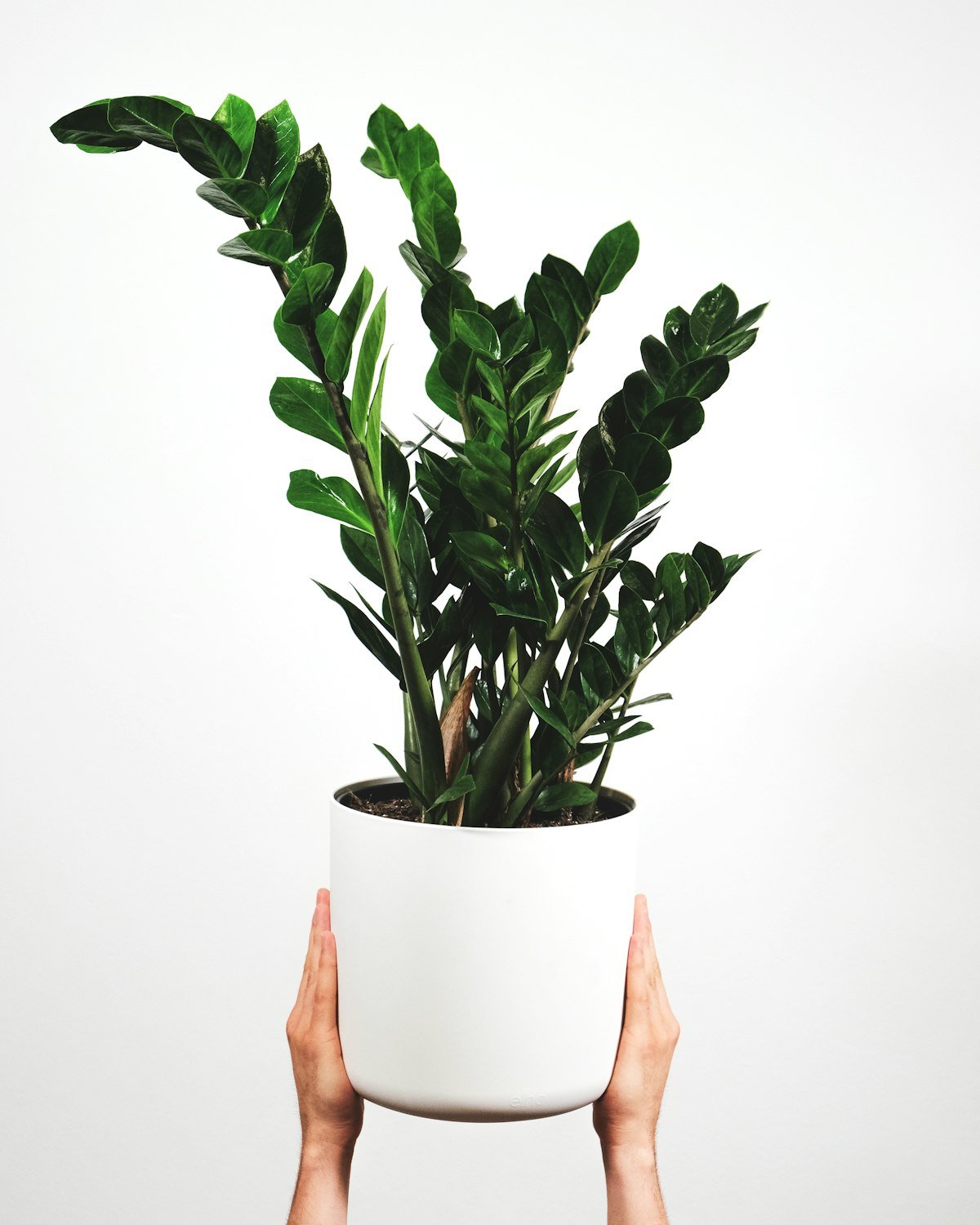
Audit the room before buying a plant
Begin with the space, not the plant. Walk through the rooms where you want greenery and note the direction of each window, nearby obstructions, heating vents, air-conditioning outlets, and places where furniture would make watering awkward. A bright window can still provide poor growing conditions if a neighboring building, deep overhang, or sheer curtain blocks much of the available light.
Make a three-zone light map
- Bright zone: close to an unobstructed window, suitable for plants that need stronger light.
- Medium zone: a bright room set back from the glass or filtered by a curtain.
- Lower-light zone: a room with limited direct brightness, where tolerant foliage plants are the safer choice.
These labels are a practical starting policy, not a measurement of light intensity. If a plant produces stretched stems, unusually small new leaves, or leans strongly toward the window, move it closer to the light. If leaves develop pale, bleached patches after a sudden move into strong sun, step it back or add a sheer curtain.
The Royal Horticultural Society recommends considering light, temperature, humidity, and watering together when caring for houseplants; its houseplant guidance is a useful reference for translating a room’s conditions into plant choices (RHS houseplant care guidance, accessed February 2026). For a minimalist interior, this prevents the common mistake of using a visually perfect plant in a biologically unsuitable corner.
Choose plants by care pattern and scale
Once you know the room’s conditions, choose plants that fit both the environment and your household routine. A snake plant can suit someone who travels or forgets watering, while a fiddle-leaf fig rewards a stable position and consistent observation. A Monstera can provide a strong architectural silhouette, but it needs enough room for its leaves and climbing growth.
Use one plant role per space
- Anchor plant: one taller specimen beside a sofa, cabinet, or empty corner.
- Surface plant: a compact plant for a shelf, desk, or console.
- Repeating plant: two or three similar plants that create visual rhythm without making the room feel crowded.
For a worked example, imagine a north-facing apartment living room with one brighter east-facing window. Put a snake plant near the darker bookcase, place a Monstera in the brighter zone with room to spread, and reserve the coffee table for a small plant that can be moved easily for cleaning. The decision is not “Which plant looks best?” but “Which plant can keep its shape and watering rhythm in this exact location?”
Check toxicity before bringing plants into homes with pets or young children. The ASPCA maintains a searchable list of toxic and non-toxic plants, so use the plant’s botanical name rather than relying only on a common name when verifying a purchase (ASPCA toxic and non-toxic plant list, accessed February 2026).
Set up the pot, soil, and drainage correctly
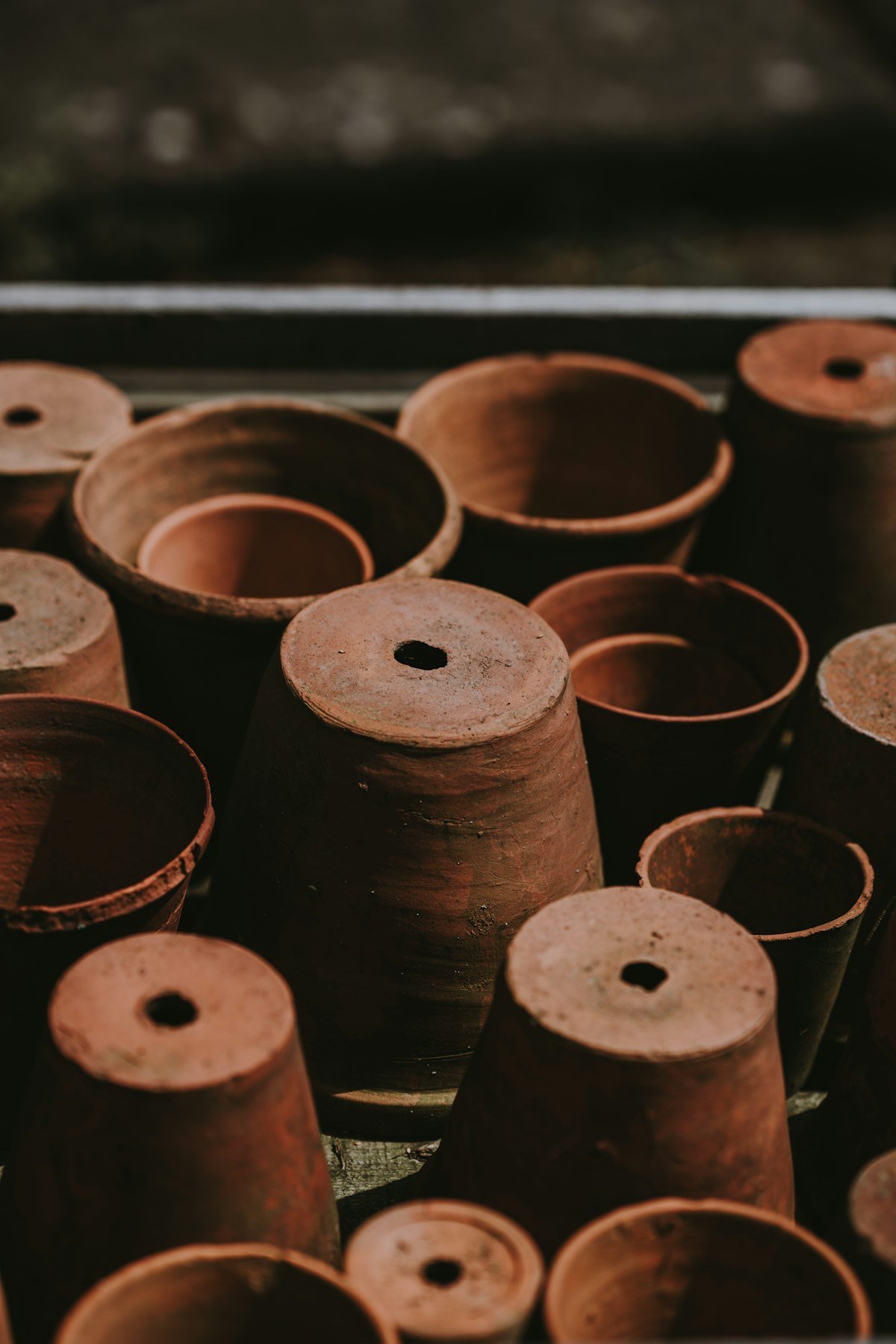
A healthy plant can still struggle in a decorative container that traps water. Keep the plant in a nursery pot with drainage holes, then place that pot inside a cachepot. This gives you a polished look while allowing excess water to leave the root zone. Empty collected water rather than letting the nursery pot sit in it.
Use the root ball as your sizing guide
Choose a replacement pot only modestly larger than the existing root ball; an illustrative starting policy is one size up, then adjust if the roots are tightly circling the container or the soil remains wet for too long. A much larger pot is not automatically safer: it can hold more damp soil around a small root system and make watering harder to judge.
Use a commercial indoor potting mix suited to the plant instead of garden soil. Garden soil is often too dense for containers and can reduce air spaces around roots. Do not cover the drainage opening with a thick layer of stones as a substitute for drainage; the key improvement is a real hole and an appropriate growing medium.
Repot when roots circle heavily, emerge from drainage holes, the plant dries unusually fast, or growth stalls despite adequate light. The University of Minnesota Extension explains that repotting decisions should account for root crowding, container size, and the plant’s growing conditions rather than follow a rigid calendar (University of Minnesota Extension repotting guidance, accessed February 2026).
Build a check-before-watering routine
Watering by weekday is convenient but unreliable because light, pot size, season, and room temperature change how quickly soil dries. Instead, check the soil and the pot’s weight before watering. Push a finger into the upper layer of mix, look for moisture lower down, and lift the container if it is small enough to handle safely.
Water thoroughly, then stop managing it
When the plant needs water, apply it slowly until some drains from the bottom. Let the pot finish draining before returning it to a cachepot. If water runs immediately down the sides while the center remains dry, the mix may have pulled away from the pot or become difficult to re-wet; water in smaller passes and inspect the soil rather than repeatedly adding more.
An illustrative starting policy is to check small pots weekly and large pots every week or two, but the signal to adjust is the soil itself: check more often if it is dry quickly, and wait longer if it remains damp. Do not treat that interval as a universal schedule. Penn State Extension likewise emphasizes adjusting houseplant care for the plant, container, light, and indoor conditions (Penn State Extension houseplant care guidance, accessed February 2026).
- Check the soil before adding water.
- Confirm the drainage hole is not blocked.
- Water the root ball, not only the exposed surface.
- Empty the saucer or cachepot after drainage.
- Record the date only as a clue, never as the decision itself.
Arrange the collection for care and visual calm
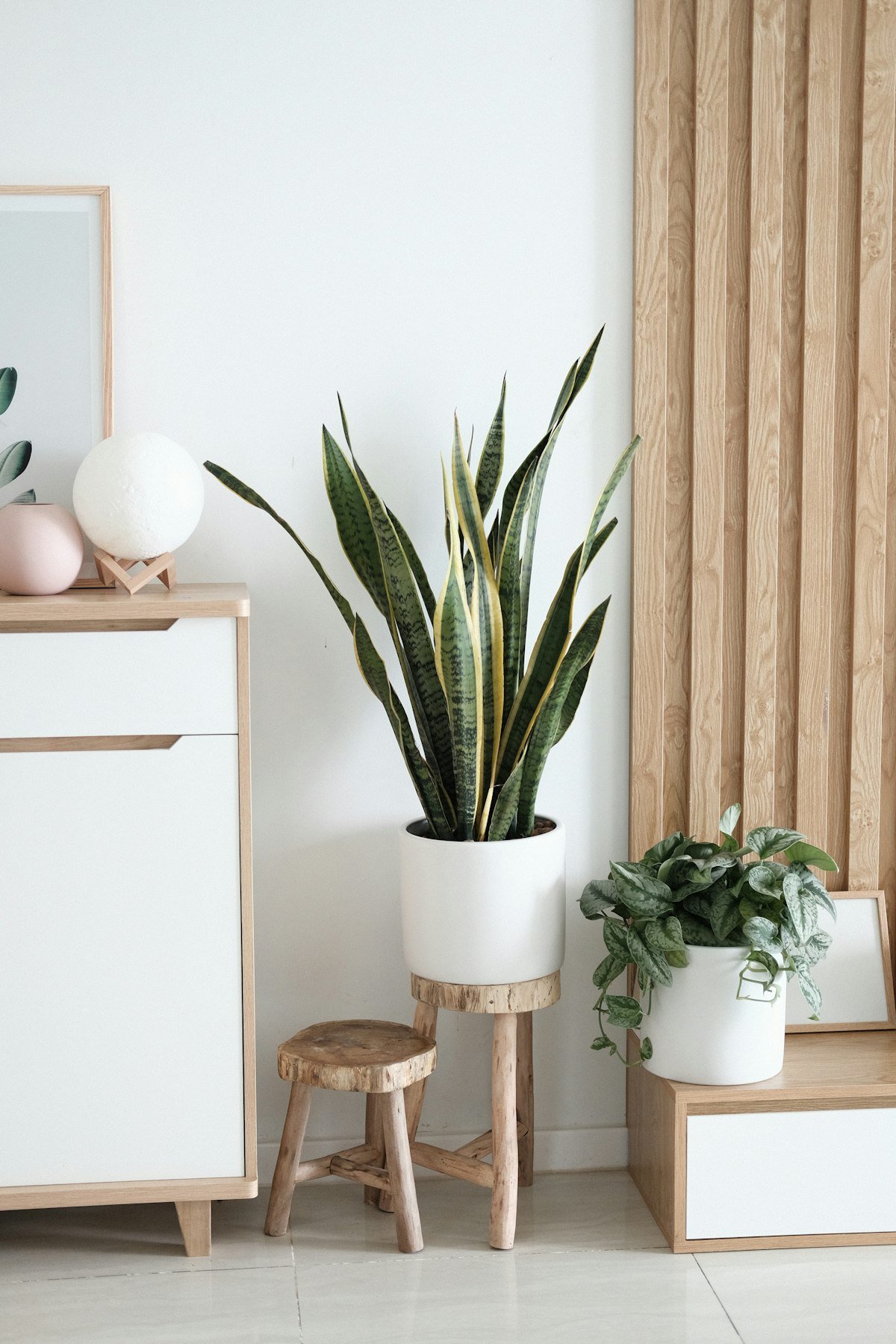
Good plant styling reduces maintenance because every pot remains visible and reachable. Leave enough clearance to rotate foliage, wipe leaves, inspect stems, and carry the pot to a sink. Group plants by similar light and watering needs, not merely by color or height.
Use a simple placement matrix
| Room condition | Plant role | Useful placement | Adjustment signal |
|---|---|---|---|
| Bright, indirect light | Large focal plant | Monstera in a stable floor pot | Move back if leaves bleach; move closer if growth stretches |
| Moderate light | Vertical accent | Snake plant beside a cabinet | Check for persistently wet soil before watering again |
| Stable bright room | Sculptural specimen | Fiddle-leaf fig with clearance around its canopy | Change position only gradually if it reacts to relocation |
| Limited light | Small, movable plant | Desk or shelf near the brightest available wall | Move closer if new growth becomes thin or one-sided |
The table is an implementation artifact: write the plant’s name, location, last check, and adjustment signal on a note in your phone. This is especially useful for interior designers managing a furnished project or for apartment dwellers who move plants between rooms. Keep plants away from hot blasts and cold drafts; a stable location is usually more helpful than frequent decorative rearrangement.
Diagnose symptoms before changing everything
When a plant looks unhealthy, change one variable at a time. Moving it, repotting it, fertilizing it, and watering it heavily on the same day destroys the evidence you need to identify the cause.
Read the symptom with the context
- Yellow lower leaves: check wet soil, poor drainage, and low light before assuming the plant needs fertilizer.
- Brown, crisp edges: inspect watering consistency, direct sun, dry air, and salt buildup in the potting mix.
- Long gaps between leaves: increase available light gradually rather than immediately adding fertilizer.
- Soft stems or a sour-smelling mix: pause watering and inspect the roots for prolonged saturation.
- Fine webbing or clusters on new growth: isolate the plant and inspect both sides of leaves before treating it.
Take a photo when you first notice a change and compare it after your adjustment. An illustrative starting policy is to wait about one to two weeks before making a second major change, unless the plant has obvious collapse, pests, or dangerously saturated soil. Shorten that observation period when damage is spreading; extend it when new growth is slow but otherwise healthy.
For leaves coated with dust, wipe gently with plain water and a soft cloth. Avoid polishing products that leave residue. Remove fully dead leaves with clean scissors, but do not remove a healthy leaf merely because it is older or slightly imperfect.
What to do first today
Choose one room and make the light map before buying anything else. Then select one plant for each available role, place it in a draining nursery pot, and create a phone note with its location, light zone, and soil-check date. Your first action should be a soil check—not a scheduled watering—because that single habit exposes the most common indoor-care mistake: adding water without confirming the plant needs it.
When you want a plant that fits this process and a modern home, browse CozyPlant’s curated indoor collection for options such as Monstera, fiddle-leaf fig, and snake plants. Use the room audit above to choose the right match at CozyPlant.
Authored with NotFair SEO