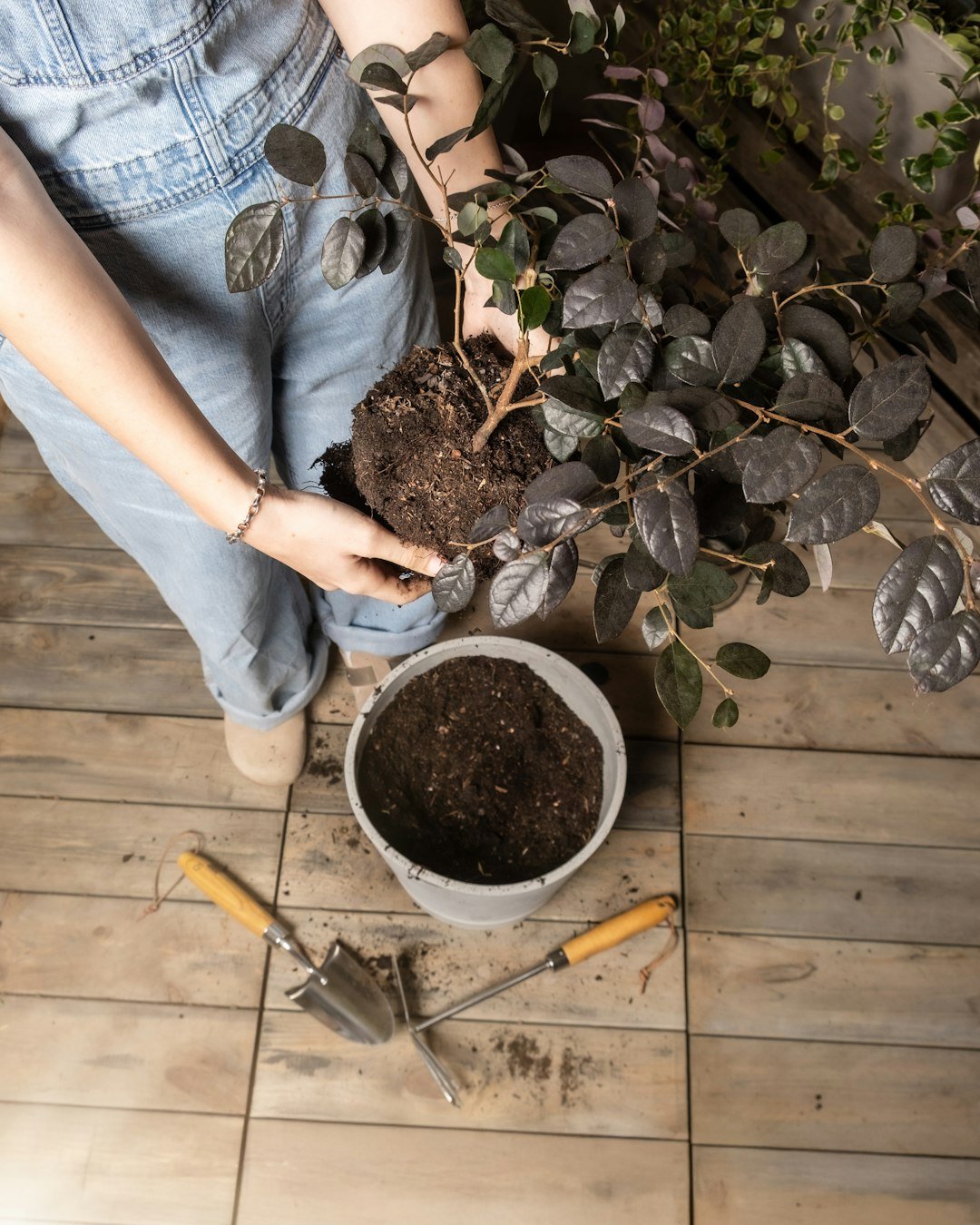
Repotting is not simply moving a houseplant into a bigger container. The pot size, drainage, root condition, growing medium, and timing all affect how well the plant recovers. Done for the right reason, repotting can restore usable growing space and improve the root environment. Done unnecessarily, it can create avoidable stress.
When should you repot a houseplant?
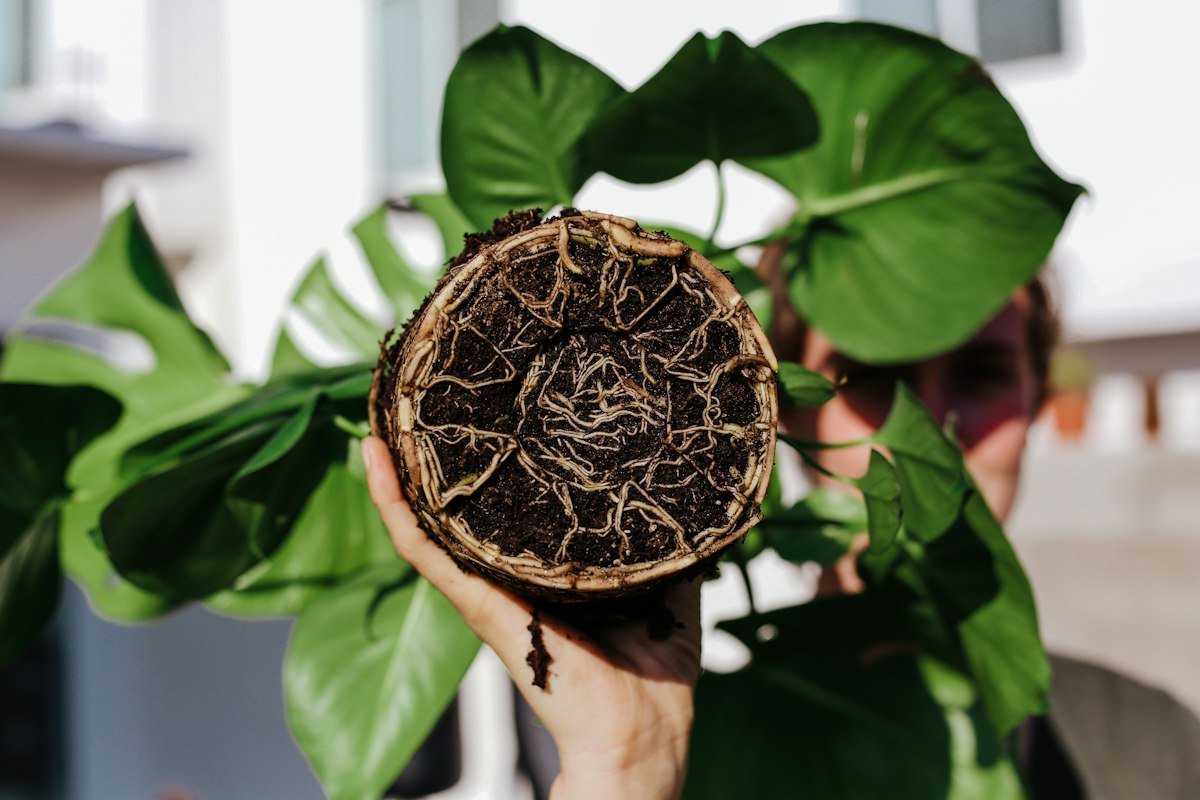
Look for evidence rather than following a rigid calendar. Roots growing through drainage holes, a severely crowded root ball, a pot that dries unusually quickly, or a growing medium that has broken down can all justify inspection. A healthy plant does not automatically need a larger pot every year.
- Roots are circling densely around the root ball.
- Roots are emerging from drainage holes.
- Water is passing through unusually quickly because the medium has compacted or degraded.
- Growth has stalled despite otherwise suitable care.
- The current container is unstable or no longer supports the plant.
Choose the next pot carefully
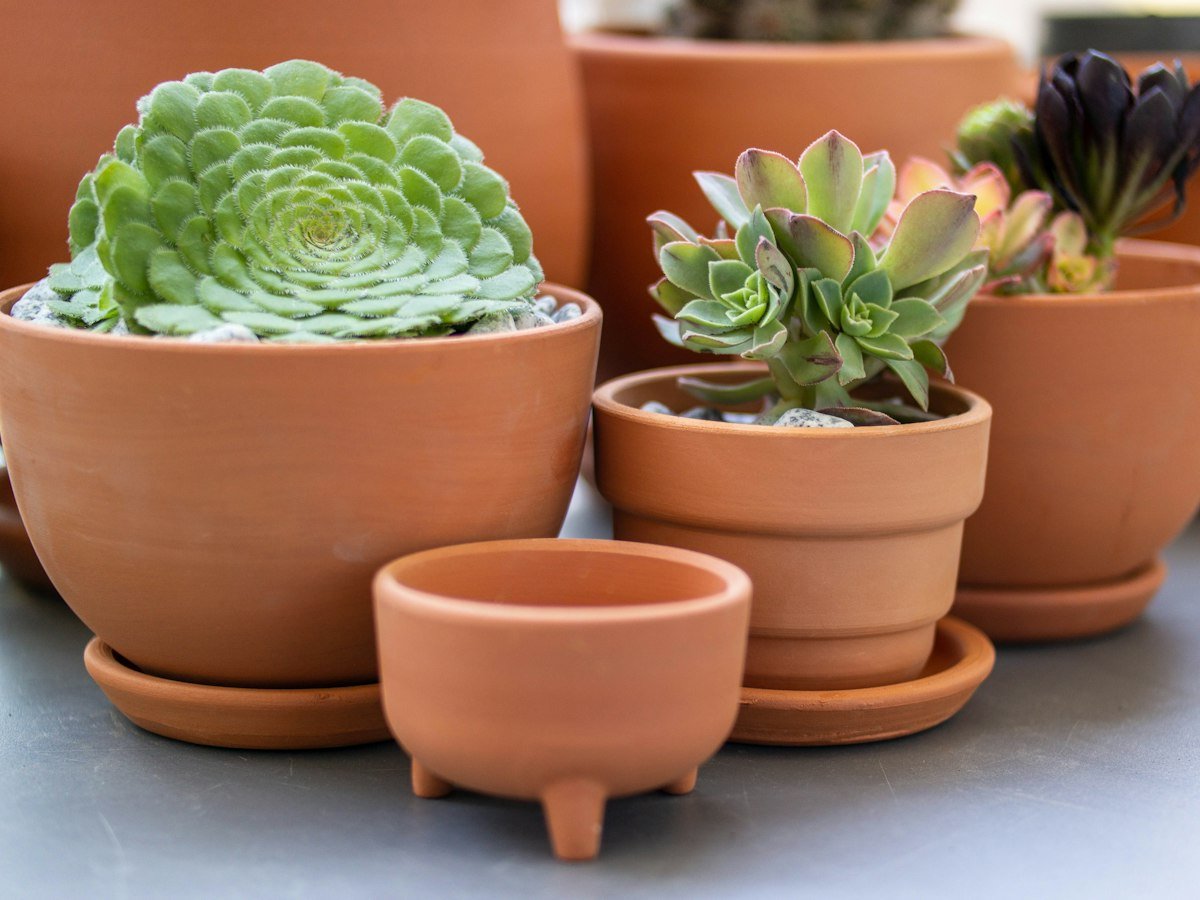
The next container should generally be only modestly larger than the current root system. A dramatically oversized pot contains more unused wet medium around the roots and can make moisture management harder. Always prioritize a container with effective drainage for plants that are sensitive to persistent wet soil.
Choose a suitable growing medium
There is no single mix for every houseplant. Tropical foliage plants, succulents, and moisture-sensitive species can have different requirements. The practical goal is a medium that provides enough water retention for the plant while maintaining air space around the roots and allowing excess water to leave.
How to repot a houseplant step by step
- Prepare the workspace. Have the new container, fresh growing medium, clean tools, and a surface that can be cleaned easily.
- Inspect the current pot. Check drainage and loosen the plant carefully rather than pulling hard on the stems.
- Examine the roots. Look for dense circling, dead sections, or signs of persistent moisture problems.
- Prepare the root ball. Gently loosen only what needs to be loosened. Avoid unnecessary root damage.
- Position the plant. Keep the plant at an appropriate depth; do not bury the stem or crown deeper than before unless the species specifically calls for it.
- Fill around the roots. Add fresh medium evenly and settle it without aggressively compacting it.
- Water according to the plant. After repotting, follow the plant’s normal moisture requirements rather than keeping the new mix constantly wet.
What to do after repotting
Expect some adjustment after a major root disturbance. Keep the plant in suitable light and avoid changing several other variables at once. Do not assume that more fertilizer will speed recovery. The plant first needs a stable root environment and appropriate moisture.
Common repotting mistakes
Using a pot that is much too large
More space is not automatically better. Excess medium can remain wet for too long, particularly when the plant has a small root system.
Ignoring drainage
A decorative container without a drainage hole can work as a cachepot when the plant remains in a separate draining nursery pot. Do not confuse a decorative outer pot with the actual root container.
Changing the light at the same time
After repotting, avoid moving the plant into a dramatically different environment unless there is a clear care reason. Stability makes it easier to identify any genuine problem.
Following a fixed repotting schedule
Calendar-based repotting can be less useful than inspecting roots, container fit, drainage, and growth. Some plants remain comfortable in the same pot for longer than others.
Repotting and watering
Fresh medium may behave differently from the old mix, so observe moisture after the change. Use the same evidence-based approach described in our houseplant watering tips instead of assuming the plant needs water on a fixed schedule.
Frequently asked questions
What size pot should I use when repotting?
Choose a modest step up that gives the roots additional room without surrounding a small root ball with a large volume of wet medium.
Should I loosen all the roots?
No. Loosen compacted or circling roots only as needed and avoid unnecessary damage.
Can I repot a stressed plant?
Sometimes repotting is necessary when the root environment is causing the stress. Otherwise, diagnose the underlying issue first rather than repotting automatically.
Final takeaway
Repot when the plant gives you a reason, choose a container that fits the root system, use an appropriate growing medium, and keep post-repot care stable. For species-specific guidance, see our snake plant care guide and our broader indoor plant care system.