Plant decor is the deliberate use of living plants, pots, stands, and placement to improve a room’s appearance while matching its light, space, and care constraints. The best approach is not to scatter greenery everywhere: choose a few plants with suitable mature sizes, repeat a restrained palette of containers, and place each plant where its light and watering needs can actually be met. That creates a cohesive indoor landscape for a living room, apartment, office, or bedroom rather than a collection of stressed plants.
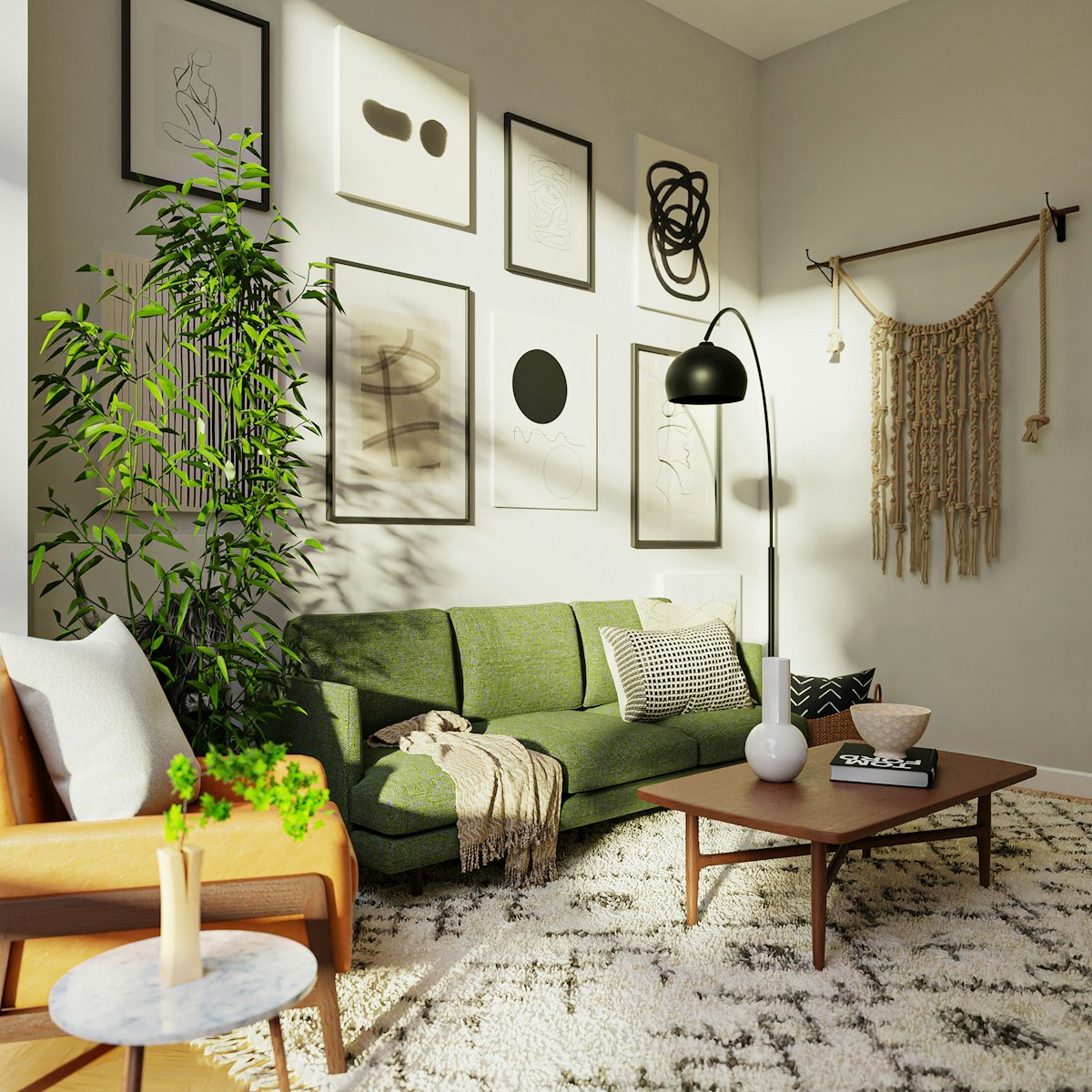
What Plant Decor means in a furnished room
Plant decor sits at the intersection of interior styling and plant care. A plant is a living design element, so its value depends on two outcomes: it should support the room visually, and it should remain healthy enough to keep supporting that visual role. A trailing pothos in a high shelf, for example, has a different design function from a tall fiddle-leaf fig beside a sofa, even if both are simply “greenery.”
Think of every plant arrangement as a small composition with four parts:
- Volume: the height, width, and visual weight the foliage adds.
- Structure: the pot, stand, shelf, or surface that holds and frames it.
- Relationship: how the plant aligns with furniture, windows, artwork, and walking paths.
- Maintenance access: whether you can rotate, water, inspect, and move it without disrupting the room.
This definition helps solve a common beginner problem: buying plants based only on appearance. A beautiful plant that outgrows a narrow hallway, blocks a window, or needs brighter light than the room provides is not successful plant decor. It is a future obstruction or replacement expense.
Use plants as visual architecture
Plants can soften hard edges, divide zones, emphasize vertical space, or add contrast to a neutral room. A tall specimen can mark the end of a sofa and visually separate a sitting area from a dining area. A compact plant can fill the empty corner of a bookcase without competing with the objects around it. A group of small pots can make a wide sill feel intentional, but only if their shapes and heights are varied enough to avoid looking like a row of identical objects.
For homeowners and designers, the useful question is not “Where can I fit another plant?” It is “What spatial problem should this plant solve?” Possible answers include an empty vertical corner, a harsh transition between materials, a low-contrast shelf, or a room that needs a natural focal point.
Separate visual style from biological requirements
A minimalist room often benefits from fewer, larger gestures: one architectural snake plant, one broad-leafed centerpiece, or one trailing plant on an open shelf. That does not mean every room should use the same species. Select the plant after assessing the location’s light, temperature changes, available floor area, and access to water.
For a practical starting point, browse Indoor Plants when you need to choose indoor plants for a home or apartment; it helps you compare greenery for home decor and select plants suited to different rooms rather than shopping by pot appearance alone.

Why thoughtful greenery changes how a room works
Plant decor matters because living foliage contributes color, texture, scale, and visual rhythm in ways that framed art or accessories cannot. Leaves introduce irregular shapes into rooms dominated by straight lines. Repeated greens can connect a wood floor to a neutral sofa, while a sculptural plant can give an under-furnished corner a clear purpose.
The effect is strongest when the arrangement has controlled repetition. Repeating one material, such as matte ceramic or natural fiber, makes several unrelated plants feel like a collection. Repeating a leaf shape or green tone can also connect rooms without making them look staged. The limitation is that repetition can become monotonous; one contrasting plant or container usually gives the eye somewhere to pause.
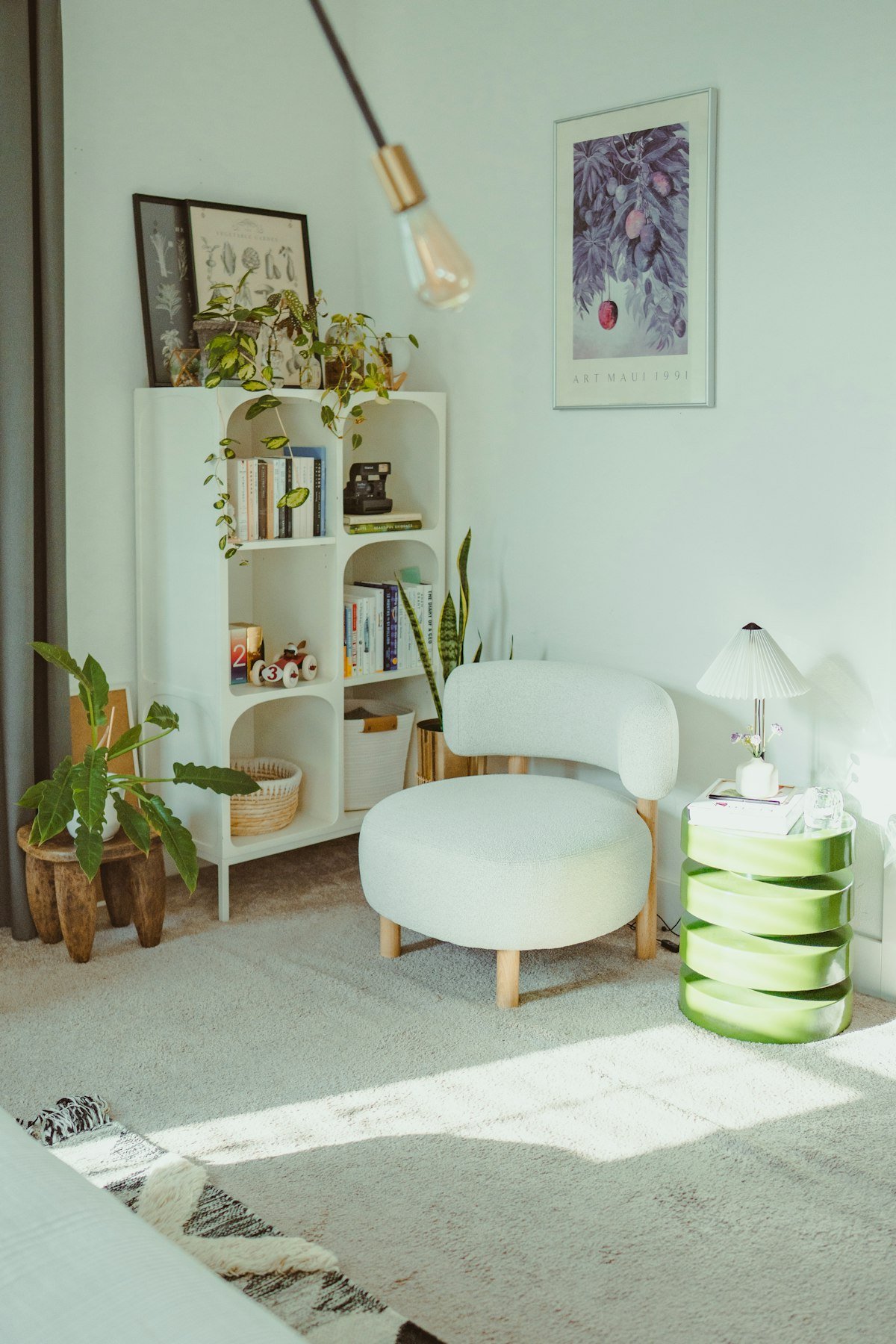
Balance scale, negative space, and sightlines
Large plants need breathing room. If foliage touches curtains, artwork, or a television, the entire corner can look crowded even when the floor area is technically clear. Leave enough negative space around a plant for its silhouette to read. A narrow upright plant works well beside a low cabinet; a wide, arching plant needs a broader visual field.
Use these checks before committing to a placement:
- View the plant from the room entrance and from the main seat, not only from directly beside the pot.
- Keep leaves clear of doors, drawer pulls, vents, and frequently used walkways.
- Compare the plant’s mature width with the furniture’s width, rather than styling only its current nursery size.
- Keep enough access around the container to lift it, check the soil, and clean fallen leaves.
These are design constraints, but they also protect the plant. A pot shoved tightly against a wall is harder to rotate and inspect. A plant pressed against a cold window may experience a different temperature than the rest of the room. Good styling anticipates these operational details instead of hiding them.
Choose containers as part of the material palette
The container determines whether a plant feels calm, rustic, architectural, or playful. In a modern interior, two or three coordinated finishes are usually easier to manage than a different decorative pot for every plant. Consider a limited palette of white, charcoal, terracotta, wood, or woven fiber, then vary height and shape within it.
Do not confuse a decorative cachepot with a planting pot. A cachepot can hide a functional nursery container, but water should not remain pooled around the inner pot. The Royal Horticultural Society’s houseplant guidance discusses container and drainage considerations alongside general indoor care at RHS houseplants guidance. Use that reference when selecting pots that support both the intended look and responsible watering.
How to make Plant Decor work biologically
The visual plan must follow the plant’s growing conditions. Light is usually the first constraint. A room can feel bright to human eyes while offering insufficient usable light for a plant several feet from a window. Window direction, glazing, curtains, nearby buildings, and seasonal changes all affect the result.
Instead of labeling a room simply “bright” or “dark,” describe the actual spot: direct sun for part of the day, bright filtered light, or low light away from windows. Then match the plant to that location. A plant that tolerates lower light may grow more slowly there; it does not necessarily thrive in complete darkness.
Match plant form to light and placement
Use a simple placement matrix before buying:
- Bright window: consider plants that can handle stronger light, while checking whether summer sun through glass may scorch leaves.
- Bright indirect area: place broad-leafed or patterned plants where they receive plenty of ambient daylight without harsh midday exposure.
- Dim corner: select a tolerant plant, reduce watering expectations, and accept slower growth rather than promising a dense display.
- High shelf: use compact or trailing plants that will not become a falling hazard and can still be reached for inspection.
Watering is the second major constraint. A decorative schedule such as “every Sunday” is convenient but biologically unreliable because soil dries at different rates depending on pot size, plant type, light, airflow, and season. Check the growing medium and the plant’s condition instead. The University of Minnesota Extension’s houseplant resources explain that indoor plant care depends on environmental conditions and species-specific needs; its guidance is useful for replacing calendar-only routines with observation: University of Minnesota Extension houseplant care.
Design a maintenance loop, not just a display
Every attractive arrangement needs a repeatable care path. Keep a saucer or waterproof tray where it cannot damage the floor. Place a small cloth or watering can nearby if that makes spills easier to handle. Leave enough room to turn the pot so growth does not lean permanently toward the window.
A workable care loop can be as simple as:
- Inspect leaves and soil whenever the plant is watered.
- Move the plant temporarily if you need to clean, prune, or water it thoroughly.
- Empty excess water from outer containers instead of letting the pot stand in it.
- Record unusual yellowing, drooping, pests, or sudden leaf drop before changing several variables at once.
This loop protects the design investment. A plant that is easy to inspect is more likely to receive timely care, while a plant hidden behind furniture can decline for weeks before the problem becomes visible.
Container size also affects the visual and biological result. An oversized pot may look substantial, but excess soil can stay wet around a small root system. A very small container may dry rapidly and make a tall plant unstable. Choose a container that supports the root system and the plant’s eventual proportions, not merely the scale you want on moving day.
Where Plant Decor breaks down
Most failures come from treating a styling decision as permanent. Plants grow, rooms change, and seasonal light shifts. A corner that works in March may receive intense afternoon sun in July, while a plant near a window may become crowded by autumn growth.
Common design and care mismatches
- Too many small plants: the room gains visual noise, and watering becomes a collection of separate chores.
- One oversized statement plant: the focal point overwhelms furniture or blocks useful light and circulation.
- Decorative pots without drainage planning: water damage or chronically wet soil becomes more likely.
- Plants selected for color alone: patterned or pale foliage may need brighter conditions than the chosen room provides.
- Unrealistic maintenance: a busy household chooses a high-attention plant for an inaccessible shelf.
Pet safety is another non-negotiable check. Some common houseplants can be harmful if cats or dogs chew them. The ASPCA maintains separate plant lists for cats and dogs, which can help you verify a candidate before bringing it into a pet-accessible room: ASPCA’s list of plants that can be toxic to cats. If a pet has eaten a plant, contact a veterinarian or an appropriate animal poison-control service rather than relying on a decor article.
Know when to remove a plant from the composition
Removing a declining plant is not a styling failure. It prevents one weak element from making the entire arrangement look neglected and gives you a chance to diagnose the cause. Is the plant receiving unsuitable light, staying wet too long, suffering from pests, or simply too large for the location?
Quarantine a suspect plant away from a collection while you inspect it. Clean fallen leaves and check nearby plants for similar symptoms. Avoid responding to every problem with more water or fertilizer; a symptom such as yellowing can have several causes, and adding inputs without identifying the constraint may intensify it.
For allergy-sensitive households, remember that indoor plants are not a substitute for ventilation or moisture control. The U.S. Environmental Protection Agency explains that indoor air quality is affected by multiple sources and conditions, including ventilation and moisture; use its indoor air quality guidance for broader household decisions rather than expecting a few plants to solve an air-quality problem.
How practitioners apply Plant Decor in real rooms
Professionals generally begin with the room’s function, then build a plant plan around sightlines and maintenance. A family room may need a durable floor plant outside the main play path. A small apartment may benefit more from one vertical plant and two shelf plants than from several pots competing for limited floor area. A residential designer should also confirm who will water the plants and whether the client accepts seasonal repositioning.
A measured starting arrangement
The following is an illustrative starting policy, not a universal design rule. Adjust it to the room, occupants, and plants:
- For a small living room, begin with 1 tall floor plant, 2 medium plants, and no more than 3 small shelf plants.
- Keep the main walking route at least 30 inches wide as a planning example, then verify local accessibility needs and furniture dimensions.
- Use 2 container finishes across the arrangement and add a third only when the room already contains several strong materials.
- Reserve at least 15 minutes once a week as an illustrative care window for inspection, leaf cleaning, and moving pots for watering.
- Photograph the arrangement from the doorway before buying additional plants; if the focal point is unclear, rearrange first.
The numbers above are not promises about plant health or a fixed interior-design standard. They are a way to limit impulse purchases and make the arrangement testable. If the room feels crowded with one tall plant, stop at one. If a long, bright shelf can comfortably support more greenery without blocking objects or access, expand gradually.
Apply a room-by-room decision sequence
Living rooms usually support a focal plant near a sofa, console, or empty corner. Choose a form that contrasts with the furniture: an upright plant beside low seating or a broad plant near narrow, vertical shelving. Keep screens and speakers visible, and avoid placing leaves where they brush people as they sit.
Bedrooms call for quiet scale and easy maintenance. A small plant on a dresser can be enough; avoid turning a bedside surface into a dense collection that competes with lamps, books, or personal items. Put watering access ahead of visual symmetry.
Kitchens have useful surfaces but also heat, steam, grease, and frequent movement. Keep plants away from stovetops and splashing water. A washable pot and a compact form are more practical than a wide specimen that crowds food-preparation space.
Home offices benefit from plants that frame, rather than obstruct, the working area. Place greenery to the side of a monitor or behind the desk if it does not interfere with light, camera framing, or cable access. A trailing plant can soften shelving, but it should not hang into the keyboard or chair path.
Before finalizing any room, make a short inventory:
- Which locations receive usable daylight, and for how much of the day?
- Which plant sizes can remain accessible after mature growth?
- Where can water be handled without risking floors, books, or electronics?
- Which plants are safe choices for the household’s children and pets?
- What is the maximum number of care tasks the occupants will realistically repeat?
Make a specific recommendation before you buy
Start with the room that has the clearest need, not the room with the emptiest shopping list. Choose one focal plant for scale, one or two supporting plants for texture, and containers that repeat an existing material in the space. Confirm light, mature dimensions, drainage, and pet considerations before ordering. Then live with the arrangement for several weeks before adding more; restraint makes plant decor easier to maintain and easier to revise.
For a curated way to choose greenery for modern rooms, explore CozyPlant’s indoor plant selection at CozyPlant; it is a practical next step when you want plants that support a minimalist home rather than clutter it.
Authored with NotFair SEO