Quick answer: To increase humidity for houseplants in a lasting way, use what actually moves the needle: a humidifier aimed at a plant corner, a naturally humid room with light (bathroom or kitchen), and grouping plants together. Misting alone and most pebble trays do not raise room humidity in a meaningful way—they feel helpful for a few minutes, then the air goes back to where it was. Aim for roughly 40–50% RH (a common horticulture rule of thumb from sources like the National Gardening Association and university extensions), measure with a hygrometer, and skip “compensating” with extra water.
If you already know your home runs dry and your calathea or ferns are crisping, this guide compares methods honestly: what works, what is mostly placebo, and how to verify the result. For the numbers—what’s too dry, which plants care most, and how to read a hygrometer—see our companion piece on indoor humidity for tropical houseplants. If the problem started when the radiators came on, start with protecting houseplants from dry air when the heat turns on.
Why raising humidity matters (and what target to use)
Thin-leaved tropicals lose moisture through their leaves faster than thick, waxy plants. When indoor relative humidity sits below about 30–35% for days or weeks, crispy edges, curling, and stuck new leaves show up first on calathea, maranta, ferns and similar plants. Raising humidity near those plants reduces stress; it does not replace watering based on soil moisture.
A practical target for most foliage houseplants is 40–50% RH, with sensitive tropicals often happier closer to 50–60%. That range comes from common garden and extension guidance, not a single lab study—and it is also comfortable for people. You do not need a greenhouse. You need a method that actually lifts RH around the plant and a way to check it.
Method comparison: what raises humidity vs what doesn’t
Use this table as a myth-busting snapshot. “Typical RH effect” means what you can usually expect in a normal apartment, not a sealed grow tent.
| Method | Typical RH effect | Best for | Caveats |
|---|---|---|---|
| Cool-mist or ultrasonic humidifier | Often +10–20 points near plants when sized and placed well | Sensitive tropicals in dry heated homes | Clean regularly; don’t blast max all day; watch for mold on walls |
| Humid room (bright bathroom/kitchen) | Often 10–20 points higher than a heated living room | Calathea, ferns, prayer plants | Needs enough light; avoid dark, steamy corners with zero airflow |
| Grouping plants | Modest local bump (a humid “pocket”) | Plant shelves and corners | Helps a little; rarely enough alone in 20% winter air |
| Pebble tray | Very small / local; room RH barely moves | Keeping pots above standing water | Useful for drainage habits, not as a humidity fix |
| Misting leaves | Minutes, not hours | Brief leaf cleaning / unfurling help | Does not raise lasting humidity; wet leaves overnight can invite spots |
| Watering more “for humidity” | None for air; raises root-rot risk | Never as a humidity strategy | Dry air dries leaves, not roots |
Humidifier: the method that reliably works
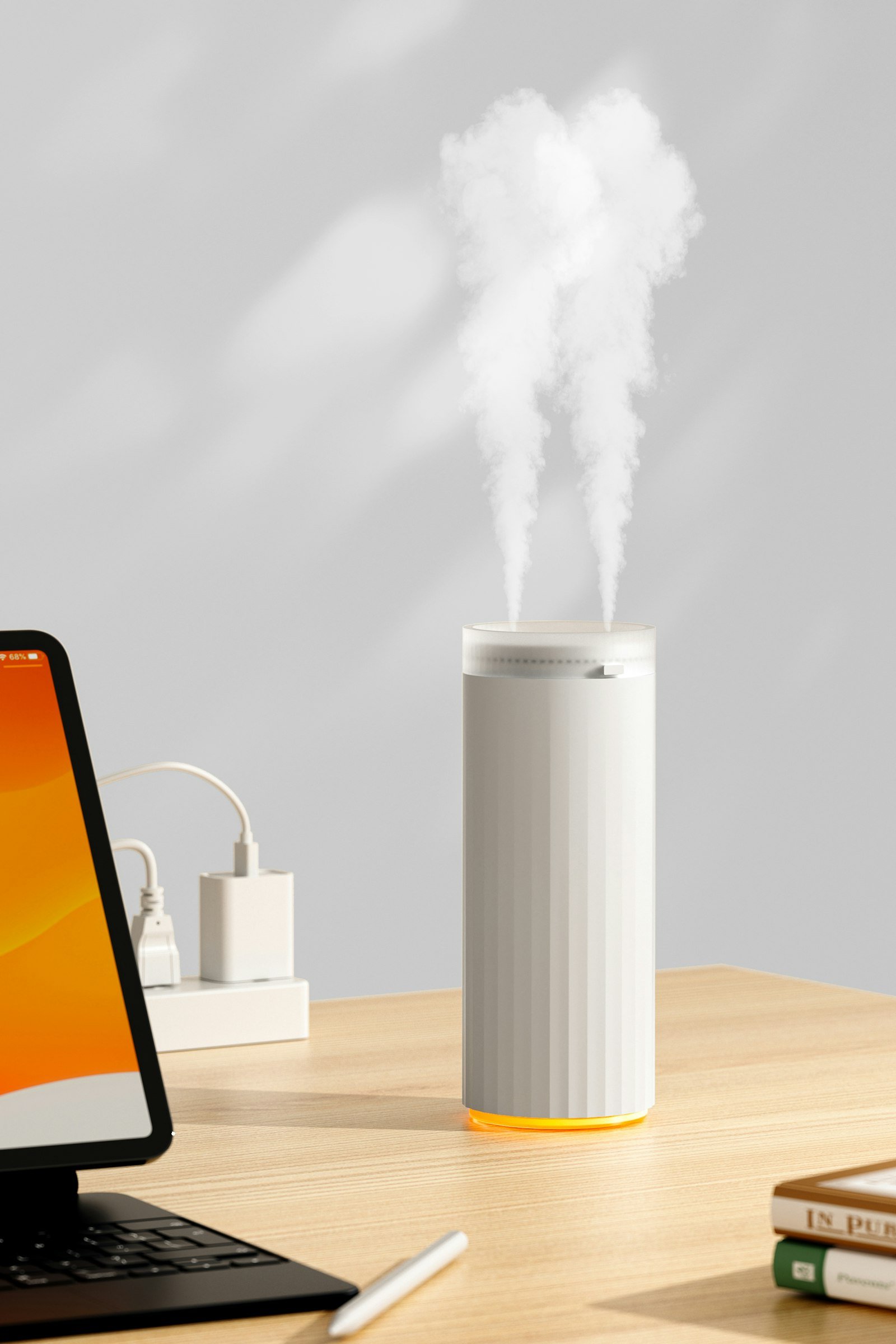
If you want to know how to increase humidity for houseplants with one tool that actually changes the reading on a hygrometer, a small cool-mist or ultrasonic humidifier is the answer for most dry apartments.
Placement and distance
- Put the humidifier near the plant group, not across the room and not blasting directly onto leaves for hours.
- A few feet away is usually enough. Sitting the unit right against foliage can leave water spots or keep leaves wet.
- Keep it off radiators, vents and windowsills that freeze or overheat.
Target % and runtime
- Aim for about 50% around sensitive plants, not 70%+ all day. Constant very high humidity with poor airflow favors mold and fungal leaf spots.
- Use a built-in humidistat if you have one, or run it in shorter cycles and check a hygrometer at plant height.
- You do not need to run it at maximum 24/7. Match output to how dry the room is.
Cleaning
Stagnant tank water grows film and can aerosolize gunk. Empty, rinse and dry the tank regularly; follow the maker’s descaling notes if you have hard water. A dirty humidifier is worse than no humidifier.
Grouping plants and humid rooms
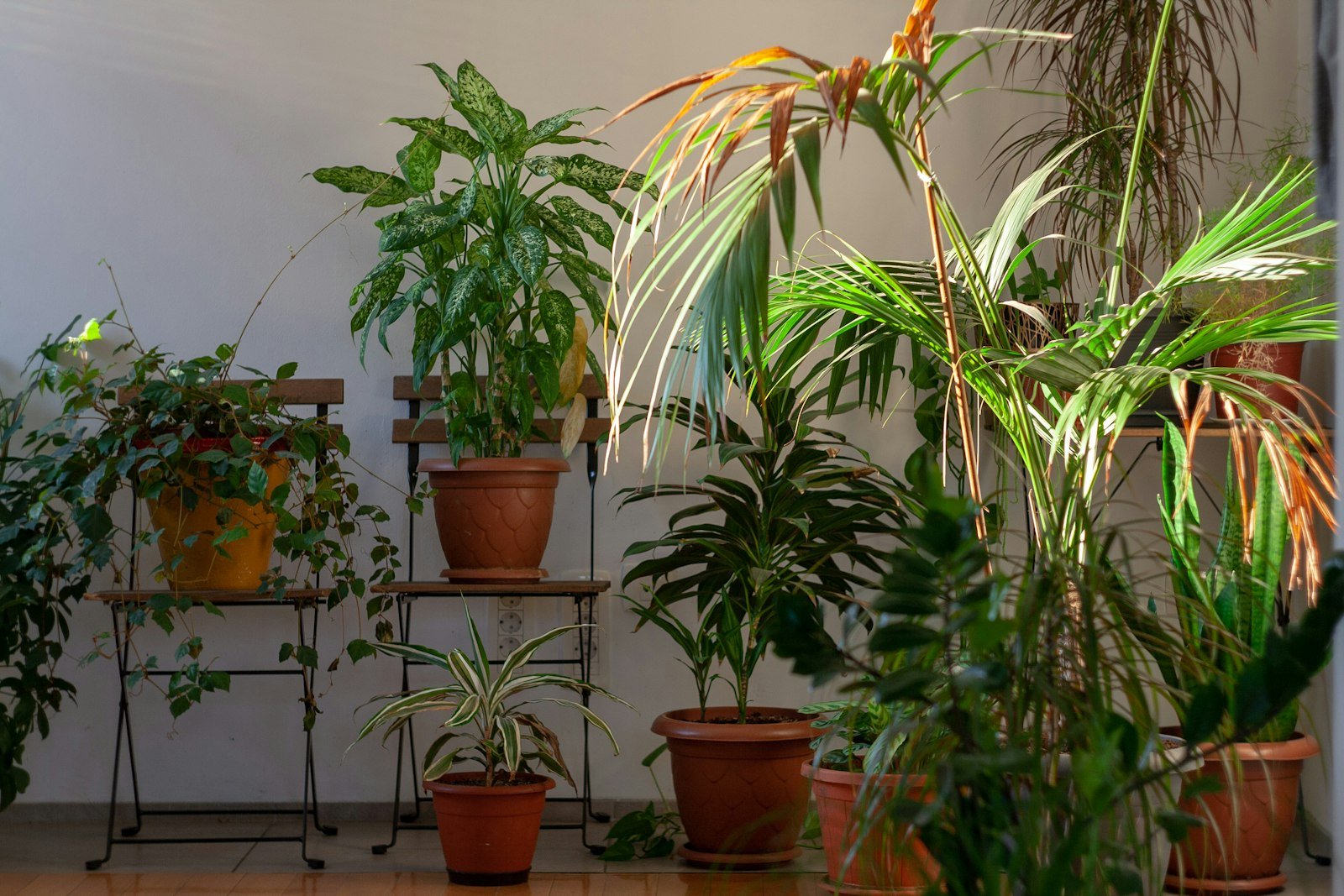
Does grouping plants raise humidity? Yes, a little. Plants release water vapor through transpiration, so a cluster creates a slightly more humid microclimate than a lone pot on an open shelf. It is free, looks good, and pairs well with a humidifier. It is rarely enough by itself when the living room sits at 20–25% RH in winter.
Humid rooms are often the easiest win. A bathroom or kitchen with a window (or strong grow light) is commonly 10–20 points more humid than a room with a heater. Move humidity-sensitive plants there when light allows. Avoid stuffing them into a dark, sealed cabinet with no airflow.
Tough plants that shrug off ordinary dry air—like the ZZ plant—can stay in the dry room while your calatheas get the better spot.
Pebble trays: what they do and don’t do
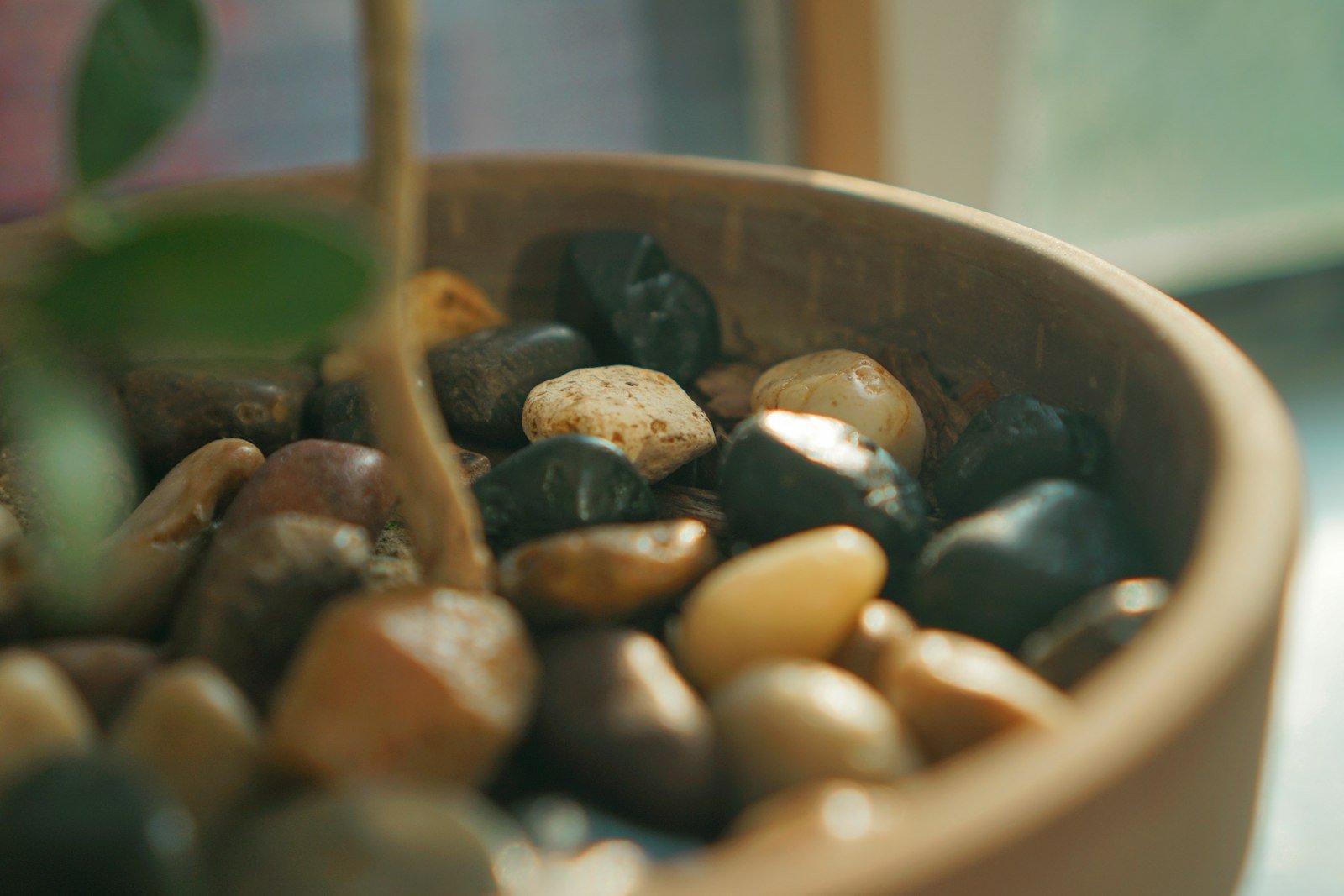
Humidifier vs pebble tray for houseplants: a humidifier changes room or corner RH in a measurable way; a pebble tray mostly does not. Evaporation from a shallow tray of wet pebbles can create a tiny damp layer right above the tray, but in a normal open room the effect on a hygrometer a foot away is usually negligible.
Pebble trays are still useful for one thing: keeping the pot above standing water so roots don’t sit soaked after you water. That is a drainage habit, not a humidity strategy. If your only “humidity plan” is a pebble tray, add grouping, a better room, or a humidifier.
Misting: brief help, not lasting humidity
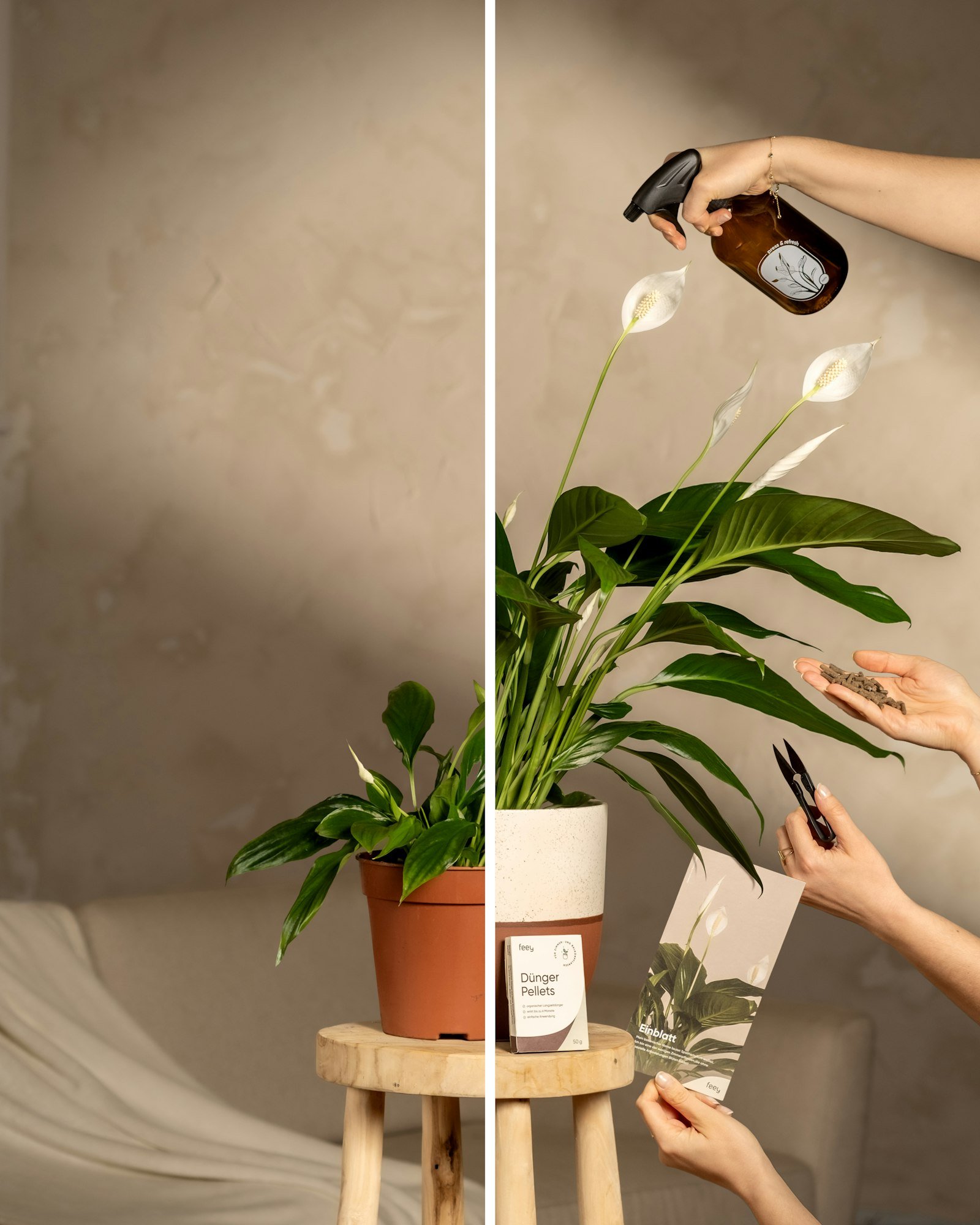
Does misting increase humidity? Only for a short time. A spray of water evaporates quickly; the room RH barely stays elevated. So misting is a poor substitute for a humidifier when the air is chronically dry.
Where misting can still help briefly:
- Softening a stuck new leaf so it unfurls with less tearing (common on some aroids and calathea).
- Rinsing dust off leaves so they can photosynthesize properly.
Where it backfires: soaking leaves late in the evening with little airflow, which can encourage fungal spots on some plants. If you mist, do it lightly in the morning and treat it as leaf care—not as your humidity system. We’ll dig deeper into misting myths and technique in a dedicated follow-up; for now, treat misting as optional, not foundational.
What not to do
- Don’t overwater to “make up” for dry air. Dry air stresses leaves; soggy soil stresses roots and leads to root rot. Water based on soil moisture, including in winter—see how often to water houseplants in winter.
- Don’t leave plants in sealed plastic bags long-term without checking airflow and mold. Short humidity tents for recovery are different from a permanent sealed bag.
- Don’t park pots on radiators or in the path of heating vents. That creates a pocket of very dry, hot air. Move plants 1–2 meters away when you can.
- Don’t ignore pests. Dry, warm air favors spider mites. Raising humidity helps prevention, but mites still need treatment if they’re already present.
If brown tips are your main symptom, confirm the cause with our brown leaf tips diagnosis guide—dry air is common, but salts and watering habits matter too. For seasonal timing of care changes, use the fall houseplant care checklist.
How to verify with a hygrometer
- Place a cheap digital hygrometer at plant height in the plant corner (not on a high shelf or next to a drafty window).
- Note the reading morning and evening for a few days before you change anything.
- Add one method at a time (move to a humid room, then group, then humidifier) and recheck.
- Success looks like the daily low climbing toward 40–50% (or ~50%+ for the most sensitive plants), plus fewer new crispy edges over the following weeks.
If the hygrometer barely moves after misting or adding a pebble tray, that is useful data—not a failure. It means you can stop relying on those gestures and use methods that work.
FAQ: how to increase humidity for houseplants
Does misting increase humidity for houseplants?
Only briefly. Mist evaporates in minutes, so it does not raise lasting room humidity. Use misting for light leaf cleaning or to help a stuck leaf unfurl, not as your main humidity plan.
Humidifier vs pebble tray—which should I use?
Choose a humidifier (or a humid room) when you need a real RH increase. Keep pebble trays if they help you avoid sitting pots in runoff water, but don’t expect them to fix dry winter air.
Does grouping plants raise humidity?
Yes, modestly. A cluster creates a slightly more humid pocket through transpiration. Combine grouping with a better room or a humidifier when your home is very dry.
How close should a humidifier be to houseplants?
Near the plant group—typically a few feet away—so the mist raises local humidity without soaking leaves all day. Avoid pointing a strong stream directly at foliage for hours.
What humidity should I aim for?
Around 40–50% suits most foliage houseplants; many thin-leaved tropicals prefer closer to 50–60%. Constant levels above ~70% with poor airflow are rarely needed indoors and raise mold risk.
Can I fix dry air by watering more?
No. Dry air and dry soil are different problems. Extra water in cool pots often causes root issues. Raise humidity in the air, and water only when the soil needs it.