A useful indoor plant watering schedule template should help you decide what to do today, not persuade you to water every plant on the same weekday. Homeowners furnishing a modern living room, apartment dwellers balancing plants with travel, and designers managing several species need a repeatable system that accounts for light, containers, soil, season, and visible plant signals. This guide gives you a copyable worksheet, a way to group plants by care behavior, and a sequenced setup plan for turning observations into a practical 2026 routine.
1. Replace calendar watering with a decision rule

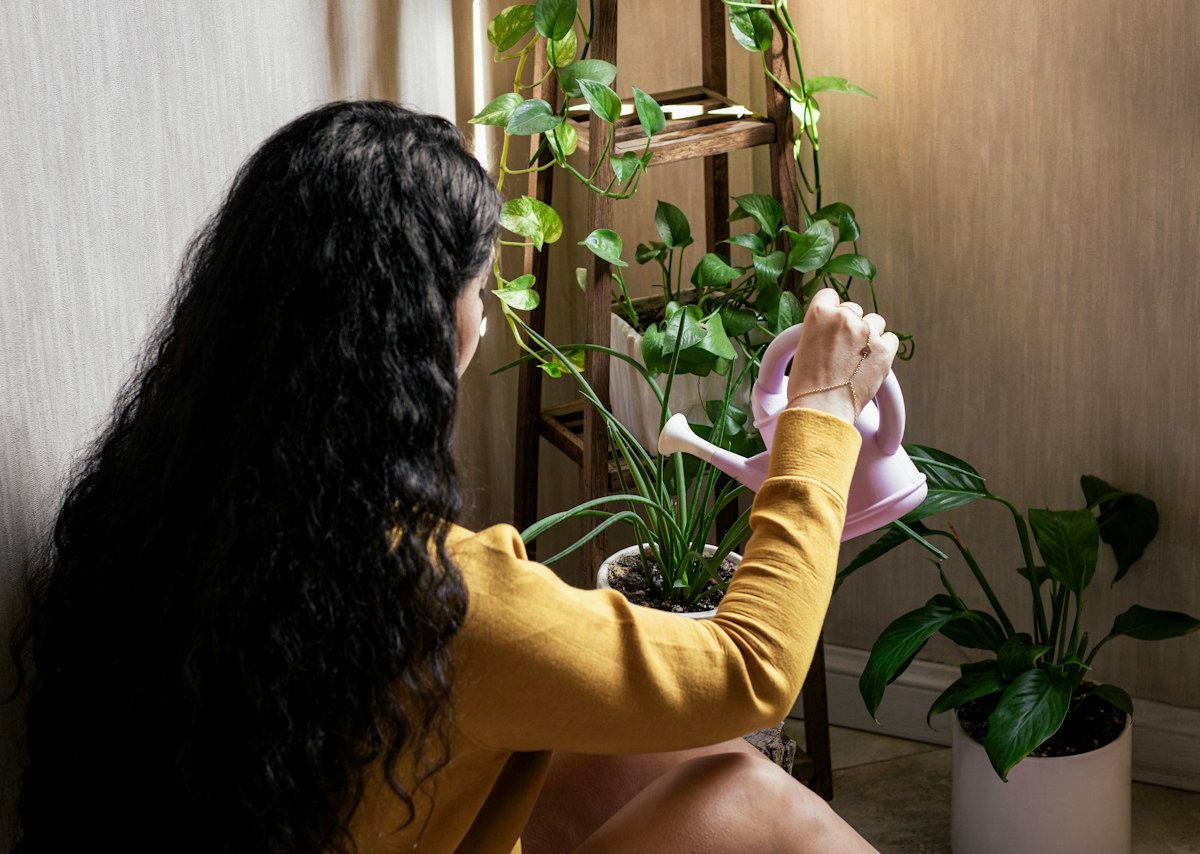
Use the calendar as a reminder to inspect, not as an automatic watering command. A fixed schedule fails because two plants can sit in the same room while drying at very different rates. A small snake plant in a porous pot may need a different check from a large Monstera in a plastic nursery pot, even if both receive similar light.
Watering frequency is influenced by plant type, pot size, growing medium, light, temperature, and humidity. Iowa State University Extension and Outreach identifies these kinds of environmental and container factors when explaining how often houseplants should be watered; the institution is Iowa State University, not University of Iowa. See its watering houseplants guidance for the underlying considerations.
When this principle applies
Use a decision rule whenever your collection includes mixed species, rooms with different windows, or plants that move between decorative cachepots and nursery pots. It is especially useful for beginners because it changes the question from “Is Thursday watering day?” to “Does this plant currently need water?”
Why it works
A calendar creates false confidence. A decision rule creates a short inspection loop:
- Check the moisture at the depth that matters for that plant.
- Look at the leaves and the potting mix together.
- Confirm that excess water can leave the container.
- Water thoroughly only when the evidence supports it.
- Record the date and any unusual condition.
The failure mode is treating a reminder as proof. A reminder can prompt a soil check, but it cannot see a cool room, a cloudy week, a newly repotted root system, or a pot that lacks drainage.
Concrete implementation
Create one recurring “plant inspection” reminder for the day you are usually home. Label it check plants, not water plants. During the inspection, mark each plant as water now, check again later, or investigate. “Investigate” is for yellowing, pests, compacted soil, or a container that stays wet far longer than expected.
Starting policy for an illustrative example: inspect a mixed collection once a week, then assign each plant its own next-check date. This is a workflow example, not a universal watering interval.
2. Build plant groups around drying behavior
A schedule becomes easier when it uses a few practical groups instead of one row for every plant. Grouping does not mean watering all members simultaneously. It means deciding which observations and reminders each type deserves.
Group A: Plants that tolerate a drier pause
Snake plants and many other succulents generally make poor companions for a “keep evenly damp” routine. Their thick leaves and water-storing structures make repeated watering before the mix has dried a common problem.
- Inspect deeper into the pot rather than judging only the surface.
- Give the plant strong light appropriate to its species while it dries.
- Use a container with a drainage opening.
- Do not add a small splash merely to satisfy the reminder.
Failure mode: watering by leaf appearance alone. A slightly soft or wrinkled leaf can have several explanations, including root trouble. Confirm the growing medium and roots before increasing frequency.
Implementation example: Put a snake plant in the “dry pause” group, inspect it during the weekly round, and schedule the next check based on the depth of dryness you observed. Record “slow drying” if the center remains moist between inspections.
Group B: Plants that prefer a more consistent check
Many tropical foliage plants, including Monstera, are better managed with closer attention to moisture changes than with long periods of complete neglect. This does not mean keeping the pot permanently saturated. It means avoiding a cycle of severe dryness followed by a rushed flood.
The Royal Horticultural Society recommends checking houseplant compost and watering according to the plant’s needs rather than relying on a universal interval. Its houseplant watering guidance also discusses factors such as plant type, container, and growing conditions.
Failure mode: confusing a moist surface with a moist root zone. Dense foliage can shade the surface, while roots lower in the container may be dry—or the reverse. Check at more than one depth when the pot is large.
Implementation example: For a Monstera in a bright room, inspect the upper portion of the mix and the pot’s weight. If the pot still feels heavy and the mix is damp below the surface, postpone watering and set a short follow-up check.
Group C: Plants that punish inconsistent attention
Fiddle-leaf figs and other large-leaved plants often make inconsistent care visible through drooping, leaf drop, or discoloration. That does not make them ideal candidates for a rigid schedule. It makes accurate placement and observation more important.
Failure mode: changing three variables at once. If you move a fiddle-leaf fig, repot it, increase watering, and add fertilizer in the same week, you will not know which change caused the response.
Implementation example: Keep the plant in one suitable location, log the date of each watering, and change only one care variable at a time. The schedule is valuable here because it preserves a record, not because it predicts an exact date.
3. Measure moisture with more than your fingertip
Use a small set of repeatable signals. The goal is not laboratory precision; it is to reduce guesswork. Combine the plant’s appearance, the pot’s weight, and the moisture deeper in the mix.
When this principle applies
Use multiple signals for large pots, deep containers, decorative cachepots, and plants that have already shown stress. It also helps interior designers and plant-care teams hand off responsibility because “looks fine” is too vague for another person to act on.
Why it works
Each signal answers a different question:
- Pot weight: Has the container lost a meaningful amount of water since the last thorough watering?
- Soil depth: Is the root zone still damp, or is only the surface dry?
- Leaves: Is the plant showing a pattern that deserves investigation?
- Drainage: Can excess water leave instead of collecting around roots?
University of Minnesota Extension explains that houseplant watering should account for the plant, the container, the potting medium, and the growing conditions. Its watering houseplants resource is a useful reference for checking those factors together.
Failure mode and correction
Failure mode: using one tool as an oracle. Moisture meters can be useful for learning a pot’s pattern, but a reading is not a diagnosis of root health. A fingertip can also mislead in a large pot because it samples only one small area.
Correct the problem by taking the same kind of observation each time. For example, note whether the pot feels light, whether the upper mix is dry, and whether the plant has any new symptoms. Consistency makes your records comparable.
Concrete implementation
Choose a discreet inspection kit that fits a minimalist home:
- A wooden skewer or chopstick for checking deeper mix.
- A saucer or waterproof tray for protecting floors and furniture.
- A narrow-spout watering can for directing water to the soil.
- A phone note or printed log for dates and observations.
For a large Monstera, insert the skewer away from the main stem, check the pot’s weight before watering, and inspect whether water drains freely. For a small snake plant, rely more heavily on the dry-down pattern and pot weight than on a shallow surface check.
4. Assign each room a watering zone
Organize by microclimate, not by furniture location. Two plants on the same console may experience different light if one is shaded by a lamp, artwork, or curtain. A plant beside a bright window can also dry faster than one across the room, even when the air temperature feels similar.
When this principle applies
Room zoning is useful for open-plan homes, apartments with one primary window, and design projects where plants are distributed across living rooms, bedrooms, kitchens, and home offices. It prevents a single household reminder from flattening meaningful differences.
Why it works
Light affects how actively a plant grows and how quickly its growing medium may dry. Containers and airflow add further variation. Rather than recording “living room plants,” record a zone with a description such as “bright east window,” “filtered light shelf,” or “low-light hallway.”
Failure mode: assigning zones by room name alone. “Bedroom” says little about whether a plant sits beside glass, behind a curtain, or near a heating vent. A useful zone describes the conditions that change the inspection decision.
Concrete implementation
Make three or four zones to start:
- Bright and warm: near a bright window or in a room that dries quickly.
- Medium and stable: away from direct window exposure with fairly consistent conditions.
- Low-light or slow-drying: farther from windows, in cooler corners, or in larger containers.
- Recently changed: moved, repotted, pruned, or showing symptoms.
Place a small label in your log rather than on the plant if you want an uncluttered interior. For example, “MF-02 / bright and warm” can identify a Monstera without adding visual noise to a minimalist shelf.
5. Make seasonal adjustments without inventing a rigid timetable
Change the inspection frequency before changing the watering amount. Seasonal shifts alter light, temperature, growth, and indoor conditions, but they do not affect every room equally. A bright winter window and a shaded summer corner may require different responses from the expected seasonal pattern.
When this principle applies
Use seasonal review points when daylight changes, heating or cooling begins, plants move closer to windows, or you bring a new plant home. A review is also useful after a vacation, a heat wave, or an unusually overcast period.
Why it works
Houseplants can dry at different rates as their environment changes. The safest adjustment is to observe more often for a short period, then revise the next-check date. This preserves the plant’s evidence instead of applying a seasonal slogan.
Failure mode: halving or doubling water automatically. A plant that is drying slowly does not necessarily need less water forever; it may have compacted mix, poor drainage, or reduced light. Likewise, a wilted plant may have damaged roots rather than a simple shortage of water.
Concrete implementation
At the start of each seasonal review, write down:
- Whether the plant has moved closer to or farther from a window.
- Whether heating, cooling, or a fan now affects the area.
- Whether the plant is actively producing new growth.
- Whether the pot is drying faster, slower, or about the same.
- Whether leaves show a new pattern of curling, spotting, or drop.
Then use a short observation period. Illustrative policy: inspect a newly changed zone twice during the first week, record what happened, and only then alter its routine. This is a starting policy for learning your home, not a universal seasonal rule.
6. Use the right watering method for the container
Watering technique is part of the schedule. A date in a spreadsheet is not enough if water runs down a gap beside dry soil, collects inside a cachepot, or never reaches the lower mix.
When this principle applies
Pay particular attention when using decorative planters, self-watering containers, small nursery pots, or large containers that are difficult to move. The method should protect flooring and furniture while still allowing you to assess drainage.
Why it works
Thorough watering and drainage help reveal whether the medium is accepting water evenly. The RHS notes that overwatering and poor drainage can create problems for houseplants; its watering guidance is a useful reference when deciding how the container should be handled.
For a pot with a drainage opening, water slowly enough to wet the mix rather than immediately flooding one channel. Allow excess to drain, then empty the saucer or cachepot. For a container without drainage, treat it as a design risk: use a removable nursery pot inside the decorative vessel or choose a plant and watering method suited to the limitation.
Failure mode and correction
Failure mode: leaving a nursery pot submerged in decorative water. The outer planter can hide the problem, especially in a pale or textured interior. Lift the inner pot after watering and check that the cachepot is not holding standing water.
Concrete implementation
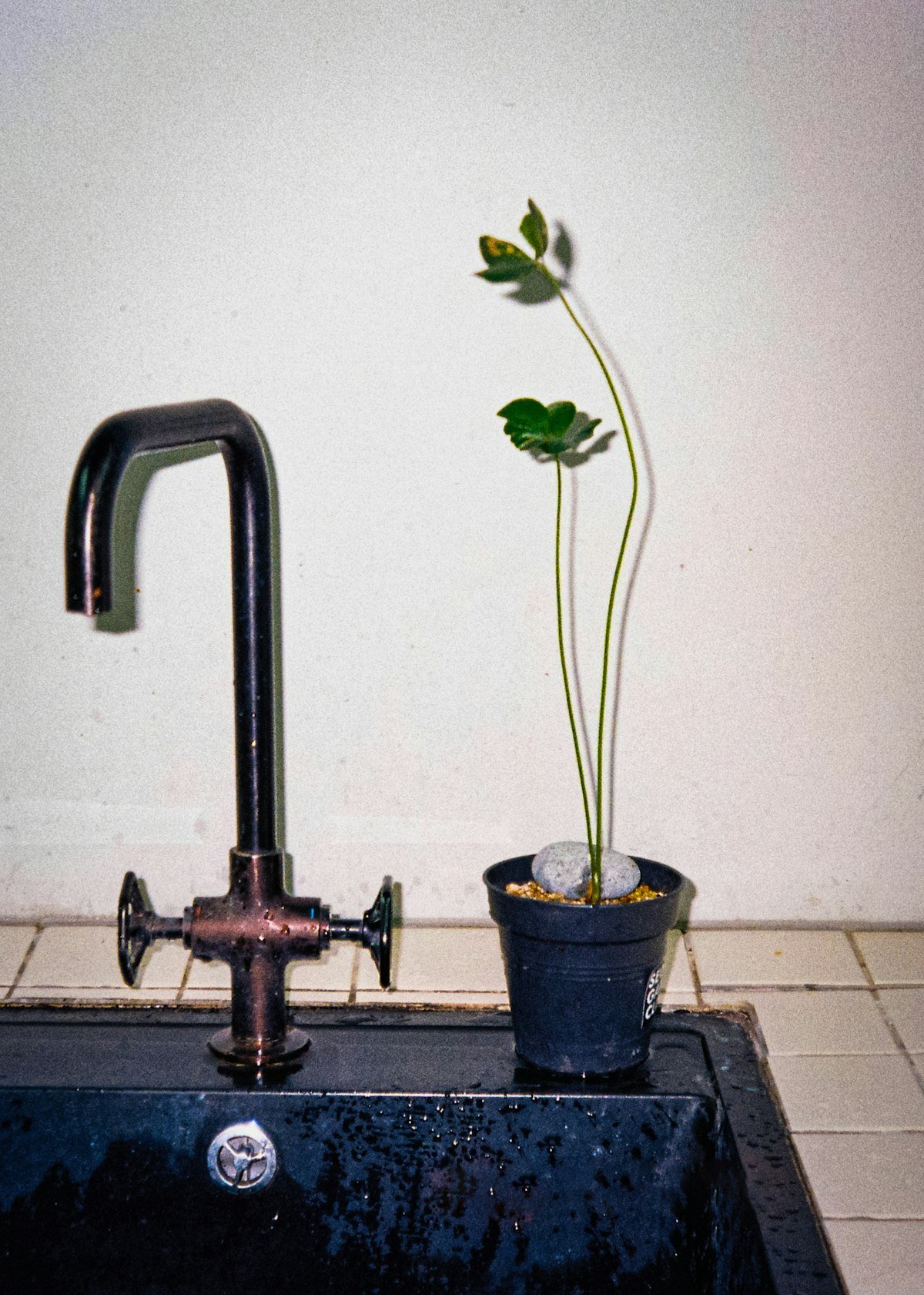
Create a “container note” in your worksheet: drainage hole, inner pot, self-watering reservoir, or no visible drainage. A fiddle-leaf fig in a heavy ceramic planter may need to be watered in a sink or bathtub so the excess can leave safely. A small plant on a desk may be easier to lift, drain, and return once the exterior is dry.
7. Copyable Indoor Plant Watering Schedule Template
This is the consolidated worksheet to use for a new plant, a room reset, or a handoff to someone caring for your collection. Fill it in once, then update only the fields that change.
Template: plant watering decision worksheet
| Prompt | Your answer |
|---|---|
| Plant name and location: What is it, and exactly where does it sit? | [Plant name] — [room, window direction, shelf or floor] |
| Drying zone: Does this spot dry quickly, steadily, or slowly? | [Bright and warm / medium and stable / low-light or slow-drying / recently changed] |
| Container setup: What holds the plant, and where can excess water go? | [Pot material and size] — [drainage hole, inner pot, reservoir, or no visible drainage] |
| Inspection signal: What will you check before watering? | [Pot weight] + [soil depth] + [leaf condition] |
| Water-now rule: What evidence means this plant needs water? | [Describe the combination of observations] |
| Last watering: When was it watered, and what happened afterward? | [Date] — [drained freely, stayed wet, dried quickly, or other note] |
| Next inspection: When will you check it again? | [Date or reminder] |
| Exception flag: What would make you pause and investigate? | [Yellowing, pests, odor, compacted mix, drooping, root concerns, or none] |
Filled example
Plant name and location: Monstera — living room, bright east-facing window, on a low stand.
Drying zone: Bright and warm; the room receives morning light and the plant is not behind a curtain.
Container setup: Plastic nursery pot inside a ceramic cachepot; drainage hole present; cachepot must be emptied after watering.
Inspection signal: Pot feels lighter than after watering, upper mix is dry, and leaves are not showing a new symptom.
Water-now rule: Water when the pot has become noticeably lighter and the mix is dry to the plant’s usual inspection depth; postpone if the pot remains heavy or the lower mix is still wet.
Last watering: March 8, 2026 — drained freely; cachepot emptied.
Next inspection: March 14, 2026, then revise according to the observed dry-down.
Exception flag: Investigate if the pot stays wet much longer than usual, the soil smells sour, or leaves develop a new pattern of yellowing.
How to adapt the fields
- For a snake plant: Make the water-now rule more conservative and emphasize dry-down and pot weight.
- For a fiddle-leaf fig: Keep the location and observation notes precise so you can separate watering issues from relocation stress.
- For a plant-care team: Replace informal descriptions with shared terms such as “upper mix dry” or “cachepot empty.”
- For a minimalist home: Keep the worksheet digital and use short location codes on each plant record.
- For a new purchase: Add an exception note for acclimation and avoid assuming its previous nursery routine matches your home.
Do not fill in a universal number just to make the sheet look complete. The valuable fields are the observations and the next inspection decision. After several entries, your log will show the plant’s pattern more honestly than a copied weekly interval.
8. Troubleshoot the schedule when the plant disagrees
A schedule is a feedback system. When the plant repeatedly contradicts the plan, revise the diagnosis instead of becoming more aggressive with the watering can.
Use symptom patterns as prompts, not verdicts
- Mix stays wet: Check light, pot size, drainage, soil structure, and whether water is collecting inside the cachepot.
- Mix dries unusually fast: Check root crowding, container porosity, airflow, direct sun, and whether water is bypassing the mix.
- Leaves droop: Compare soil moisture with the plant’s normal appearance before watering.
- Leaves yellow: Inspect roots, drainage, light, pests, and recent changes rather than assuming a shortage of water.
- New spots or pests: Separate the plant if appropriate and investigate the cause; do not use extra water as a general treatment.
Failure mode: responding to every symptom with more water. Root damage can reduce a plant’s ability to take up water, so adding more may compound the problem. If the mix is wet and the plant looks stressed, pause and inspect the container and roots rather than following the next scheduled date.
For plant-specific diagnosis, extension services remain useful because they distinguish watering problems from light, pests, and root conditions. North Carolina State University Extension provides a watering houseplants reference that can serve as a second check when a routine is not producing a stable result.
Put the system into practice in five steps
- Inventory the collection. Record each plant, location, container, and drainage setup. Do not begin by assigning watering dates.
- Create practical zones. Use light and drying behavior—such as bright and warm or low-light and slow-drying—rather than room names alone.
- Set one inspection reminder. Choose a day when you can look at every plant, but treat the reminder as a prompt to assess, not a command to water.
- Complete one worksheet per plant. Write the water-now rule in observable terms and record the next inspection date.
- Review after environmental changes. Recheck plants after moving furniture, changing window coverings, starting heating or cooling, repotting, or bringing home a new plant.
Start with the plants most visible in your living spaces: the Monstera near the window, the fiddle-leaf fig anchoring a room, or the snake plant on a low-light shelf. Once those records are useful, extend the same structure to the rest of the collection. For a cohesive, low-clutter home, CozyPlant offers curated indoor plants such as Monstera, fiddle-leaf fig, and snake plants; browse the selection through CozyPlant and assign each new arrival its own worksheet before choosing its first watering date.
Related CozyPlant guides
FAQ
Should every room use the same watering schedule?
No. Light, temperature, airflow, and pot size change how quickly soil dries, so each room needs its own check-in rhythm.
How do seasons change indoor watering?
Growth and evaporation often slow in darker, cooler months. Check the growing medium more carefully instead of keeping a summer interval.
What if a schedule and the soil disagree?
Trust the growing medium. A template is a reminder to check, not a reason to water on a fixed date.
Authored with NotFair SEO
Pingback: Why Houseplant Leaves Turn Yellow: A Pattern-Based Diagnosis Guide
Pingback: Indoor Plant Decor: How to Style Your Home With Plants
Pingback: Indoor Plants for Home: How to Choose & Care for Them
Pingback: Low-Light Plants for Minimalist Apartments: 2026 Guide
Pingback: Houseplant Watering Tips: How and When to Water
Pingback: Common Houseplant Pests: Identify and Treat Them