If you are wondering why are my houseplant leaves turning yellow, start with the pattern: which leaves yellow first, how wet the soil feels, and how much light the plant receives. Yellow leaves are usually a symptom of overwatering, underwatering, light stress, nutrient imbalance, or pests—not a single mystery disease.
Yellowing (chlorosis) means the leaf is losing chlorophyll or the plant is reallocating resources. Indoors, that almost always ties back to water, light, nutrients, roots, or insects. This guide uses calm, pattern-based diagnosis so you can fix the cause instead of guessing.
How to Read Yellow Leaves Like a Diagnostic Map
Direct answer: Match three clues—leaf age (older vs newer), soil moisture (wet vs dry), and yellowing style (uniform, edges, veins, spots)—then adjust water, light, or care. Most houseplant yellowing resolves when you correct the dominant stressor and remove only leaves that are fully spent.
If the plant is not collapsing, observe for a day or two before big changes. Note which leaves yellow (oldest, newest, or scattered); whether color is even or limited to edges, tips, or between veins; whether leaves feel soft, crisp, or spotted; whether the pot is heavy/soggy or light/dry; and whether light, fertilizer, location, or watering recently changed.
Those clues usually point to one primary cause. Secondary stressors can stack (overwatering plus low light), but treating the strongest pattern first keeps care simple.
| Clue | What it often suggests |
|---|---|
| Oldest leaves yellow first | Normal aging, underwatering, or nitrogen shortage |
| Newest leaves yellow first | Overwatering stress, iron/micronutrient issues, or root problems |
| Whole plant pale/yellow | Light too low, chronic nutrient lack, or severe root stress |
| Yellow with brown soft spots | Excess moisture / possible root rot pathway |
| Yellow with crisp edges | Underwatering, low humidity, or fertilizer burn |
| Yellow + sticky residue or webbing | Pests (scale, mealybugs, spider mites) |
Why Are My Houseplant Leaves Turning Yellow? Start With Leaf Position
Direct answer: Older leaves yellowing first often means aging, underwatering, or nitrogen shortage; newer leaves yellowing first more often points to root stress from wet soil or a micronutrient issue. Use leaf position as your first filter before changing fertilizer or light.
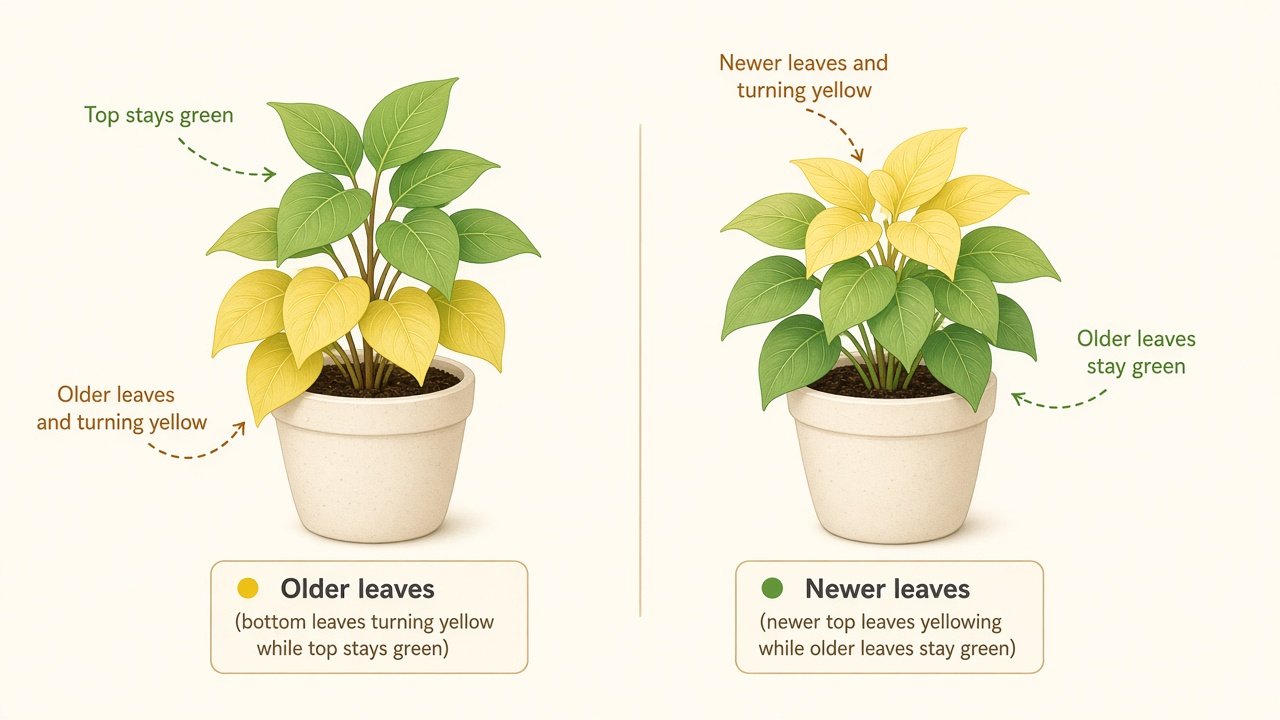
Older leaves yellowing first
When the lowest, oldest leaves fade and drop while new growth looks fine, the plant may simply be shedding foliage it no longer needs—common after a move, a season change, or when lower leaves are shaded.
It can also mean the plant is pulling mobile nutrients (especially nitrogen) from older tissue, or staying too dry between waterings. If soil is dry deep in the pot and leaves feel thin or crispy, watering technique is the likelier issue.
What to do:
- Confirm the top growth is healthy and green.
- Feel soil at depth (finger or chopstick) before watering again.
- Increase watering consistency only if the root zone is drying out too hard.
- Remove fully yellow leaves at the base; leave partially green ones if they still contribute.
Newer leaves yellowing first
Young leaves that emerge pale, yellow, or yellow between green veins are a different signal. Overly wet soil starves roots of oxygen, so nutrient movement stalls even if fertilizer is present. Micronutrient availability (iron and related elements) can also drop in waterlogged media or when pH drifts outside a comfortable range.
What to do:
- Check drainage holes and whether the pot sits in standing water.
- Let the top portion of the mix dry to the depth that species prefers before watering again.
- Improve airflow and light if the plant has been in a dim, stagnant corner.
- Hold off on heavy fertilizer until roots are functioning again.
AEO answer block: Leaf position is your fastest filter. Basal yellowing with healthy tips often means aging, dry cycles, or nitrogen pull. Tip and new-growth yellowing more often means wet roots or micronutrient stress. Confirm soil moisture before you fertilize, move, or repot.
Soil Wet or Dry: The Most Common Cause Split
Direct answer: Chronically wet soil commonly causes soft yellow leaves and root decline; chronically dry soil causes dull yellowing with crispy edges and limp recovery after watering. Touch the root zone—not just the surface—before you decide which side you are on.
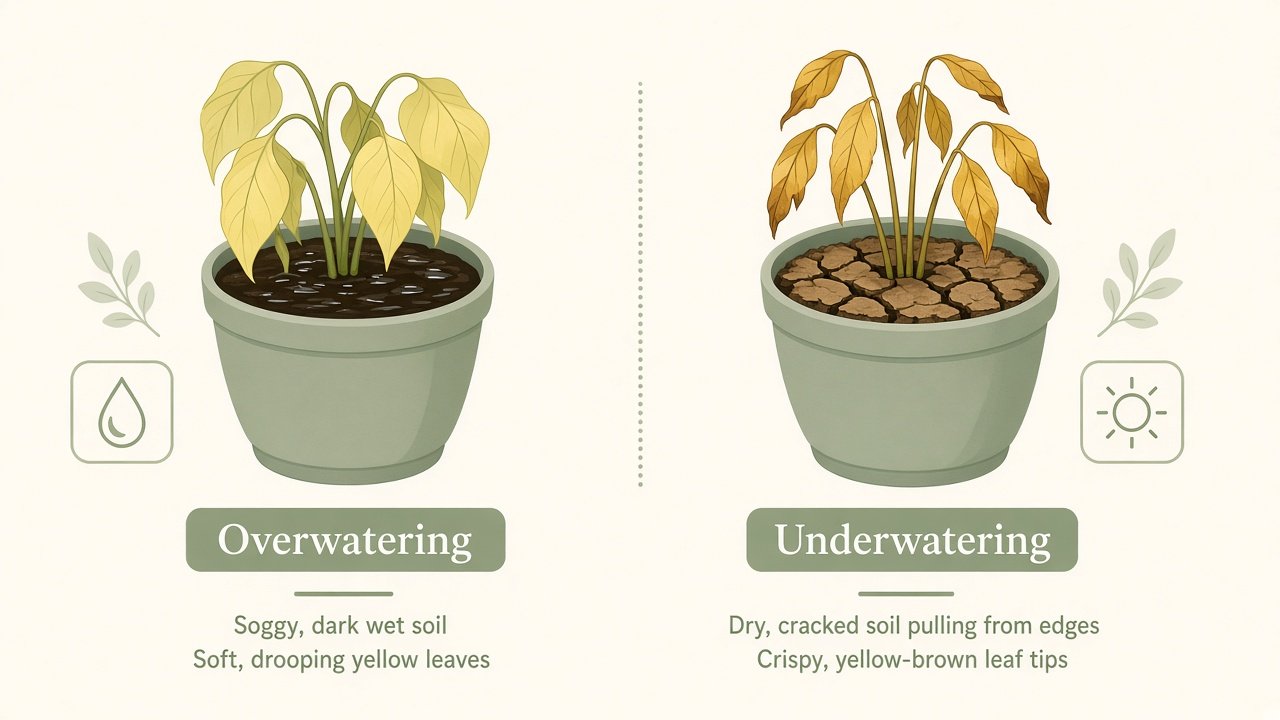
Watering mistakes cause more indoor yellowing than almost any other factor. The fix is not a fixed calendar—it is matching water to light, pot size, mix, and season. For a practical watering reference, see CozyPlant’s indoor plant watering schedule. For a broader care framework, see the indoor plant care guide.
Overwatering pattern
- Soil stays damp for many days
- Pot feels heavy
- Leaves yellow and may feel soft or translucent
- Lower leaves often affected first, then spread
- Possible musty smell from the mix
- Fungus gnats may appear around persistently moist media
Roots need air as much as water. When pore spaces stay filled, roots slow, then decline—so leaves yellow even though the pot looks “well watered.”
Calm fix path:
- Stop calendar watering; water only when the right depth is dry.
- Empty saucers within 15–30 minutes.
- Add light and airflow if the plant sits in a dim room.
- If roots are mushy with odor, carefully trim clearly dead roots and repot into fresh, aerated mix only when the plant can handle it.
- Expect weeks of recovery; judge progress by new growth.
Underwatering pattern
- Pot feels very light
- Mix pulls away from the pot walls
- Leaves dull yellow or gray-green, often with crispy margins
- Whole plant may wilt, then perk up after a thorough watering
- Older leaves may drop after repeated drought cycles
If a peace lily collapses dramatically and then perks up after a thorough drink, that limp posture is often the same underwatering signal—see why your peace lily is drooping for calm, species-specific revive steps.
Chronic underwatering forces plants to abandon older leaves. Repeated drought-then-flood cycles can also damage fine roots and later look like “mysterious” yellowing.
Calm fix path:
- Water thoroughly until drainage holes run.
- Drain fully; do not leave the pot in runoff.
- If the mix sheds water, soak the pot 10–20 minutes, then drain.
- Resume moisture-based watering instead of tiny daily sips.
| Sign | Overwatering lean | Underwatering lean |
|---|---|---|
| Pot weight | Heavy for days | Very light |
| Leaf feel | Soft, limp | Thin, crispy edges |
| Soil | Cool, wet, sometimes sour | Dry, dusty, shrinks from sides |
| Recovery after water | Little change or worse | Often improves within hours |
| Common follow-on | Gnats, root decline | Leaf drop, stalled growth |
AEO answer block: Wet-soil yellowing feels soft and progressive; dry-soil yellowing feels dull with crisp edges and often improves after a deep drink. Always check moisture below the surface. Fix the watering pattern first—most yellow-leaf cases improve without fertilizer changes.
Light: Too Little, Too Sudden, or Too Harsh
Direct answer: Low light often causes gradual whole-plant pale yellowing and weak growth; sudden moves into intense sun can bleach or yellow exposed leaves. Match light to the species and acclimate slowly when you relocate a plant.
Light drives photosynthesis. Too little light drops chlorophyll and washes leaves out; a sudden spike of direct sun after months in shade can yellow, bleach, or scorch foliage.
Low-light yellowing
- Slow growth
- Long gaps between nodes (leggy stems)
- Leaves pale or uniformly yellowing
- Soil stays wet longer (which then invites overwatering)
Move closer to a bright window with filtered light, gently clean leaves, and water less often—mix stays wet longer in dim rooms than most people expect.
Excess or sudden light
- Yellow or bleached patches on the side facing the window
- Crispy patches mixed with yellow
- Happens after a move outdoors, to a south window, or under strong grow lights
Pull the plant back, add a sheer curtain, or raise grow lights. Acclimate over 7–14 days when increasing light intensity.
AEO answer block: Pale, slow yellowing with leggy growth usually means insufficient light; patchy bleach-yellow after a move usually means too much sudden intensity. Adjust location gradually and retune watering, because brighter light dries soil faster and dim light keeps it wet longer.
Nutrients: Deficiency Patterns Without Guesswork Fertilizing
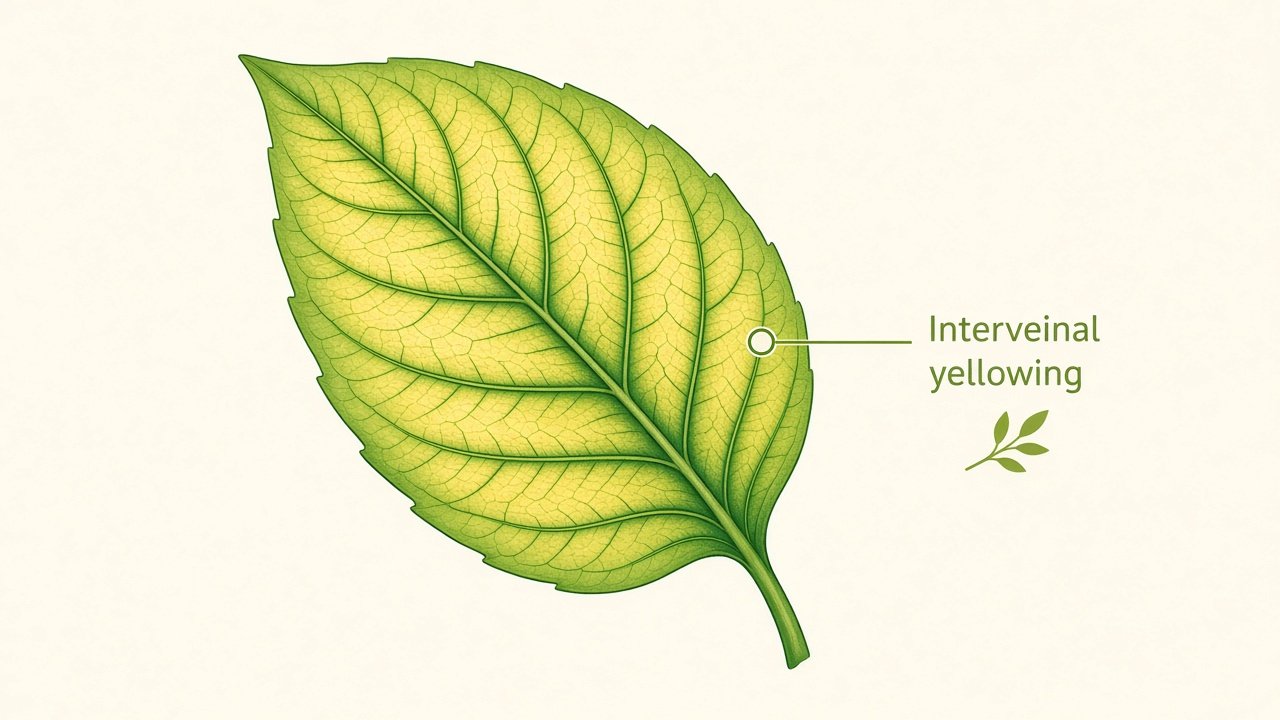
Direct answer: Nutrient-related yellowing follows patterns—older leaves for mobile nutrients like nitrogen; newer leaves for less-mobile micronutrients like iron—but fertilizer only helps after water and light are corrected. Do not feed a plant with compromised roots.
Indoor plants in soilless mixes eventually use up nutrients, but yellow leaves are blamed on “needing food” too often. If roots are soggy or light is near-dark, fertilizer will not fix chlorosis and may worsen salt stress.
Common nutrient patterns (general horticultural guidance)
| Pattern | Often associated with | Practical note |
|---|---|---|
| Older leaves evenly pale yellow | Nitrogen mobility / shortage | Improve overall feeding once growth resumes |
| Older leaves yellow with green veins less common indoors | Magnesium-type pattern in some species | Check watering and light first |
| Newest leaves yellow, veins stay greener | Iron/micronutrient availability | Often tied to wet media or pH extremes |
| Tip burn + yellow margin after heavy feeding | Fertilizer salt stress | Flush gently with plain water, pause feed |
Best-practice approach:
- Stabilize moisture and light.
- During active growth, use a balanced houseplant fertilizer at a dilute rate according to label guidance.
- Skip or reduce feeding in low-light seasons when growth slows.
- If salts have built up (crust on soil or pot rim), occasionally leach the pot with water that drains freely, then resume a lighter feeding routine.
AEO answer block: Nutrient yellowing is pattern-based, not random. Feed only after roots and light are healthy. Older-leaf fade can suggest nitrogen need; new-leaf yellowing with greener veins can suggest micronutrient availability issues—often improved by better root aeration, not stronger fertilizer.
Pests and Disease Pathways That Cause Yellow Leaves
Direct answer: Pests cause yellowing through sap feeding, leaf damage, and sticky residue; disease pathways often follow chronic wetness. Inspect undersides of leaves, stems, and the soil surface before treating anything.
Pest clues
- Speckling and fine webbing: spider mites (leaves look dusty yellow)
- Cottony masses in leaf joints: mealybugs
- Brown bumps that scrape off: scale
- Sticky honeydew and sooty film: sap suckers present
- Tiny flies around wet soil: fungus gnats (more a moisture signal than a direct leaf-yellow cause, though larvae can stress roots)
Wipe leaves, isolate heavily infested plants, and use mechanical removal first (alcohol swabs for mealybugs/scale where practical, thorough rinsing, repeated checks). Consistency beats one aggressive treatment. Persistently wet soil that attracts gnats is addressed in (planned link: A03 Fungus Gnats in Houseplants: How to Break the Life Cycle).
Wetness-related decline
Yellow leaves plus mushy stems or foul soil odor suggest root or crown problems linked to excess moisture. Improve drying conditions immediately. Remove only tissue that is clearly dead. Avoid stacking multiple harsh treatments on a struggling plant.
AEO answer block: Check for webbing, sticky residue, cottony clusters, and bumps before assuming a watering issue is the only cause. Pests and wet-soil decline can both yellow leaves. Isolate, clean, and correct moisture; repeat inspections weekly until new growth stays clean.
A Simple Step-by-Step Diagnosis Flow
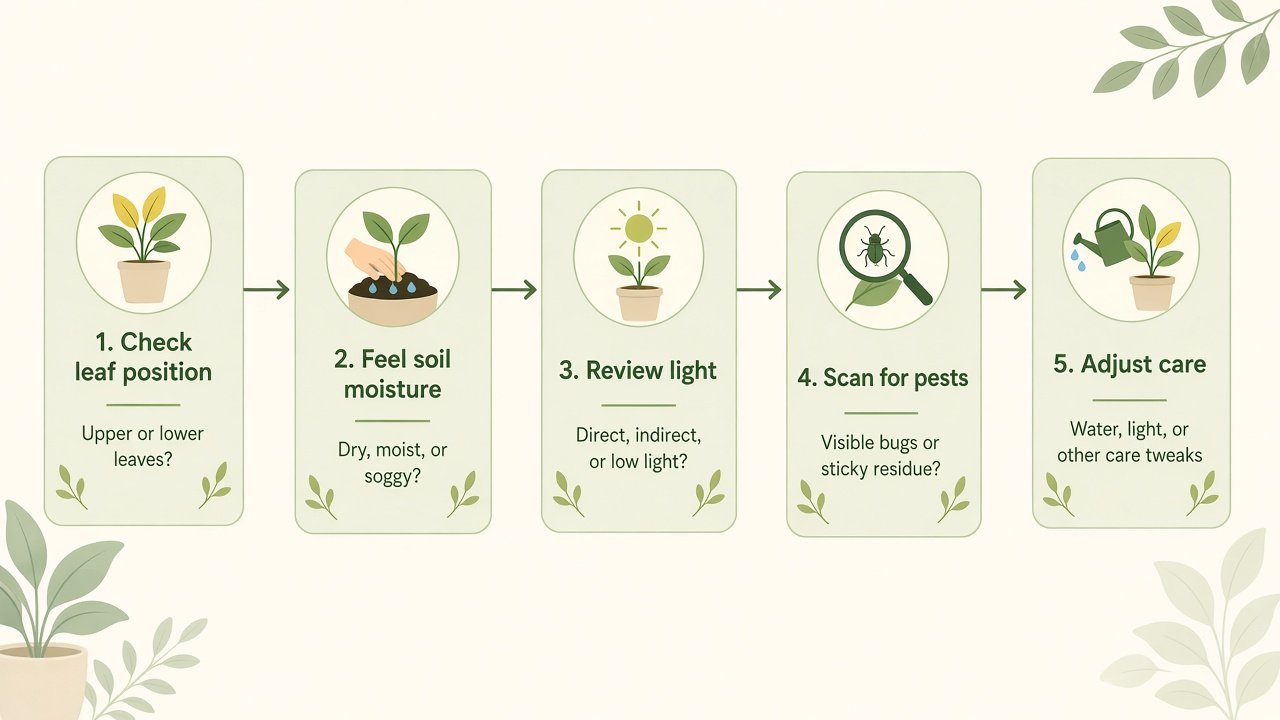
Use this sequence so you do not chase five fixes at once:
- Identify leaf age pattern — older, newer, or mixed.
- Check soil moisture at depth — wet, evenly moist, or dry.
- Assess light — too dim for months, or recently intensified?
- Inspect for pests — undersides, joints, sticky surfaces.
- Review recent fertilizer — none for a long time during active growth, or heavy recent feeding?
- Change one major variable — usually watering rhythm or light—then wait and watch new growth.
Healthy new leaves are the success metric. Already-yellow leaves rarely turn fully green again—that is normal. Trim when they are more yellow than green so progress is easier to see.
What Not to Do When Leaves Turn Yellow
- Do not fertilize a plant sitting in soggy soil.
- Do not repot in panic every time one leaf yellows.
- Do not remove every slightly pale leaf if the plant still needs that surface area.
- Do not chase viral diagnoses from a single photo without checking moisture and pests first.
- Do not assume one viral “hack” (ice cubes, constant misting, daily water) fits every species.
Calm, repeated observation beats dramatic intervention.
FAQ
Why are my houseplant leaves turning yellow overnight?
Sudden yellowing is rarely true overnight chlorophyll loss—you are often noticing leaves already in decline, or a fast response to dry-out, cold draft, or overwatering shock. Check soil moisture and recent temperature/light changes, then inspect for pests.
Should I cut off yellow houseplant leaves?
Yes—remove leaves that are mostly yellow or brown, cutting cleanly at the base or natural joint. Leave leaves that are still largely green; they can still photosynthesize. Sterilize tools between plants if disease is suspected.
Can yellow leaves turn green again?
Fully yellow leaves usually will not return to a rich green. Partial chlorosis sometimes improves when the cause is corrected (especially mild nutrient or light issues), but plan on judging recovery by healthier new growth rather than resurrecting spent leaves.
How long after fixing watering do yellow leaves stop?
If moisture was the main issue, new yellowing often slows within one to three weeks, depending on species and season. Existing yellow leaves may still drop. Consistent new growth that stays green is the clearer sign you have corrected the pattern.
Is one yellow leaf always a problem?
No. Occasional older-leaf yellowing is normal as plants shed foliage. Worry more when yellowing accelerates, spreads to new growth, or pairs with wilting, odor, pests, or stalled growth.
Pingback: Pothos Care Guide: How to Grow a Healthy Indoor Pothos
Pingback: Fiddle Leaf Fig Care: How to Choose and Grow It