Why is my pothos turning yellow? Start with leaf position: oldest leaves yellowing from the bottom with wet soil usually means overwatering, scattered dull yellowing with a light dry pot often means underwatering, and yellowing that climbs from the vine tip can point to light, nutrients, or pests. Match where the yellow sits before you change watering, cut vines, or repot.
Pothos (Epipremnum aureum, including golden, neon, and marble queen types) tells a clear story through which leaves fade first. This guide is a calm diagnostic—not a full care redo. For everyday watering, light, and soil setup, use the pothos care guide. For the broader houseplant yellowing framework, see why houseplant leaves turn yellow. Indoor Plants, Made Simple.
Yellowing is a pattern, not a panic—read leaf position and soil before you act.
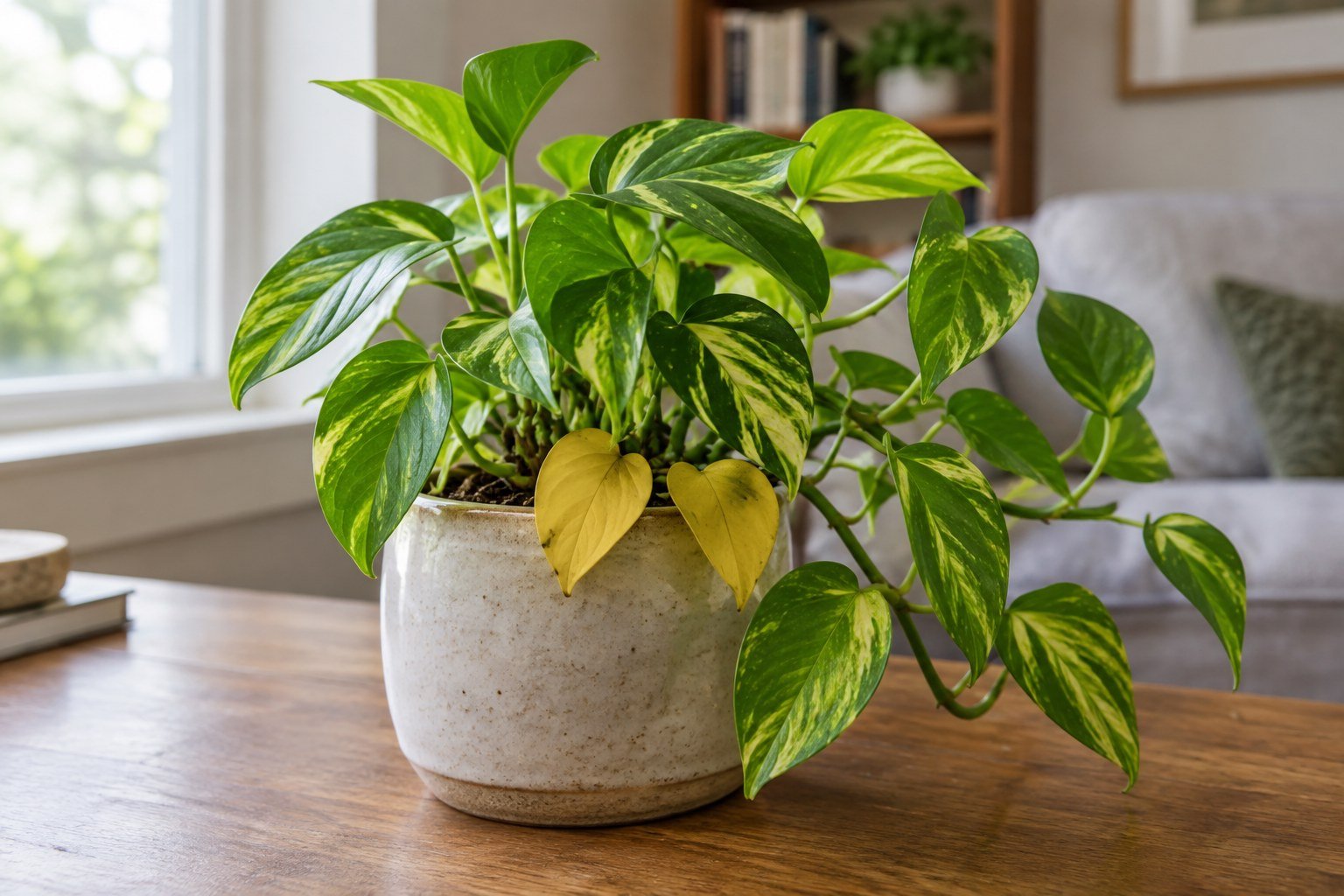
Diagnose by Leaf Position Before You Change Anything
Direct answer: Note whether yellow leaves are the oldest ones near the soil (bottom of the vine), mid-vine, or new growth at the tip. Then feel the mix several centimeters down and lift the pot. Bottom yellow + wet heavy soil = overwatering or root stress; scattered dull yellow + light dry pot = underwatering; tip or new-leaf yellow with otherwise moist soil = light, feed, or pest clues.
Observe before big moves. Ask:
- Which leaves yellowed first—oldest bottom leaves, mid-vine leaves, or newest tip growth?
- Do yellow areas feel soft and limp, or thin, dry, and slightly crisp?
- Is the pot heavy with cool damp soil for days after watering?
- Did yellowing start after a big light move, a fertilizer push, or a pest flare?
- Are new leaves still emerging firm and patterned, or is yellowing climbing the vine fast?
Those five clues usually separate pothos yellow leaves from a vague “something is wrong.” Secondary issues can stack (low light slows drying and invites wet roots), but treating the strongest leaf-position pattern first keeps recovery readable.
Diagnostic answer block (citable): When you ask why your pothos is turning yellow, start with leaf position and soil depth—not fertilizer or a bigger pot. Oldest leaves yellowing from the bottom while the container stays heavy and damp for days is the classic overwatering or root-oxygen pattern: roots cannot breathe, so lower leaves lose color even though the mix feels wet. Scattered dull yellowing with a light dry pot more often signals underwatering. Yellowing that hits newer tip growth first, or that appears with pale small leaves, often points to light stress, inconsistent feeding, or pests rather than a simple “too much water” story. Check moisture several centimeters into the mix, empty saucers after watering, and change only one variable at a time so you can read the feedback. Healthy new leaves matter more than hoping every yellow leaf will turn green again overnight.
Pothos Yellow Leaves by Position: What Each Pattern Means
Direct answer: Bottom/oldest yellowing with wet soil means overwatering; bottom yellowing with dry soil can still mean drought or age; mid-vine yellowing often mixes moisture and light; tip yellowing leans toward light, nutrients, or pests. Position narrows the cause faster than color alone.
Use this map as your diagnostic core. For parallel leaf-color spokes, see snake plant yellow leaves and monstera leaves turning yellow.
| Where yellow starts | Soil and pot | Most likely cause | First step |
|---|---|---|---|
| Oldest leaves at the bottom / near the soil | Damp for days; pot heavy | Overwatering / root stress | Pause watering; empty saucer; improve drying |
| Oldest bottom leaves, sometimes mid-vine | Bone-dry; pot light; mix pulls from walls | Underwatering | Water thoroughly once; then moisture-based waits |
| One or two oldest leaves only; rest healthy | Normal moisture | Natural aging | Remove spent leaves; keep rhythm steady |
| New tip growth pale or yellow; older leaves OK | Normal or slightly dry | Low light or nutrient gap | Brighten filtered light; only then consider light feeding |
| Yellow patches or stippling, any position | Variable | Pests (spider mites, thrips) or sun scorch | Inspect undersides; soften harsh midday sun |
| Sudden yellow after move to bigger pot / dense soil | Stays wet in the middle | Poor drainage / oversized pot | Water sparingly; restore airflow and drainage |
Bottom leaves yellowing (most common story)
Pothos yellow leaves bottom is the pattern most people notice first. On a trailing vine, the oldest leaves sit closest to the soil. When roots sit wet, those older leaves often fade first: soft or limp yellowing, sometimes with a dull olive cast before full yellow. A heavy pot, cool damp mix deep down, fungus gnats, or a musty smell strengthens the overwatering read. Related general yellowing patterns are covered in the houseplant yellow leaves guide.
What it usually looks like:
- Oldest leaves near the base yellow first
- Soft or limp feel (not crispy)
- Pot stays heavy; soil cool and damp deep down
- Drainage may be blocked, or the pot sits in runoff
- New tip growth may still look fine at first
Calm fix for yellow leaves on pothos overwatering: pause watering until the appropriate depth begins to dry, empty saucers within 15–30 minutes, improve airflow and filtered light if the plant sits in a dim wet corner, and only inspect roots if soft mush and odor persist after the mix lightens.
Scattered dull yellowing with a light pot
Pothos prefers the top of the mix to dry between drinks, but long drought still shows as dull yellowing, thinner texture, and slightly crisp edges. The pot feels light; mix may pull from the walls. Unlike soft wet yellowing, dry-stress leaves are not mushy.
What it usually looks like:
- Dull yellow or gray-green fade on several leaves
- Leaves feel thinner; edges may crisp
- Pot is light; soil dry deep down
- Often after long stretches without water in bright rooms
Calm fix: water thoroughly until drainage runs, empty the saucer, then shift to moisture-based timing instead of tiny daily sips or months-long neglect. Do not “catch up” with repeated soaks the same week.
Tip growth yellowing or pale new leaves
Golden pothos leaves turning yellow at the tip—or new leaves emerging small, pale, or washed out—often points away from simple bottom-leaf aging. Very low light can produce weak, pale growth. A sudden harsh sun blast can bleach exposed faces. If the plant has not been fed in a long growing season and tip growth looks thin and yellow while roots are healthy, a light, balanced feed after moisture is stable can help—but never fertilize a soggy or freshly drought-stressed plant.
Calm fix: bright filtered light for steady variegation and growth; soften harsh midday sun with distance or a sheer; only consider a dilute feed once moisture rhythm is calm.
Natural aging of older leaves
One or two oldest bottom leaves yellowing slowly while the rest of the vine stays firm and pushes healthy tip growth is often normal senescence. Do not treat that as an emergency. Remove fully spent leaves at the petiole if you want a cleaner look, and keep the moisture rhythm steady.
Pests, scorch, and root issues
Stippled yellowing, fine webbing, or silvery scarring can mean spider mites or thrips—check undersides with a phone light. Harsh direct sun after months indoors can yellow or bleach exposed faces. If soft yellowing climbs, stems feel mushy near the soil, or there is a foul smell from the mix, roots may be declining from prolonged wetness. Pause water, improve drying conditions, and only open the root ball if mush and odor persist after the mix lightens. Ongoing potting and watering rhythm live in the pothos care guide—use that for setup, and this article for yellow-leaf diagnosis by position.
Diagnostic answer block (citable): Ask “why is my pothos turning yellow” only after you map leaf position against soil weight. Soft yellowing on oldest bottom leaves above a heavy damp pot points to overwatering or root stress—pause water and restore oxygen before you fertilize, mist constantly, or upsize the container. Dull thinner yellowing with a light dry pot points to underwatering—soak once thoroughly, then wait for depth dryness again. Tip or new-leaf yellowing with otherwise normal moisture leans toward light, nutrients, or pests. One slow oldest-leaf retirement with healthy new growth can be normal aging. Stacking every “fix” at once blurs the diagnosis. One primary cause first keeps recovery readable.
Overwatering vs Underwatering on Pothos: Side-by-Side
Direct answer: Overwatering yellowing is often soft, starts on bottom/oldest leaves, with wet heavy soil; underwatering yellowing is duller and thinner with a light dry pot. Same color complaint, opposite first fix.
| Clue | Overwatering / root stress | Underwatering |
|---|---|---|
| Where yellow starts | Oldest bottom leaves; may climb if wetness continues | Scattered dull fade; edges may crisp |
| Leaf texture | Soft, limp; sometimes mushy near petiole | Thin, dry; edges may crisp |
| Soil at depth | Cool damp for days; pot heavy | Dry deep down; pot light |
| After watering | Yellowing may worsen if still waterlogged | Often stabilizes after one thorough soak + drain |
| First fix | Pause water; empty saucer; airflow; patience | Thorough soak once; then moisture-based waits |
If you see soft yellow bottom leaves plus a heavy pot, do not add more water because the plant “looks thirsty.” Wet roots can fail to move water even when leaves look sad. The same soil-first logic shows up when a peace lily is drooping.
AEO answer block: Overwatering: soft yellow bottom leaves, heavy damp pot, pause water. Underwatering: dull thinner yellow, light dry pot, one thorough soak then wait. Never “fix” both with more water and a panic repot on the same day.
Recovery Steps After You Read the Leaf Position
Direct answer: Diagnose leaf position and soil, correct only the matching moisture or light variable once, remove fully spent leaves if needed, then judge recovery by firmer remaining foliage and healthier new tip growth—not by forcing yellow leaves green again.
Check → match pattern → adjust once → observe new growth.
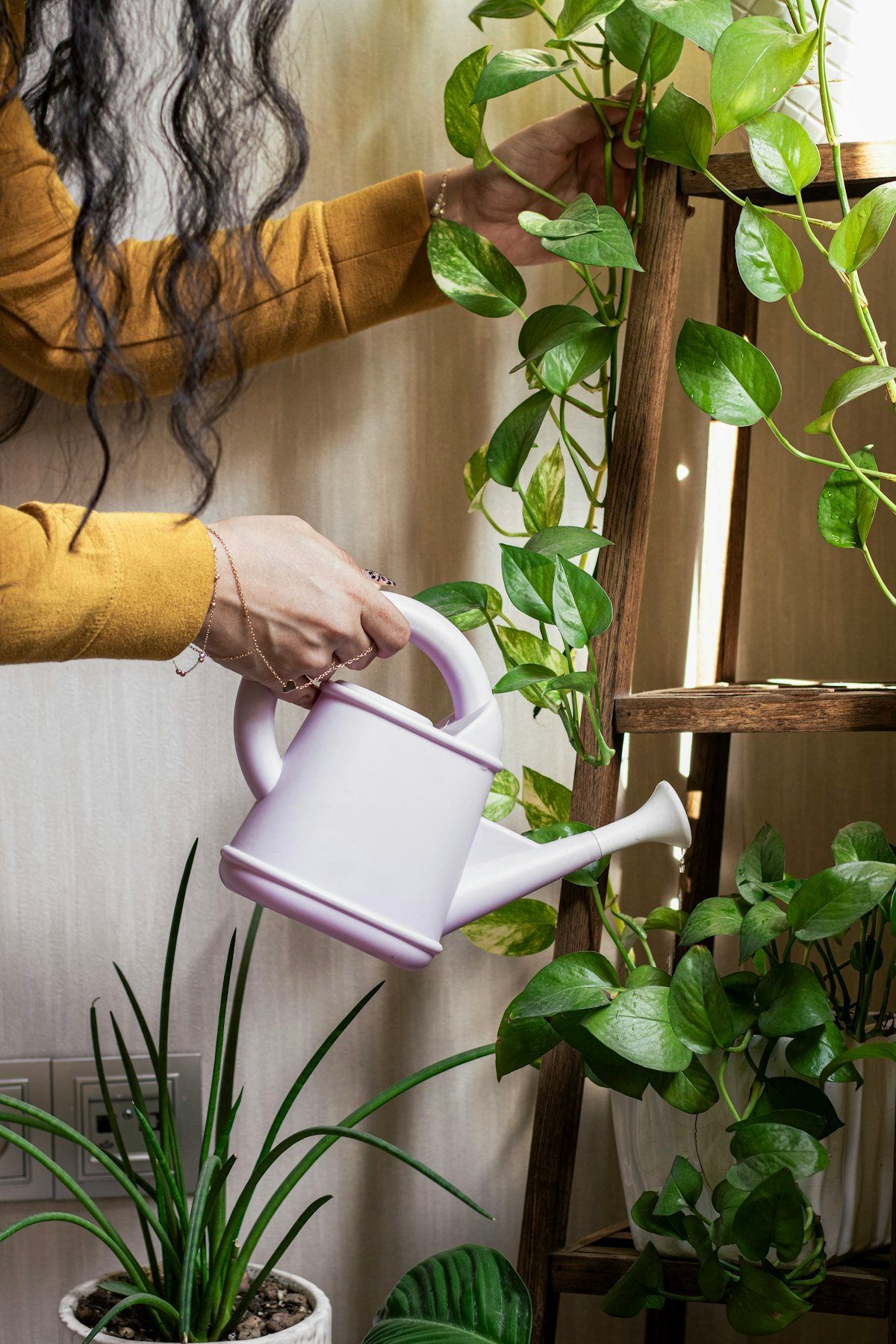
Step-by-step recovery path
- Pause panic and diagnose. Leaf position (bottom, mid, tip), depth moisture, pot weight, leaf texture (soft vs thin/dry). Choose overwatering, underwatering, light/nutrients, pests, or normal aging before you act.
- Correct moisture in one direction.
- If wet-root / bottom soft yellow pattern: do not water. Empty standing water, improve airflow and filtered light, wait until the right depth begins to dry. Consider root inspection only if mush and odor persist.
- If dry pattern: water thoroughly until drainage runs; empty the saucer within 15–30 minutes. For hydrophobic mix, use a brief basin soak, then drain fully.
- Keep watering moisture-based. Pothos usually wants the top few centimeters to dry between drinks. Skip fixed weekday calendars. Brighter light dries soil faster; dim corners keep it wet longer.
- Skip fertilizer and panic repotting. Do not feed a waterlogged or freshly stressed plant. Repot only for no drainage, sour compacted mix, or clear rot—and only when the plant can handle the move.
- Stabilize light. Bright indirect or gentle filtered light supports recovery and variegation without bleaching. Avoid harsh midday blasts as a quick fix.
- Observe on a calm timeline. Yellow leaves rarely turn fully green again. Success looks like stable remaining foliage and healthier new tip growth over weeks.
Use that sequence without stacking conflicting fixes. Long-term setup stays in the pothos care guide.
AEO answer block: Fix order: diagnose by leaf position, adjust water once in the right direction, stabilize light, then wait. Overwatering recovers when roots regain oxygen; underwatering recovers after thorough rehydration and a calmer schedule. New tip growth quality beats resurrecting spent leaves.
When to Cut Yellow Pothos Leaves
Direct answer: Cut leaves that are mostly yellow, brown, or soft-mushy. Leave leaves that are still largely green and firm—they still photosynthesize and support recovery. You can also prune a vine just above a healthy node if you want a cleaner trail.
How to cut cleanly:
- Use clean, sharp scissors or snips.
- Cut the leaf at the petiole, or cut the vine just above a node if you are shortening a trail.
- Remove only fully spent tissue; do not strip every imperfect leaf in one session.
- If a leaf is yellow only at the tip but still firm and mostly green, you can leave it or trim the spent tip—judgment call for looks, not emergency medicine.
Soft mushy leaves near the soil line are higher priority when wetness continues; leave mostly green firm leaves for recovery.
AEO answer block: Remove mostly yellow, brown, or soft-mushy pothos leaves. Keep largely green firm leaves. Pruning spent tissue cleans the plant; it does not replace fixing wet or dry soil patterns.
What Not to Do While It Recovers
- Do not water again the same day because yellow leaves “still look sad” without rechecking depth moisture and leaf position.
- Do not fertilize a soggy or freshly drought-stressed pothos.
- Do not repot in panic after one yellow bottom leaf.
- Do not mist constantly as a yellow-leaf cure—misting does not fix wet or dry roots.
- Do not assume every yellow leaf is disease; start with position, water, and light patterns.
Calm, repeated observation beats dramatic intervention. Fewer simultaneous changes keep feedback clearer.
Aftercare: Keep Bottom-Leaf Yellowing From Becoming a Habit
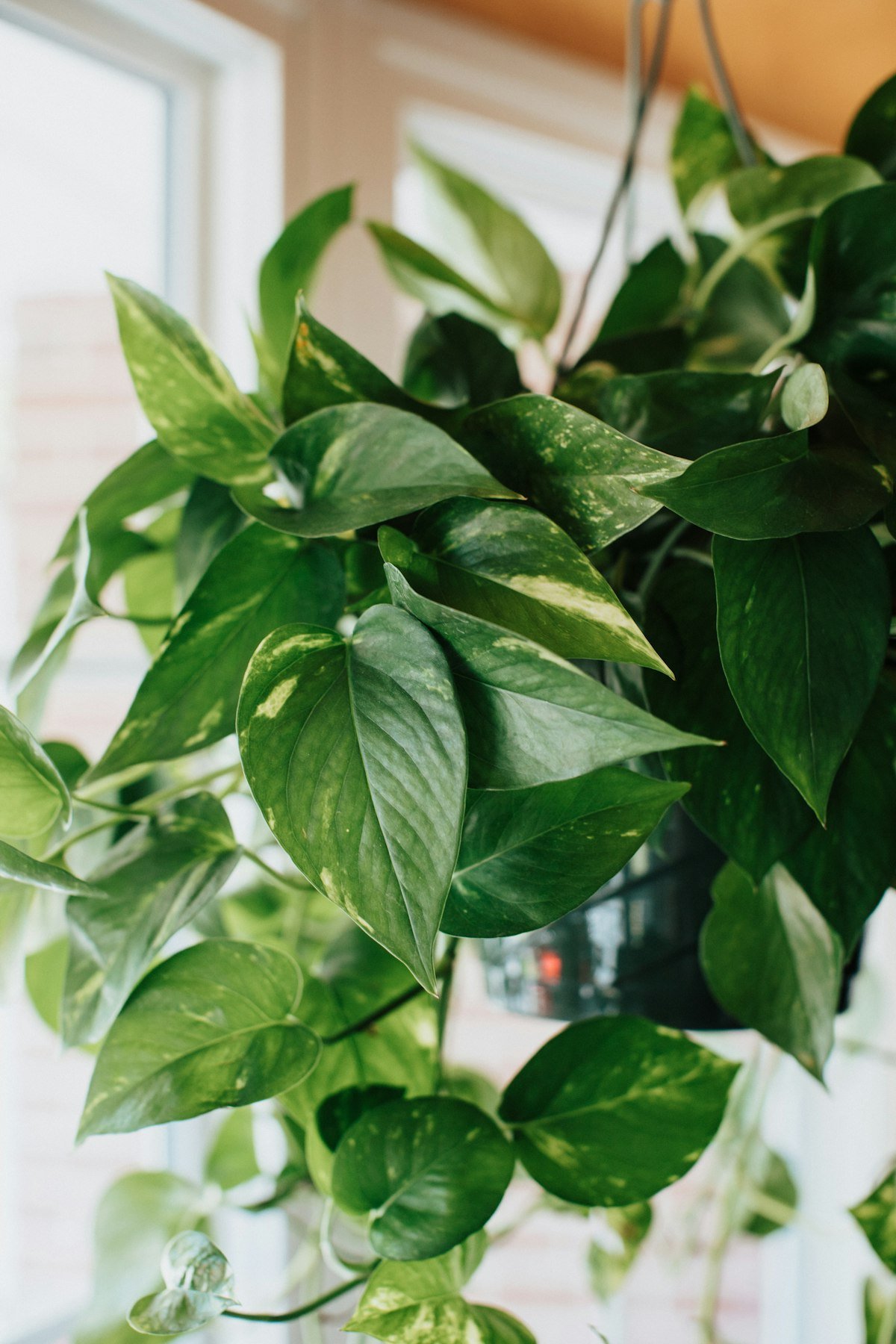
Once the pattern stabilizes:
- Water when the right depth asks for it—not on a fixed weekday.
- Use a pot with drainage; empty saucers.
- Give bright, filtered light so the mix dries on a predictable pace and tip growth stays strong.
- Expect occasional oldest-leaf retirement on a mature vine—that can be normal.
- Return to the full setup guide for soil, pot size, and light ranges: Pothos Care Guide.
For the cluster hub on leaf color, keep Why houseplant leaves turn yellow nearby. For related troubleshooting spokes, see snake plant yellow leaves, monstera yellow leaves, and peace lily drooping.
FAQ
Why is my pothos turning yellow?
Direct answer: Most often overwatering (soft yellow oldest bottom leaves + wet heavy soil) or underwatering (duller thinner yellow + light dry pot). Tip yellowing can mean light or nutrient stress; occasional oldest-leaf yellowing with healthy new growth can be normal aging. Check leaf position and soil depth before fertilizing or repotting.
Why are pothos yellow leaves starting at the bottom?
Direct answer: Bottom/oldest leaves usually fade first when roots stay wet, because those leaves are the oldest and least prioritized under stress. Confirm with a heavy damp pot before you assume pests or fertilizer failure.
Are yellow leaves on pothos always overwatering?
Direct answer: No. Soft limp yellowing with damp soil often is, but dull dry yellowing with a light pot points to underwatering, tip yellowing can mean light or nutrients, and a single slow oldest leaf can be natural aging. Soil feel and leaf position separate the stories.
Should I cut yellow leaves off my pothos?
Direct answer: Remove leaves that are mostly yellow, brown, or soft-mushy. Leave leaves that are still largely green and firm—they still photosynthesize. Cutting every imperfect leaf removes useful surface area during recovery.
Will golden pothos leaves turning yellow turn green again?
Direct answer: Fully yellow leaves usually will not return to a rich green. Judge recovery by firmer remaining foliage and healthier new tip growth after you correct moisture and light—not by resurrecting spent blades.
Can low light cause pothos yellow leaves?
Direct answer: Yes, especially weak pale tip growth or dull color over time. Low light also keeps soil wet longer, which can stack with overwatering. Brighten filtered light and recheck watering before you fertilize.