Indoor plant decor is the deliberate use of living plants, containers, stands, and placement to improve a room’s appearance while keeping the plants healthy enough to remain part of the design. It is not simply adding a plant to an empty corner. A successful arrangement connects light, scale, maintenance, and visual balance so that the greenery works with the room rather than becoming another household task.
That distinction matters whether you are furnishing a modern living room, softening a rental apartment, specifying plants for a residential project, or expanding a collection without creating clutter. The most attractive plant display is usually the one that fits the room’s actual conditions: available daylight, floor area, humidity, traffic, pets, and the time someone can realistically spend watering and checking leaves.
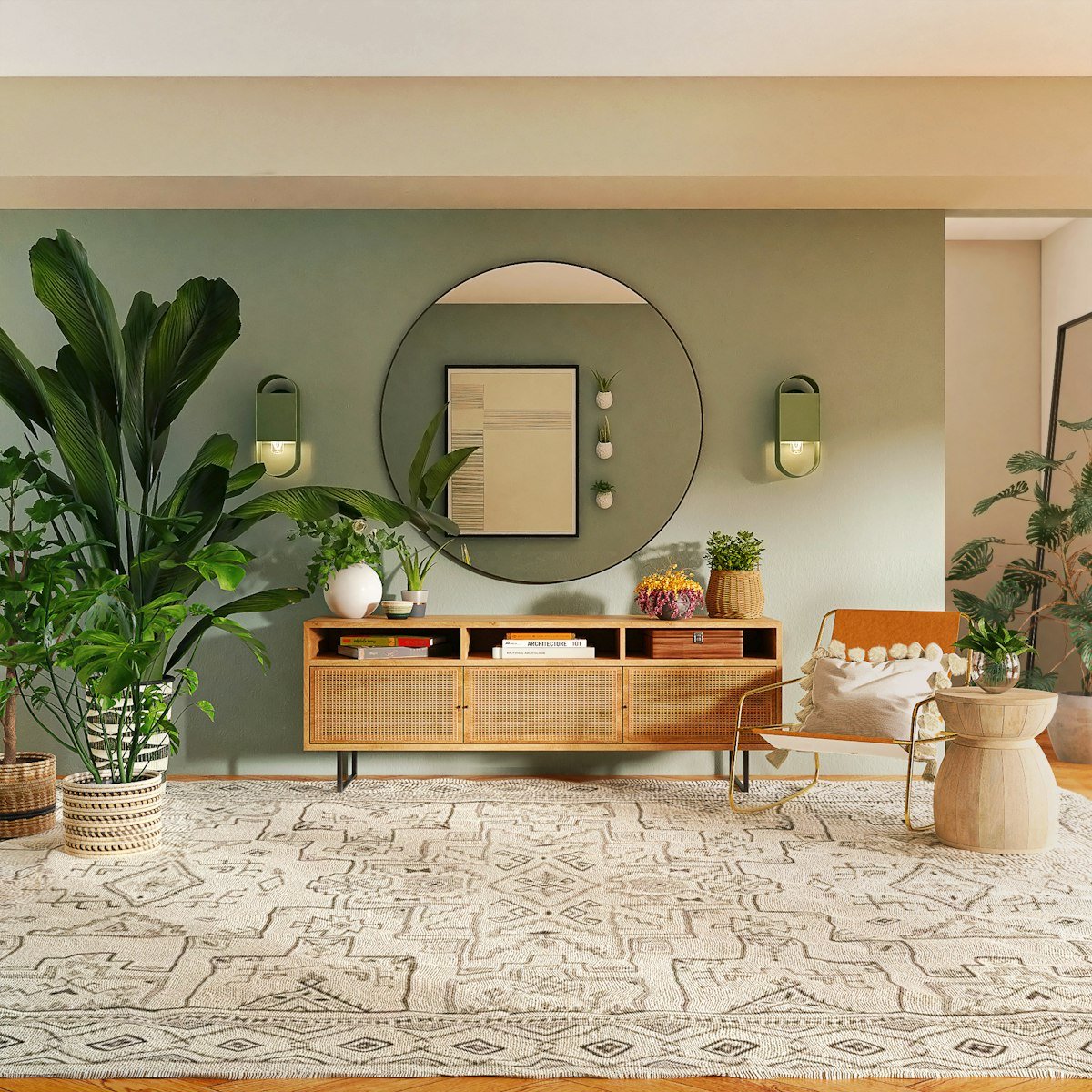
What Indoor Plant Decor includes
Plant decor has three connected layers. The first is the plant itself: its height, leaf shape, color, growth habit, and tolerance for the room. The second is the container or support system: pots, baskets, pedestals, shelves, and furniture that determine how the plant sits in the composition. The third is the operating environment: light, airflow, access to water, drainage, and protection for floors and furniture.
The plant is a shape, not just a species
When choosing greenery for a room, think in visual categories before thinking in plant names. A tall plant can act as a vertical accent beside a sofa. A broad-leaf plant can fill a quiet corner with a strong silhouette. A trailing plant can soften a high shelf, while a compact plant can add detail to a desk or bedside table.
- Vertical form: use a snake plant or similarly upright plant to emphasize ceiling height without spreading far into a walkway.
- Architectural form: use a Monstera or another large-leaf plant when the room needs a prominent focal point rather than several small accents.
- Soft trailing form: place a trailing plant on a shelf or cabinet where its stems can fall away from doors and electrical equipment.
- Compact form: group smaller plants on a tray so they read as one arrangement instead of scattered objects.
- Textural form: combine smooth, broad leaves with fine or upright foliage to create contrast without relying on many colors.
These categories are useful because visual scale often matters more than plant rarity. A small plant on a deep console may disappear, while a large specimen in a narrow passage may interrupt movement. Choose a plant whose mature habit suits the intended location, not only the size it has on purchase day.
The container is part of the composition
A nursery pot is functional, but it is rarely the final design object. A decorative cachepot, woven basket, ceramic planter, or raised stand can establish a room’s material language. In minimalist interiors, repetition beats novelty: two or three related finishes usually look calmer than a collection of unrelated colors and patterns.
Keep the practical pot inside the decorative one when possible. The inner pot should have drainage, and the outer container must be checked for standing water after irrigation. This arrangement makes it easier to remove the plant for watering and reduces the temptation to treat a sealed decorative vessel like a normal flowerpot.
For a cohesive display, coordinate one or two of these elements:
- pot finish with nearby metal hardware or wood tones;
- plant height with the furniture’s visual weight;
- leaf color with textiles, artwork, or a restrained neutral palette;
- stand shape with the room’s dominant geometry;
- the number of containers with the amount of open space the room needs.
Why plant styling affects how a room feels

Plants influence a room through proportion, rhythm, contrast, and movement. Their effect is not limited to the idea that greenery makes a home feel more natural. A plant can interrupt a hard line, direct attention toward a window, fill an unused vertical plane, or separate two functional zones without a permanent partition.
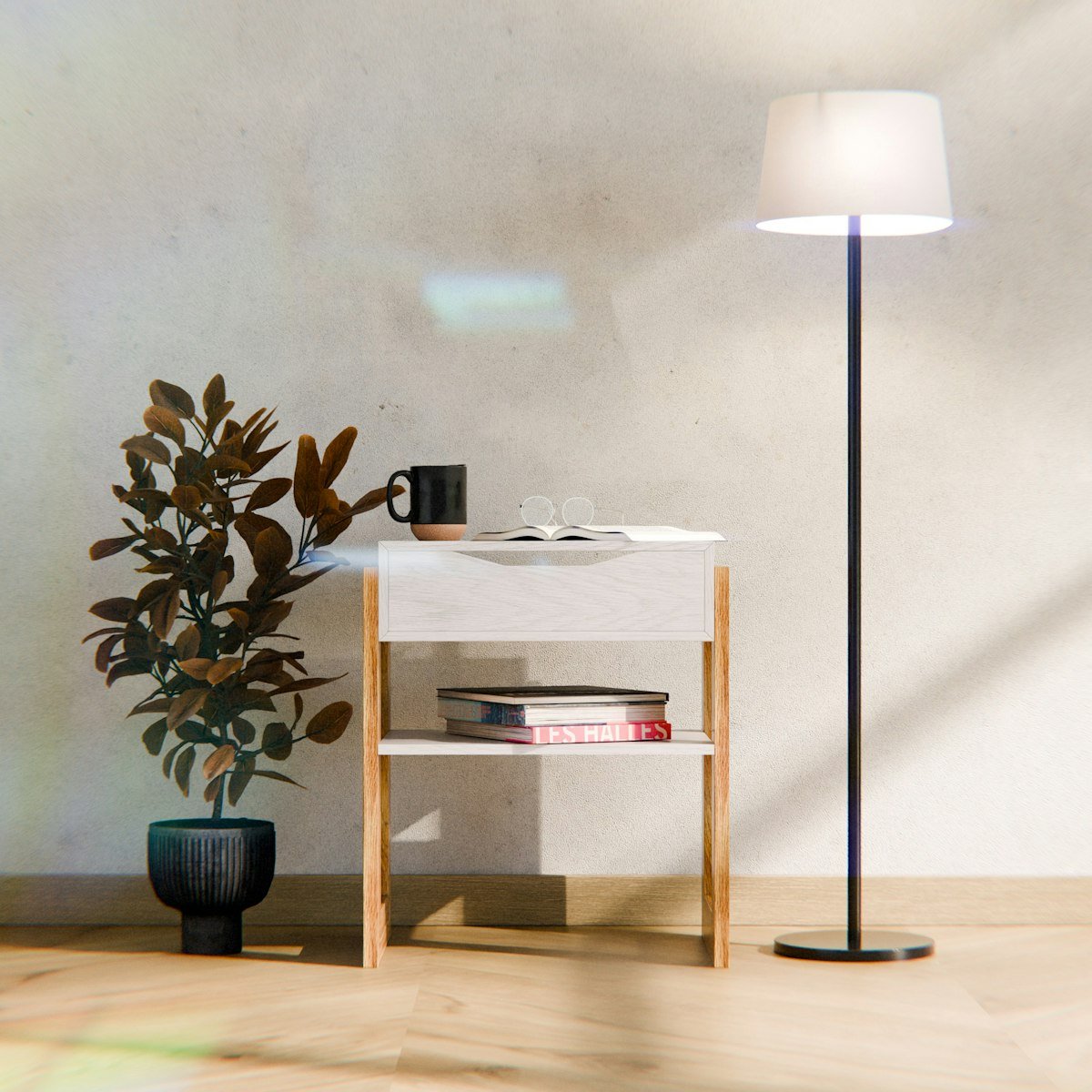
Use scale to correct visual imbalance
A room with low furniture and empty upper walls may benefit from one strong vertical plant. A room already filled with tall shelving may need low, spreading foliage instead. The goal is not maximum greenery; it is the right mass in the right place.
As an illustrative starting policy, imagine a living room with a long sofa, a low media unit, and one empty corner. A single tall specimen beside the sofa may balance the room better than five small pots distributed across the media unit. In contrast, a narrow kitchen shelf may suit a line of compact plants because the available depth limits the display’s size.
Before buying, sketch the intended location and note:
- the clear width of the walking route;
- the height of nearby furniture and windowsills;
- the direction from which the plant will be viewed;
- the distance to the nearest water source;
- the amount of space needed to rotate, prune, or remove the plant.
These measurements are not universal plant rules; they are planning prompts. The correct clearance depends on the household, furniture, and plant’s eventual spread. Treat any numeric layout as an illustrative example, not a benchmark.
Create rhythm without making a showroom
Repetition creates continuity. You might repeat a pot finish, echo a leaf color in a cushion, or place plants at different heights along one visual line. Rhythm becomes clutter when every surface receives a separate specimen. Leave deliberate gaps so individual plants can be read as forms.
A useful arrangement often has three levels:
- Anchor: one larger plant or substantial planter that establishes the composition.
- Bridge: a medium-height plant, stand, or piece of furniture that connects the anchor to the surrounding room.
- Detail: one small plant or trailing element that adds texture without competing with the anchor.
This arrangement is a design framework, not a requirement to buy three plants. One well-placed plant may be enough in a small apartment. Conversely, a large open-plan room may need several separate groupings, each with its own anchor, so the greenery does not look like a single isolated island.
Match the mood to the maintenance reality
A calm, minimalist room is undermined by plants with yellowing leaves, dusty foliage, or improvised saucers. A more expressive room can absorb variety, but it still needs a manageable routine. The University of Minnesota Extension’s guidance on growing healthy houseplants emphasizes matching care to conditions such as light and watering needs; that principle is also the foundation of responsible plant styling. For a deeper care framework, see CozyPlant’s indoor plant care guide.
For a beginner, low-maintenance greenery may mean a forgiving plant placed where it receives suitable light and can be checked easily. It does not mean a plant can be ignored. The best choice is usually the plant you can observe and reach, not the plant you hope will tolerate neglect in a dark corner.
How to make Indoor Plant Decor work in practice
Good plant styling begins with the room, then moves to the plant. Reverse the process and you can end up forcing an unsuitable specimen into a photogenic but unhealthy position. Work through light, access, scale, and care before deciding on the final pot.
Start with light, not the label
Observe the location at different times of day. Note whether direct sun reaches the leaves, whether a nearby building blocks the window, and whether curtains or blinds change the exposure. Light conditions can vary significantly between a windowsill and the back of the same room.
The Royal Horticultural Society’s houseplant-care guidance explains that indoor plants have different requirements and that positioning, watering, and seasonal changes all affect care. Use that guidance as a starting point, then check the care information for the particular plant you are considering.
A simple light audit can be written as a decision list:
- Bright window area: consider plants suited to stronger light, while checking whether hot direct sun could scorch sensitive foliage.
- Filtered light: choose plants that tolerate bright but softened exposure and keep leaves clear of dusty glass.
- Interior position: select only plants whose care guidance fits the lower available light, and be prepared to move or supplement the location if growth declines.
- Changing seasonal light: recheck the position when the sun’s angle changes or when curtains are used more often.
Do not use a plant’s survival in dim light as proof that the location is ideal. A plant may remain alive while producing weaker growth, leaning toward a window, or losing its characteristic form. Healthy appearance is a better design test than mere survival.
Design around access to water
Watering is part of the layout. A plant placed on a high shelf may look elegant but become neglected if removing it is awkward. A large pot in a narrow hallway may be easy to see but difficult to carry. Place plants where you can inspect the soil, lift or tilt the container safely, and deal with excess water without damaging the floor.
Watering frequency should not be assigned by a decorative schedule alone. Use CozyPlant’s indoor plant watering schedule guide as a flexible reference, then check the actual growing medium and plant condition. It depends on the plant, container, potting mix, light, temperature, and season. Check the plant’s care requirements and the moisture of the growing medium instead of applying a fixed weekly rule. The RHS explains that overwatering can be as damaging as underwatering and recommends paying attention to the plant’s conditions rather than treating all houseplants alike.
Use the following as an illustrative operating plan for a new arrangement:
- Day 1: place the plant, confirm drainage, and record the light conditions.
- Days 2–7: inspect leaves, soil, and stability without automatically adding water.
- Week 2: reassess whether the container is easy to access and whether the plant is receiving the intended light.
- After that: keep a flexible check-in routine based on the plant’s response and the care guidance for its species.
This is an example workflow, not a universal watering timetable. Its purpose is to prevent the common design error of treating a newly styled display as finished when the practical care system has not yet been tested.
Use grouping to simplify care
Grouping plants can make a display look intentional and may make inspection easier, but only if the plants have reasonably compatible needs. Put plants with similar light and watering preferences within the same visual zone. Do not group a plant that prefers to dry between waterings with one that needs consistently moist conditions merely because their leaves look attractive together.
Trays can help contain minor drips and visually unify small containers, but they are not a substitute for drainage. Leave enough space to remove each pot, turn it toward the light, and check for pests. Crowding makes it harder to see early changes and can reduce airflow around foliage.
Where plant decor breaks down
The failures in plant styling are usually predictable. They come from prioritizing a photograph, an empty corner, or a trend over the plant’s needs and the household’s habits. Identifying the failure mode early is cheaper than replacing a struggling plant or repairing a water-damaged surface.
Wrong plant, right-looking location
A plant may have the ideal silhouette for a room but the wrong light exposure. Another may tolerate the light but grow too wide for the walkway. Before choosing, write down the non-negotiables: available light, maximum spread, pet access, height, watering access, and whether the plant must remain attractive from several viewpoints.
Then separate preferences from constraints:
- Hard constraint: the plant cannot block a door, radiator, vent, or required route.
- Care constraint: the owner cannot safely reach the container for inspection or watering.
- Safety constraint: pets or children can chew, pull, or knock the plant over.
- Style preference: the owner wants a particular leaf shape, pot color, or height.
- Growth uncertainty: the mature size or future support requirement may change the layout.
Resolve the hard constraints first. Aesthetic preferences should guide the shortlist, not override the physical conditions.
Overwatering disguised as enthusiasm
Watering is one of the most common ways a decorative display becomes unhealthy. A fixed ritual can encourage people to water because a certain day has arrived, even when the growing medium is still wet. The RHS advises checking the plant and its growing conditions, while the University of Minnesota Extension provides broader guidance on growing healthy houseplants. Read both as support for observation-based care, not as permission to use one schedule for every species.
Warning signs can have multiple causes, so avoid diagnosing from one symptom alone. Yellow leaves, wilting, leaf drop, and slow growth can relate to watering, light, temperature, roots, pests, or normal aging. Check several factors before changing the arrangement or care routine.
Decorative containers that create hidden problems
Sealed containers, poorly fitted saucers, and unstable stands can turn attractive styling into a maintenance hazard. Water trapped around the root ball can reduce air availability, while water left beneath a pot can mark wood or soften certain finishes. A tall plant on a lightweight stand may also become unstable as the foliage develops.
For every container, verify:
- the inner pot has appropriate drainage;
- the outer vessel can hold or safely release excess water;
- the base is stable on the intended floor or furniture;
- the planter can be moved without straining or dropping it;
- the surface beneath it is protected according to the material’s needs.
Ignoring pets and household movement
Pet safety belongs in the design brief, not as an afterthought. The ASPCA maintains a searchable toxic and non-toxic plants database for cats, dogs, and horses. Check the specific plant before bringing it into a home with animals, and remember that a plant listed as non-toxic can still cause stomach upset if eaten in quantity.
Placement also matters independently of toxicity. A curious cat may pull down a trailing vine; a child may use a plant stand to climb; a large dog may knock over a narrow planter. Choose heavier, stable containers where appropriate, keep fragile pots away from traffic, and avoid placing leaves where they invite repeated contact.
How practitioners apply the method room by room
Professionals and experienced plant owners usually begin with the room’s job. A living room needs visual anchoring and circulation. A bedroom benefits from restrained scale and easy care. A home office needs plants that do not obstruct screens, cords, or task lighting. Applying the same display formula everywhere creates inconsistency and unnecessary maintenance.
Living room: build one clear focal point
Start with the largest piece of furniture and identify where the eye needs balance. A tall plant beside a sofa, cabinet, or empty wall can counter a low horizontal arrangement. Keep leaves away from door swings and heating or cooling outlets where possible, and make sure the pot does not narrow the main route through the room.
For an illustrative living-room scheme, use one substantial plant near the edge of a seating group, one medium plant on a side surface, and no more than one small accent in the immediate area. This is not a rule about quantity. It is a way to test whether each plant has a job. If two plants perform the same visual role, remove one or move it to another zone.
Bedroom: prioritize calm and access
Bedrooms often benefit from fewer, quieter forms. Choose a plant with a manageable mature size and place it where curtains, wardrobes, and bedside movement will not interfere. Avoid turning a narrow bedside surface into a dense display that collects dust or competes with task lighting.
Use a pot finish that supports the room’s existing materials rather than introducing another strong accent. A single plant on a dresser can be enough when the room already contains artwork, textiles, and lighting with substantial visual weight.
Home office: protect the work surface
Desk plants should not obstruct the screen, keyboard, camera, or paperwork. A compact plant can soften an office without taking over the primary work zone. Larger plants are usually better placed beside the desk, where they add height without occupying valuable surface area.
Keep water away from electronics and use a stable saucer or tray appropriate to the desk material. If the plant needs frequent repositioning to access light, choose a lighter container or place it on a low stand that can be moved safely.
Kitchen and dining areas: choose practical placement
Kitchens contain heat, steam, splashes, grease, and frequent movement. Avoid placing plants where they interfere with food preparation or sit directly beside a hot appliance. A shelf can work if it is strong enough, easy to clean, and far enough from splashing water to protect the foliage and container.
In dining areas, keep plants outside the conversation zone and away from elbows, serving paths, and table edges. A floor plant in a corner often works better than a centerpiece that must be moved for every meal.
Rental apartments: make the display reversible
Renters can create substantial impact without drilling into walls. Use freestanding stands, narrow consoles, plant ladders designed for stability, and coordinated pots. Protect floors with suitable trays and confirm that the display does not block access to windows, radiators, vents, or emergency routes.
Choose pieces that can serve another purpose if the plant moves. A simple stool, for example, may work as a plant stand now and a side table later, provided its stability and surface protection are suitable. This reduces the risk of buying decor that only works in one temporary arrangement.
Residential projects: specify the care system with the aesthetic
For interior designers and homeowners furnishing a complete space, plant selection should be documented alongside the finish schedule. Record the intended location, light description, container type, drainage method, mature form, access requirements, and responsibility for care.
A clear specification can include:
- plant category and acceptable alternatives;
- preferred height and maximum spread for the location;
- container finish and required inner pot;
- light conditions and any seasonal relocation plan;
- watering access and floor-protection method;
- pet or child-safety checks where relevant;
- replacement or pruning decision if the plant outgrows the composition.
This approach prevents a common handoff problem: a room is styled beautifully, but nobody knows who will move, water, prune, or replace the plants. Design durability includes maintenance ownership.
A specific recommendation for choosing your next display
Build your next arrangement from the location outward. Photograph the room, mark the light direction, measure the available footprint, and list the care routine you can sustain. Select a plant whose mature shape suits those constraints, then choose a container that provides drainage, stability, and a visual connection to the room.
For most beginners, one healthy anchor plant is a better starting point than a large mixed collection. Add a second plant only when it contributes a different height, texture, or function and can share the available care system. If a plant repeatedly struggles, move it before replacing it; the problem may be the location rather than the species.
CozyPlant offers curated indoor plants, including Monstera, fiddle-leaf fig, and snake plants, for modern homes that pair greenery with considered interiors. Explore the selection through CozyPlant and choose a plant that fits both your room and your routine.
Related CozyPlant guides
FAQ
How do I style indoor plants in a small room?
Choose one or two plants with a clear shape, give them a defined place, and match pot scale to the furniture rather than filling every surface.
Should decor come before plant care?
No. A plant that cannot live in the room’s light will not stay decorative. Choose the species for the conditions first, then style it.
What plants look good in a minimalist interior?
Snake plant, ZZ plant, and a well-placed pothos work well because their forms stay simple and they tolerate typical apartment light.
Authored with NotFair SEO
Pingback: Indoor Plants for Home: How to Choose & Care for Them