An indoor plant shop is more than a catalogue of attractive leaves. It is a buying service that helps you match a living plant with a room, light conditions, container, delivery method, and realistic care routine. That distinction matters whether you are furnishing a minimalist apartment, specifying greenery for a client, or choosing your first plant for a home office.
The best choice is not necessarily the rarest plant or the largest one available. It is the plant that can tolerate the conditions you actually have and still look intentional in the space. A useful shop should therefore make decisions easier: it should explain light preferences, mature shape, watering considerations, pot options, and what to expect after delivery.
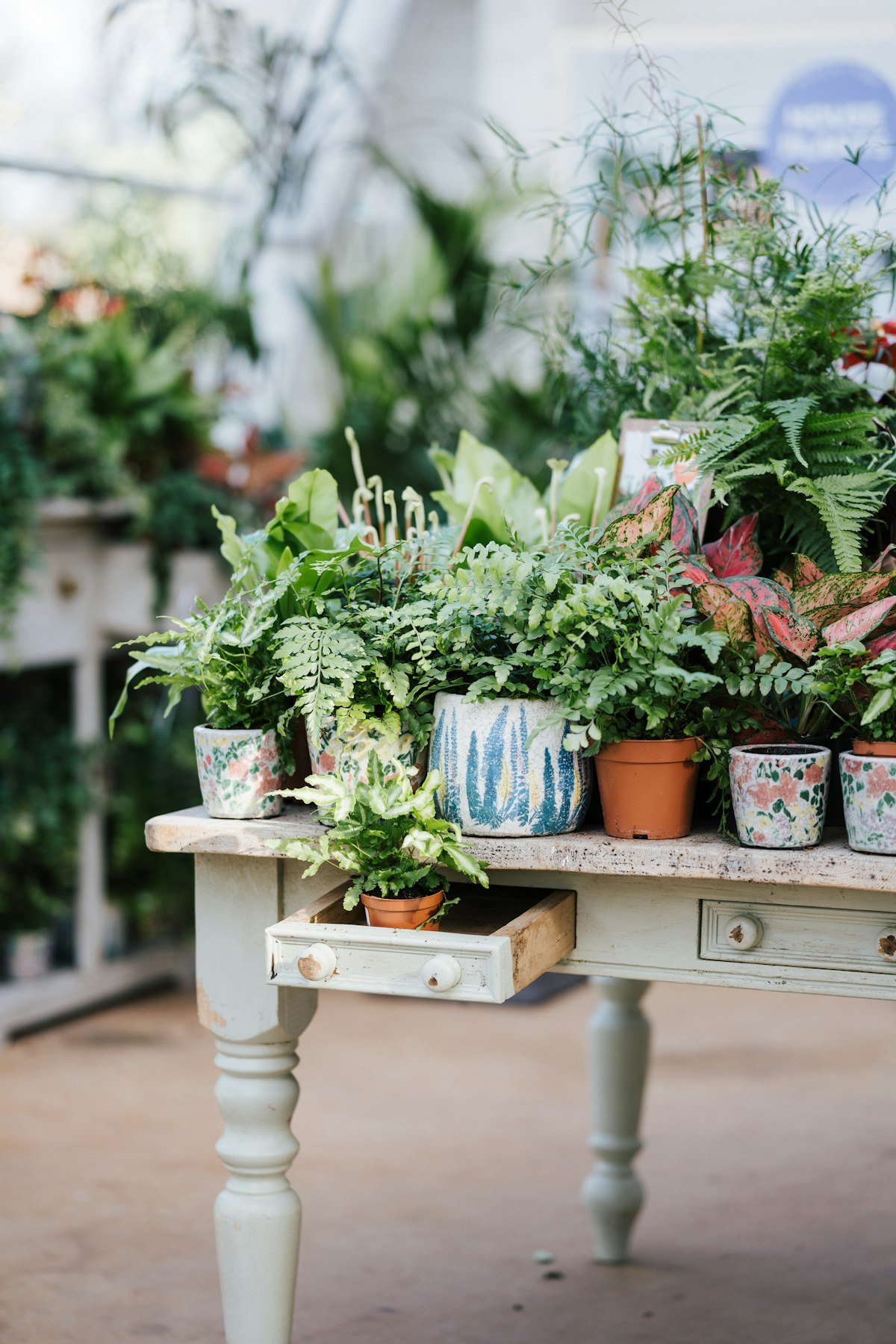
What an Indoor Plant Shop actually provides
A conventional garden centre may sell indoor plants among outdoor stock, tools, compost, and seasonal products. An online or specialist indoor plant shop usually narrows the task to plants selected for interior environments. The distinction is practical: indoor spaces have filtered light, stable temperatures, limited drainage, and less room for trial and error than a garden bed.
Think of the shop as a plant-to-room matching system. Its useful output is not simply a species name. It is a recommendation that answers four questions:
- Will the plant fit the available light? “Bright” should be clarified with context such as a sunny window, indirect daylight, or a darker interior position.
- Will the mature form suit the room? A plant that is compact at purchase may eventually need vertical clearance, floor space, or support.
- Can the household maintain it? Watering, drainage, humidity, pets, travel, and heating patterns all affect the decision.
- Will it arrive and settle successfully? Packaging, delivery timing, potting condition, and first-week instructions influence the transition into the home.
That definition changes how you browse. Instead of beginning with “Which plant looks best?”, begin with “Which plant is compatible with this location and routine?” Appearance remains important, especially for modern interiors, but it becomes a constraint rather than the only criterion.
The three layers of a useful plant listing
A clear listing should provide information at three levels. The first is visual information: leaf colour, texture, silhouette, and approximate form. The second is environmental information: light preference, temperature concerns, and tolerance for missed care. The third is operational information: pot size, dispatch or delivery details, arrival condition, and aftercare.
These layers serve different shoppers. A homeowner may need a single statement plant for an empty corner. An apartment dweller may prioritise a forgiving plant that handles an inconsistent schedule. An interior designer may need repeated forms at compatible sizes for several rooms. A collector may care about a particular genus, leaf pattern, or growth habit.
Plant-care guidance should also separate preference from necessity. A plant may prefer higher humidity without requiring a greenhouse-like environment. It may grow best in strong indirect light but survive in a less suitable position with slower growth. The distinction prevents two common errors: promising that every plant works anywhere, or making ordinary indoor care sound impossibly technical.
For foundational care, the Royal Horticultural Society explains that houseplants differ in their requirements for light, watering, temperature, and humidity rather than sharing one universal routine. Its houseplant care guidance is a useful reference when evaluating whether a shop’s instructions are specific enough.
Why the shopping decision matters after the plant arrives

Buying the wrong plant creates a chain of avoidable problems. A low-light room may produce weak growth in a plant selected for a bright position. A decorative cachepot without drainage may encourage water to collect around the roots. A large plant may dominate a narrow walkway, while a small plant may disappear beside substantial furniture. The purchase decision shapes care difficulty and interior balance at the same time.
Light is a location problem, not a label
Light descriptions are often the least consistent part of plant shopping. “Low light” does not mean “no light,” and “indirect light” does not describe one exact brightness level in every home. A north-facing room, a shaded room with a large window, and a room several metres from a bright window can all feel dim to a person while providing different conditions for a plant.
Before choosing, observe the intended position at different times of day. Note whether nearby buildings, curtains, balconies, or trees block daylight. Also consider whether the plant will stay in that position or be moved for cleaning, entertaining, or seasonal changes. The University of Minnesota Extension explains that houseplant light needs vary by plant and that windows, direction, and distance affect the light a plant receives; its indoor plant lighting guide provides a sound basis for making that assessment.
For a practical comparison, use the shop’s light category as a starting filter, not a guarantee. Then compare that category with the actual room. If the shop gives only vague labels and no placement guidance, the buyer has to absorb all of the risk.
Plant shape affects the room as much as colour
Two plants can have similar care needs but create very different interior effects. A snake plant contributes vertical lines and suits a narrow floor area. A Monstera can become a broad focal point with large leaves. A fiddle-leaf fig can provide height and structure but demands a location where its eventual scale will not conflict with furniture or circulation.
Evaluate the plant as a piece of living composition:
- Silhouette: upright, arching, spreading, or climbing.
- Visual weight: fine leaves read lighter; large leaves create a stronger focal point.
- Clearance: space above, beside, and behind the plant for growth and maintenance.
- Container relationship: whether the pot should recede, contrast, or align with existing finishes.
- Repetition: whether one plant is a statement or several plants form a quiet rhythm.
Use these factors to avoid a common decorating mistake: selecting a plant because it looks attractive in a product photograph without considering how its shape will interact with a sofa, shelf, desk, or doorway.
Care capacity is part of the product fit
Care capacity is not a moral quality. It is a scheduling constraint. Someone who travels frequently may prefer a plant that tolerates a missed watering better than a delicate specimen. Someone working from home may enjoy checking plants regularly and may welcome a more involved routine. A family with pets may need to investigate plant suitability before bringing anything indoors.
Watering deserves particular attention because “water weekly” is often too blunt to be useful. The correct interval depends on the plant, pot, growing medium, season, room temperature, airflow, and light. The University of Illinois Extension advises checking the plant and growing medium rather than following a rigid calendar in its houseplant watering guidance. A shop that teaches you what to look for is more helpful than one that offers a single schedule for every species.
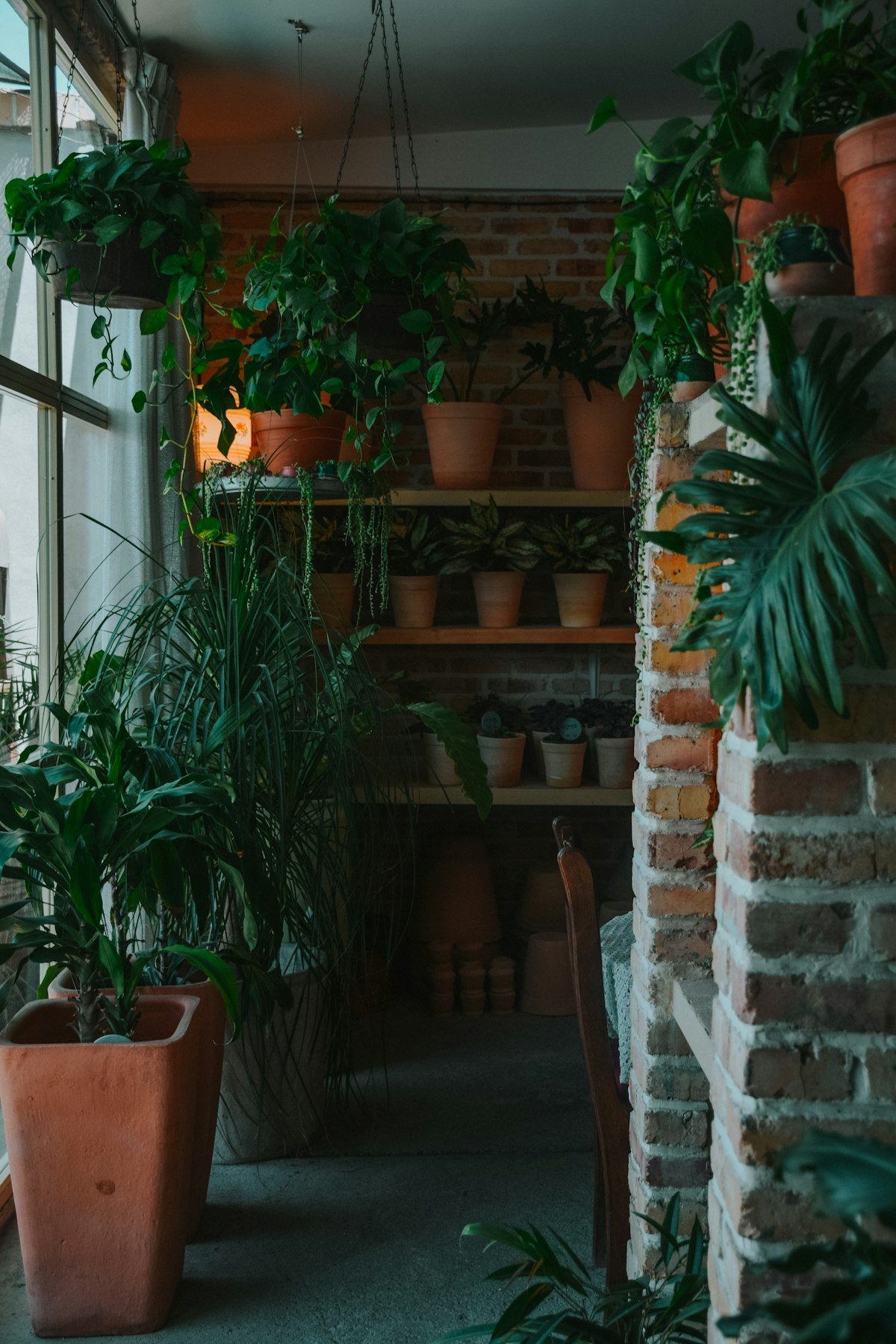
How a reliable Indoor Plant Shop should work
A good buying process reduces uncertainty in a deliberate order. It starts with the room, narrows to suitable plant types, checks the physical scale, and finishes with delivery and care. The sequence matters because reversing it encourages impulse buying: the plant is selected first, and the home is expected to adapt afterwards.
Step 1: Record the room before browsing
Write a short room brief. It does not need specialist measurements. Record the approximate position, nearby window, obstructions, available floor or shelf space, and how often someone is home. Include constraints that a photograph may hide, such as a radiator, draughty entrance, curious pet, or narrow passage.
For a more reliable brief, capture:
- the room’s brightest and dimmest usable positions;
- the approximate width and height available for the plant and pot;
- whether the position is permanent or temporary;
- the household’s likely care pattern during workdays, weekends, and travel;
- any safety, access, or pet-related restriction.
These details help a shop’s team or plant filters produce a recommendation that is tied to your home rather than to a generic room photograph.
Step 2: Match the plant’s requirements to the position
Now compare candidates by environmental fit. Start with light, then check growth habit and care tolerance. Do not treat a low-maintenance label as permission to ignore placement. A forgiving plant can still decline if it is kept in darkness, left in standing water, or exposed to damaging temperature changes.
Use a simple decision table as a starting framework. The categories below are illustrative shopping prompts, not universal guarantees; the plant’s own care instructions take priority.
| Room situation | Useful plant direction | Question to verify |
|---|---|---|
| Bright room with room for a focal point | Large-leaved or architectural plant | How wide can the mature plant become? |
| Compact apartment with limited floor space | Upright plant or tabletop specimen | Can the pot sit safely without blocking movement? |
| Beginner owner with an irregular routine | Forgiving, clearly labelled houseplant | What signs show that it needs water? |
| Home office with a shelf or desk | Compact plant with a controlled growth habit | Will leaves obstruct the screen, light, or workspace? |
| Residential project with several rooms | Repeatable forms selected by light zone | Can each location support the same care standard? |
Step 3: Separate the plant from the pot decision
A plant and its decorative container perform different jobs. The growing pot should support drainage and root health; the outer pot or cachepot provides the visible finish. When a listing includes both, check whether water can drain safely and whether the inner pot can be removed for watering.
For a minimalist interior, restraint usually produces a better result than collecting unrelated finishes. Choose one relationship: a neutral pot that lets foliage lead, a tonal pot that blends with the room, or a deliberate material contrast. Do not sacrifice drainage for a seamless appearance. A beautiful container cannot compensate for a persistently waterlogged root zone.
Also check the final weight. A large ceramic container may be difficult to move for cleaning or watering. A lightweight plastic growing pot inside a stable outer vessel can make maintenance easier while preserving the intended look.
Step 4: Review delivery and arrival care
Plants are living goods, so delivery needs more scrutiny than an ordinary decor purchase. Look for clear information about dispatch timing, packaging, delivery coverage, substitutions, and what to do if the plant arrives stressed or damaged. A useful shop should explain whether the plant is sent in a growing pot, a decorative pot, or both.
Plan the arrival rather than ordering when nobody can receive it. After delivery, inspect the plant, remove external packaging, and place it in a suitable position. Avoid making several changes at once. Moving it repeatedly, repotting immediately, and changing light exposure on the same day makes it harder to identify the cause of later stress.
The RHS notes that newly purchased houseplants may need time to adjust to their new environment and recommends paying attention to placement and watering during establishment. Its after-purchase houseplant advice supports treating delivery as the beginning of care, not the end of the transaction.
Step 5: Read the aftercare before committing
Aftercare should be specific enough to guide an inexperienced owner without pretending that every home behaves the same way. Look for instructions covering light, watering checks, feeding, cleaning, repotting signals, and common signs of stress. You should also know where to ask a follow-up question if the plant’s leaves change after arrival.
The best guidance teaches observations: dry or damp growing medium, drooping, yellowing, stretched growth, crispy edges, pests, or water collecting in the outer pot. This is more durable than a calendar because the plant’s condition provides feedback.
Where Indoor Plant Shopping breaks down
Most disappointing purchases are not caused by a single bad plant. They result from missing information, ambiguous labels, or an attractive recommendation that ignores the room. Recognising these failure points helps you assess a shop before placing an order.
Failure point: “low maintenance” without conditions
Low maintenance is relative. It may mean less frequent watering, tolerance for a broader range of indoor conditions, slower growth, or simply fewer pruning needs. It does not mean the plant can survive without light, drainage, or observation.
Ask what the label is comparing. A shop should ideally state the plant’s preferred light and explain what makes its care manageable. If the description uses only broad marketing language, treat it as an invitation to investigate, not as evidence of suitability.
Failure point: mature size hidden by a product image
Product photography can make scale difficult to judge. A plant photographed alone may appear suitable for a side table but arrive at a size intended for the floor. Conversely, a young specimen may look sparse in a large room and require patience before it fills the intended composition.
Check pot diameter, plant height, spread, and whether measurements include the container. For a design project, request consistent information across products so that selections can be compared. When exact current dimensions vary because plants are living stock, the shop should make that variability clear instead of presenting a photograph as a fixed specification.
Failure point: a fixed watering calendar
A calendar can be a reminder, but it is a poor substitute for checking the plant. Water loss changes with light, season, pot material, airflow, and root development. Overwatering often comes from applying a schedule when the plant has not used the previous moisture.
Use a starting policy, not a promise. For example, an illustrative beginner policy could be to check the growing medium every few days during the first two weeks, record what you observe, and adjust only after seeing a pattern. That is not a universal interval; it is a way to learn the conditions in your own room.
Failure point: decorative convenience overriding drainage
Some buyers assume that a sealed decorative pot is ready for direct planting. If excess water cannot escape or be removed, the owner has less control over moisture. A shop should state how the plant is potted and whether the visible container is waterproof, porous, or intended only as an outer vessel.
For a rental or design-led home, this is also a protection issue. Use a saucer or removable inner pot where appropriate, and keep water away from timber, fabrics, and delicate surfaces. A tidy display is one that remains easy to inspect and move.
Failure point: no plan for an unhappy plant
Even a well-matched plant can show stress after transport or a change in environment. The useful question is not whether a shop can guarantee a perfect arrival in every circumstance. It is whether the shop provides a clear process for reporting damage, sharing photographs, and receiving care guidance.
Before ordering, save the listing and care instructions. Inspect the plant promptly, document any problem, and contact the seller through the stated support route. This creates a factual record and avoids guessing at a remedy.
How practitioners apply the decision in real homes
Different buyers should use the same basic framework but assign different weights to each factor. A beginner needs clarity and forgiveness. A designer needs repeatability and visual control. A collector may accept more care in exchange for a particular form. The shop’s role is to expose those trade-offs rather than imply that one “best plant” exists.
For the minimalist apartment
Begin with circulation. Choose one or two deliberate positions instead of filling every available surface. An upright snake plant can reinforce a narrow vertical zone, while a compact plant on a shelf can add texture without competing with artwork. Keep the palette controlled through similar pot finishes or repeated shapes.
Ask the shop for plants that suit the actual light at those positions, then confirm mature width. A small apartment benefits more from predictable scale than from a large specimen that needs constant repositioning. If floor space is scarce, check the stability of shelves and the risk of leaves or water interfering with daily use.
For the beginner owner
Choose a plant with clear care instructions and place it where you will notice it. Visibility creates a useful habit: you can see new growth, dust, drooping, or changes in leaf colour before a problem becomes severe. Avoid buying several plants with completely different requirements at once; a small collection with understandable routines is easier to learn.
Your first aftercare checklist can be simple:
- Confirm the plant’s light position and avoid moving it repeatedly.
- Check the growing medium before watering rather than following a fixed date.
- Make sure excess water can drain or be removed from the outer pot.
- Inspect leaves and stems periodically for changes or pests.
- Record what you did when the plant improves or declines.
This turns plant care into observation and adjustment rather than guesswork.
For the interior designer
Specify plants by zone instead of selecting one catalogue image for the whole project. Create groups such as bright focal positions, moderate-light shelves, and constrained corners. Within each group, define acceptable forms, container finishes, and maximum dimensions.
For a repeatable residential scheme, request:
- consistent terminology for light and plant size;
- clear distinction between growing-pot and finished-pot dimensions;
- substitution rules if a selected plant is unavailable;
- care notes that can be handed to the homeowner;
- delivery coordination appropriate to the installation schedule.
The objective is not visual uniformity at any cost. It is a planting plan that remains coherent after plants grow, rooms change, and residents take over daily care.
For the expanding collection
Collectors should track conditions, not just names. Group plants with similar light and watering preferences where practical, but leave enough space to inspect each one. New arrivals should not be placed immediately among established plants if doing so makes observation difficult.
Keep a short record of plant identity, purchase date, position, and notable changes. This is especially useful when several varieties have similar leaves or when you are adjusting care after a seasonal shift. Expansion should increase your understanding of the home’s growing conditions, not merely the number of pots.
For most households, the strongest buying rule is straightforward: select for the room first, the routine second, and the aesthetic third. That order does not make style irrelevant. It gives the style a better chance of lasting because the plant is not fighting its environment.
CozyPlant curates indoor plants for modern homes, including Monstera, fiddle-leaf fig, and snake plants, alongside guidance for care and minimalist interiors. If you want help choosing a plant that suits your space and routine, explore CozyPlant through CozyPlant.
Related CozyPlant guides
- How to choose indoor plants for home
- Indoor plant care system
- Pothos care guide
- Snake plant care guide
FAQ
What should I check before buying a houseplant?
Check the light in the intended room, the pot drainage, and whether you can keep a simple watering routine. Looks matter less than conditions.
Is an indoor plant shop the same as a care guide?
No. Use shop listings to compare plants, then use a care guide to decide whether that plant can live in your space.
Which plant should beginners buy first?
Start with pothos or snake plant unless you have a consistently bright room and want a more demanding species.
Authored with NotFair SEO